



Businesses Urged to Prepare for Making Tax Digital VAT Rollout

Guidance for VAT-Registered Businesses Prior to April 2019 MTD Requirement Businesses which are over the VAT threshold are being advised to prepare ahead of the Making Tax Digital VAT rollout, due on 1st April 2019. David Redfern, managing director of DSR Tax Claims, issued his guidance to affected businesses in order to assist them to prepare for the start of the mandatory requirement that VAT records be digitised for all businesses with a taxable turnover of £85,000, the current threshold for VAT registration. Businesses below the current threshold, who are currently registered for VAT, may choose to opt into Making Tax Digital (MTD) for VAT but are not legally obliged to. HMRC issued their VAT Notice 700/22 earlier this month, to provide businesses with further information regarding the MTD for VAT requirements which will make digital VAT returns mandatory for VAT periods beginning on or after the 1st April 2019. Redfern issued his guidance for businesses unsure of how this digital rollout will affect them. He commented, “All businesses with a taxable turnover greater than the VAT threshold will have to keep their VAT records digitally and send their VAT returns to HMRC using MTD-compatible software for VAT periods which begin on or after 1st April 2019. So, if your VAT accounting period runs from 1st March 2019 to 31st May 2019, your next VAT period beginning 1st June 2019 will need to be MTD-compatible”. He added that businesses which subsequently fall below the VAT threshold will continue to be required to send digital returns. However, certain exempt groups would be permitted to opt in or out of MTD by informing HMRC in writing. Exempt groups include those for whom digital VAT returns are not reasonably practical due to disability or remote location, as well as certain religious groups. Redfern warned businesses that they may still be required under law to keep non-digital VAT records, depending on the nature of their software and any legal requirements to preserve them in their original form. Redfern stated, “The future may be paperless but MTD won’t initially remove the requirement to keep any physical business records. Depending on the software and data recorded, it may still be necessary to retain a paper copy of the business record – for example, where only certain data is recorded from an invoice, you would still be required to retain a copy of that invoice for your business records because the software wouldn’t be recording all the data from the invoice. Where the software scanned and saved an image of the entire invoice, the business may not need to require a physical copy, though some records are required by law to be retained in their original form”. Additionally, Redfern cautioned businesses to consider their data backup arrangements carefully in order to ensure that vital financial data is not irretrievably lost in the event of technological failure. For businesses who were concerned about their digital preparations for the commencement of MTD for VAT, Redfern had some words of respite, noting that “HMRC have designated a certain ‘soft landing’ period to allow businesses to get all required digital links in place. This means that for the first 12 months of ‘mandation’, businesses won’t be required to have all their digital links fully operational so if your first affected VAT period begins on 1st April 2019, you will have until your first VAT return period on 1st April 2020 to ensure that all your links communicate automatically. This doesn’t mean that you don’t have to submit a digital VAT return though – it just means that you have a 12 month soft landing period to ensure that all of your digital links communicate with each other to eliminate any manual intervention”. Despite the soft landing period, Redfern urged businesses not to be complacent, stating that “The soft landing period doesn’t mean that you can relax about MTD – you may require that period to ensure that all your software functions together”.
Ivory Egg Launch New Training Program

Ivory Egg, specialists in KNX intelligent building technology solutions, launch a brand-new training program for 2019 in order to help system integrators develop all the skills they need to sell, specify, commission and maintain KNX projects. Following the release of the KNX Association’s update to the standardisedKNX Basicand Advanced Courses, Ivory Egg have taken the opportunity to refresh their entire training program including introducing a brand-new course developed specifically for the UK integrator. New Sales & Specification Course: Developed exclusively by Ivory Egg, the primary aim of this new Sales & Specification Courseis to make winning and designing your first project easier and more productive. A wide range of topics are covered in this convenient one-day course, including constructive methods for selling KNX systems, what information is required to know and relay to other parts in the building process, alongside the correct product specifications when facilitating a residential KNX system. The new Sales & Specification Course is designed to be run in parallel with the KNX Basic Course, yet is suitable for anyone looking to sell, quote or design KNX projects quickly and/or autonomously. KNX Basic reintroduced After the success of the split Technician and Partner courses, Ivory Egg have decided to return to the standard format of the KNX Basic Course, following the much-needed changes by the KNX Association. These changes recognise that some of the content was better suited to the advanced course, which means the Basic course is now more focused on key skills and programming. Ivory Egg are running the course over 4 days instead of 5, ensuring as little time is spent away from work as possible. A recognised industry standard, completion of the KNX Basic course allows you to become a KNX Partner and this course is perfectly suited to integrators and electricians looking to develop their KNX skills and market reach. Updates to the KNX Heating Course In addition to the new Sales & Specification course, Ivory Egg has also updated itsHeating Course. Unlike other KNX heating courses, this training program has been created specifically for the UK market and covers the systems you will typically find on a British project. This course focuses on how a KNX heating system works, which products to specify and most importantly, how to configure them. Ivory Egg’s new Heating Coursealso encompasses information about the control of cooling systems and more advanced BMS solutions for intelligent building management. Offering a comprehensive understanding of what can be controlled, you will be able to confidently adapt to demanding situations, typical of real word projects. Dates set for the KNX Advanced Course The last step in the program is the Advanced course, suitable for KNX Partners who are looking to further develop their skills. Taking a deeper look at how KNX works, this course includes how to integrate KNX with advanced systems like DALI, BMS and Logic. It also takes a more in-depth look at how KNX works including IP communication and the exciting KNX Secure solution which makes KNX a market leader in encrypted building automation. Completing this course will enable an integrator to join an elite few worldwide who have updated their KNX Partner status to Advanced. Mark Warburton, Technical Director at Ivory Egg, says: ‘We are incredibly excited to launch these new courses for 2019, along with the recently updated KNX Basic and Advanced courses. Finding new ways to share the knowledge and resources we have built up over 15 years is one of our key focuses for the future, so it’s great to be able to integrators new course and content. By supporting integrators with focused courses alongside the standard KNX courses, we believe they will be able to win more projects and deliver them quicker” For more in-depth information about Ivory Egg or to discuss your next project requirements then get in touch with the team or please click here.
Gas Safe Europe launches new Detectasmoke product

A company whose products help to saves lives by ensuring smoke and gas alarms are working properly has launched the latest addition to its range. Gas Safe Europe has added a new variant of its Detectasmoke product to meet demand. Detectasmoke DSF1 complements the company’s existing non-flammable version, which is widely used by global clients. The development of the new Detectasmoke aerosol followed changes to the Aerosol Regulations which meant that the existing propellant could no longer be used in the manufacturing process leading to raw material price increases. John Stones, Managing Director of North Wales-based Gas Safe Europe, said: “There was clearly a demand for a lower priced alternative to our non-flammable Detectasmoke and we pride ourselves on our ability to continue innovating and reacting to the demands of the fire safety industry. In addition to developing our new smoke test aerosol, we have also reformulated the non-flammable product to meet F-Gas Regulations. It ensures that our customers have the choice of which product to use at a price point to suit them.” All Detectasmoke products are fully compliant with 2018 F-Gas Regulations with an emphasis on performing quickly and producing the minimum amount of residue. They are also suitable for use with all pole delivery systems. John added: “The industry has been using aerosols to test for smoke and gas for over 30 years and has made it clear that it wants to continue using aerosol products. Our challenge as a manufacturer is to ensure that we continue to raise the bar in terms of the quality and effectiveness of the products we bring to the market. As a family-owned, multiple award-winning business, we also recognise the importance of ensuring our customers in the UK and internationally receive the best possible customer service.” Detectasmoke is widely used across a number of industries including Fire and Security, Maintenance and Marine to regularly test their smoke alarm systems. Detectasmoke is available in 250ml and 150ml cans and is available from distributors including City Electrical, Wolseley, Edmundson Electrical and CPC. In addition to Detectasmoke, Gas Safe Europe also manufactures a number of other safety products including Detectagas, Detectaleak and Detectadusta. for more information please visit http://www.gassafeeurope.com
Push-button DALI Dimming
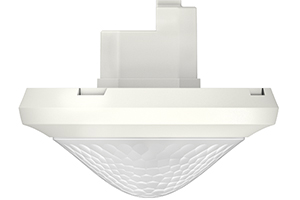
DALI lighting provides convenient and energy-efficient lighting control in commercial premises, where simple on/off doesn’t quite cut the mustard any more. Occupants – and energy bill payers – are increasingly hearing about how daylight harvesting makes best use of natural light by automatically dimming as daylight varies according to the time of the day and weather shifts. They want a share of the benefits! In practice, that usually means DALI lighting control and, if you can find an easy way of providing that, you can compete with the bigger contractors for the more profitable jobs. They will love you for it. A new generation of presence detectors do just that, because they enable installers to set up a DALI system of up to 50 lamps in three zones or groups using no more than a finger on a retractive (push to make) switch. First, a reminder that there’s no real magic to installing DALI lighting. The main difference between it and a conventional 230V switched system is that the luminaires need to be DALI compatible and that, once installed, unlike a traditional 230v circuit they are always live. In a DALI system the switching signals are controlled by an additional 2 core communication cable, the lights can then be commanded to perform requested actions, such as switch on/off, dim up/downor call up a pre-set scene. Installations therefore require two extra cores, a simple case of pulling in a 5-core cable instead of the usual 3 or 4 core cable. It’s straightforward for a competent installer. There are different levels of complexity, with more advanced DALI systems offering energy monitoring, lamp or ballast failure notification and automatic emergency lighting testing. Scene setting can change a room from conference mode to video-watching mode at the push of a button.But a DALI install doesn’t need to be this in depth or complicated. The technology can now be used for smaller installations, single rooms and with a single focus on saving energy without compromise on maintaining comfortable and safe lighting levels. A DALI network often consists of an LCM (lighting control module), a DALI power supply (which may be built into the LCM), DALI luminaires and one or more DALI-compatible control devices (switches, dimmers or PIR detectors). The DALI control signals are sent to the ballasted luminaires which can respond individually, in groups or in rows depending on the way they are programmed. By integrating the control element and power supply into a PIR occupancy detector, Theben has provided an easy-to-install, easy-to-commission, stand-alone DALI solution for offices, meeting rooms and classrooms. All the benefits and energy saving credentials of occupancy detection combined with daylight harvesting can be met quickly and easily. It’s a game changer. Theben’s the RONDA DALI occupancy sensor has 3 light sensors, to detect light levels in different zones of the room and can control up to 50 luminaires which can be allocated to the three groups in any combination. So, if, say, a row nearest the window is in strong daylight then those fittings will dim down to save energy, those in the middle row may dim slightly less and those at the back of the room will remain at 100%. The factory settings provide the perfect lighting conditions at desk level (500 lux) with a 10 minutes time delay. However these settings plus many more are fully adjustable, by using an intuitive APP and IR remote control. The really clever part is how each LED luminaire is assigned to its row or group: simply using any retractive (push to make) switch in the circuit. Once the system is put into commissioning mode (using a set sequence of presses) the first luminaire will flash: 1 press of the switch assigns this fitting to row or group 1, 2 presses to row 2 and 3 presses to row 3. Then you move onto each light in sequence. It couldn’t be easier, it can even be done with the remote control. Reassigning lights at a later date is simply a case of going into commission mode again. Should a ballast or luminaire fail then, as long as they are removed and replaced one at a time, the PIR will reassign the fitting in the correct location. It’s DALI occupancy sensing and daylight harvesting at your customers’ fingertips! For more information about DALI Lighting please click here
5 Tips to a Home Security Tool theft Prevention Plan

Recent Home Office statistics have shown that in nine out of ten crimes, nobody is charged, along comes the Tool theft Prevention Plan. Along with this, the numbers of burglaries are rising, painting nothing but a gloomy picture. Rising crimes and fewer charges mean that a solid home security prevention plan has never been more important. Prevention is clearly better than a cure, but for families who need to protect their homes and have a million and one priorities, some things can easily be forgotten. With that in mind, Andy Palmer, owner at Grays Locksmiths, has explained his top five tips for a Tool theft Prevention Plan. Don’t Postpone Fixes As soon as you realise that a lock is broken or your keys have gone missing, change your locks immediately to avoid either the key falling into the wrong hands or a passer-by taking advantage. This also applies to windows – an upstairs broken window latch might not seem urgent, but in reality this is not something to put off. No matter where the window is, it’s an entrance to your home for any unwanted visitors. Don’t try and do it yourself – it’s always better to approach a professional service. Don’t Broadcast Your Absence We’ve all heard the Facebook party horror stories where a party invite is made public and lots of unwanted people turn up, but what about when it happens the other way around? If you broadcast to everyone on social media and talk loudly to neighbours about your upcoming holiday, you could easily find yourself a victim of burglary. Don’t take any chances, wait until after your holiday to shout about it, but confide in a few trusted neighbours to make sure that they keep an eye out for you. Install CCTV CCTV has been cited as the number one deterrent for burglars for good reason – people get nervous as soon as they see cameras and they are much more likely to get caught. Sounds simple – but make sure that it is working and is regularly checked. Should you be unfortunate enough to have a burglary, you don’t want to suffer more bad luck and have the CCTV not work after investing in it! Adopt a Layered Defence Approach Technology can boost our security efforts in ways we never imagined, but it doesn’t mean we should replace traditional security devices. They should be used in tandem. Utilise your house alarm and your lock protocol with your smart home devices. Which leads us to… Alexa, I’m Going Out Using nothing but the power of your own voice, Alexa has changed the smart home game. It is often marketed for setting reminders, creating to-do’s and playing music, but it also has some impressive security credentials. In September, Amazon announced a new security feature that anyone with an Alexa device and use, called “guard mode”. Tell Alexa when you leave your house, and its smart alerts will hear the sound of breaking glass or an alarm, record the clip of the sound and send it straight to you, so you can reach out to the police as soon as possible. We have all heard the saying “fail to prepare, prepare to fail”, but there is a lot of truth in it. By following these five steps, you can actively help your prevention efforts, and in the unlikely event that you do fall victim to a burglary, it will boost the chances of the intruder being caught. For more infromation about the Tool theft Prevention Plan please click here
New Rapid Safety Boots To The Rescue

£67.95 zero rated VAT Prepare yourself for the cold, wet winter ahead with a pair of Scruffs Rapid Safety Boots. The latest addition to the Scruffs collection, these mid-ankle safety boots come equipped with composite toe and midplate for lightweight flexibility and protection from sole penetration – whatever the weather. A reliable pair of boots for any time of year, Rapid Safety Boots incorporate Scruffs Dri4Work® technology, making them fully waterproof come rain or shine. These boots take the stress of site use without compromise, with Poron® socks plus a padded tongue and collar providing extra underfoot cushioning for maximum comfort. Rapid Safety Boots have a high spec safety rating, providing protection against heat, slips and fuel oil. Keep on the right side of your work mates too with Micro-Fresh® technology, which prevents the build up of bacteria to reduce unwanted odours. With underfoot shock absorption as standard, the Rapid Safety Boot minimises stress on the feet and ankles, so that you can get on with the job at hand without distraction. So if the weather turns, the work doesn’t have to stop – Scruffs has got you covered with the waterproof Rapid Safety Boot. Available in sizes 7-12. For more information about Scruffs, visit https://www.scruffs.com/ call 0115 938 9000, or email sales@birchwoodpricetools.com for more information on the range of products.
Requirements for Overvoltage Protection
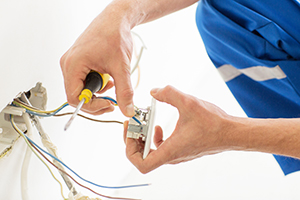
With the introduction of the 18th Edition the decision-making process for inclusion of overvoltage protection in electrical installations has changed. Here, Dave Enefer, Devices Product Manager at Crabtree, one of Electrium’s leading brands in electrical components, looks at the latest requirements for overvoltage protection. In certain circumstances overvoltage protection is mandatory. For all other situations a risk assessment is necessary However, if there is no risk assessment carried out over voltage protection must be installed and in single unit dwellings the final decision is made on a value judgement. Overvoltage Protection Requirements Firstly, we must look at the area where protection against overvoltage must be provided. Designers must consider the consequences of overvoltage, and decide which circumstances apply to each type of building / installation under consideration. Over voltage protection is mandatory where the consequences of overvoltage can result in Serious injury to persons or loss of human life (e.g. nursing homes, care facilities, hospitals) Interruptions to public services (e.g. 999 call centres, communications & transport networks etc) Damage to cultural heritage (e.g. loss of irreplaceable artefacts records etc) Interruption to industrial & commercial activity (e.g. banking, online services data centres etc) Affects a large number of individuals in one location (e.g. high-rise buildings etc) For housing providers, the last one may be the most relevant. Where the above consequences of overvoltage could occur, protection is a requirement. (See Regulation 443.4). All Other Applications – Carry Out a Risk Assessment For circumstances other than those explained above a risk assessment must be carried out to determine if protection against transient overvoltage is necessary. The risk assessment calculation is now based upon a formula that uses values that are given in Table 443.1 and on values related to geographical locations shown in fig 44.2, which is a map of the UK. These values are used with figures that are determined by the lengths of supply cables to the origin of the installation to make a calculation. If the calculated risk level is 1000 or less, then protection is required. Readers should consult BS7671 for the full details of the risk assessment criteria & equation Single Dwellings An added consideration applies for single unit dwellings. Overvoltage will be required if no risk assessment is carried out or if the total value of the installation and the equipment therein justifies such protection. Or, as the regulations put it, overvoltage protection can be omitted if the total value of the installation and the equipment within does not justify such protection. So, how should designers look at this? In or out? Surely the cost of a Surge Protection Device (SPD) is a tiny fraction of the total value of the installation and the equipment? To make the decision to include protection it’s necessary to know the value of the electrical installation. An average domestic rewire cost is apparently around £3,000. Next step is to add in the value of the equipment in the installation that can be damaged by overvoltage. Typically, that would include quite a few items of fixed equipment e.g. central heating boiler, heating controls, intruder alarm, smoke alarms, CO alarm, LED lighting, possibly a PV installation or an EV charger all of this would cost several thousand pounds to replace. While some may not think it appropriate to include portable appliances such as freezer, fridge, washing machine, dryer, oven, microwave, broadband router, games console TVs. Laptop etc, these too can be permanently damaged by overvoltage. The low cost of investment in SPDs suggests that individual household installations should include the benefits of overvoltage protection, as standard, from January 2019 just like many other applications where overvoltage is mandated. For more information visit www.electrium.co.uk/crabtree
The Advantage of Prototyping Cable Assembly

In our experience there are many engineers who design cable assemblies without prototyping them first. While they will spend a lot of time designing the assembly and specifying components, the practicalities of manufacturing cable assembly are not always explored. By prototyping cable assembly before it goes to manufacture, you can avoid many common issues further down the line. These include: Availability of components Cost of components Ease of cable assembly Environmental factors Quality standards As well as addressing the issues above, prototyping can also help you streamline production if the cable assembly requires mass production. Why Prototype Your Cable Assembly Designs? Working with a cable assembly manufacturer on prototypes ensures that custom cable assemblies work in the real world and, most importantly, can be manufactured efficiently. Prototyping can reveal design flaws that effect functionality, but also potential problems in the supply chain and the manufacturing process. Components are a key part of this. Currently we’re experiencing long lead times for some components such as connectors. If you only specify components based on price and functionality, without exploring availability, you could find that components aren’t available in your time frames, quantities or budget. Another advantage of prototyping custom cable assembly is that you can get a clear idea of the cost of production. Some connectors take longer to assemble because they require soldering or specialist skills. Manufacturing costs are based on the time it takes to complete an assembly and labour costs. Prototyping a design will allow you to explore ways to speed up production and reduce costs – for example by using components that are easier and quicker to assemble. By working with a trusted cable assembly manufacturer you can also benefit from their expertise. They can help with everything from sourcing parts to reviewing designs and making recommendations that can have a positive impact on production costs and time. Another factor to consider is the environment the cable assembly will be used in, and what quality standards are relevant in the markets the product is designed for. Temperature, humidity, sunlight and other environmental variants can all effect the performance of the finished cable assembly; and it’s safety. Components may need to withstand certain environmental factors and that will affect the specification (and potentially costs and time frames). Similarly, if a product is being produced for different global markets the cable assembly will need to comply with quality standards in those countries. Getting approved components that comply with non-EU quality standards can often take longer and prices also vary. Prototyping To Mass Production When prototyping a cable assembly you’ll most likely be working with a UK manufacturer. But when it comes to mass producing assemblies, where will that be done? Many companies prefer to get their cable assemblies manufactured outside of the UK to reduce costs. However, if the specified components are not available in the country of manufacture, it can be a false economy. Shipping components from the UK or Europe to the Far East, for example, can soon cancel out any cost benefits, or even make it more expensive. These considerations need to be part of the design stage of your cable assembly to ensure that you get no unpleasant surprises later in the manufacturing process.
Revealed: Brits’ interest in retailer-led services for home improvement and maintenance
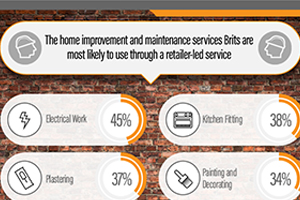
Established retailers such as Amazon and John Lewis are making a big splash in the home improvement and maintenance market. They have created similar services – where consumers can book a wide variety of tradespersons (e.g. plumbers, electricians, decorators, gardeners etc.) directly from their website, app or call centre. The primary selling point of the concept is that all considered tradespersons are subject to a rigorous recruitment process – which includes interviews, background checks and a thorough review of their past work. Since the relevant due-diligence gets done by the retailer, it takes away the agonising stress individuals usually experience when trying to shortlist the best local tradespeople. Figures certainly show that this type of service could prove to be very handy, as 41% of Brits shockingly admit to not knowing where to go when trying to find a qualified tradesperson, according to research by energy giant ‘British Gas’. Interested in property upkeep, housing agents Sellhousefast.uk analysed the latest findings from ‘Eureka!’, who surveyed 328 UK homeowners to better understand the home improvement and maintenance jobs they would be most open to arranging through a retailer-led service. Sellhousefast.uk found that ‘electrical work’(45%)is the property enhancement aspect that Brits are most willing to organise via a retailer-driven scheme. Thereafter, homeowners think ‘kitchen fittings’ (38%)and then, ‘plastering’ (37%)are the next bestsuited home upgradesto arrange with a tradesperson froma reputable brandsselection of contacts. Fascinatingly, a considerable proportion of Brits are confident enough to trust a brand to match them with the right professionals to carry out expensive refurbishments such as adding a ‘new shower’ (34%)and conducting ‘boiler repairs/maintenance’ (31%). With the huge popularity of Wi-Fi enabled thermostats, appliances, lighting and security systems to facilitate a ‘connected’ living environment– 30%of households would use a retailers service to seek outa competent individual to set-up a full smart home installation. Contrastingly, Brits would be least enticedto use a retailers programme to find capable tradespersons who can assemble ‘garden furniture’ (18%).Slightly above, just 26%would use a retailer to discoverthe right professionalsin their area who can adequately change a ‘bathroom tap’. Furthermore, Sellhousefast.uk also sought to identify some of the biggest apprehensions British consumers have about utilising a retailers home improvement and maintenance offering to search for a tradesperson(s). It was revealed that not knowing the tradesperson (42%)who would be called out, is the main obstacle stopping Brits from harnessing a retailers home solutions initiative. Subsequently, 39% believe using a retailer to source a tradesperson, is likely to end up being more-costly than exploring conventional routes to acquire them. A significant amount of Brits are worried about how they would go about resolving any issues that occur after installation (34%)with the tradesperson recommended by a retailer. Although consumers need not to emphasis on this too much – John Lewis for instance, has a one-year guarantee in place for their own scheme. Moreover, 26% are sceptical about a home improvement and maintenance service not having enough tradespeople local to their respective living location signed up to a given retailers database. On the other end, 11%will not entertain the idea of such a service as they simply don’t like buying anything technical online. 21%of homeowners hold reservations because of the belief that a tradesperson from a home improvement and maintenance programme will only do the job in hand if the products/fixtures/parts are specifically from the retailer they got hired through. Robby Du Toit, Managing Director of Sellhousefast.uk commented: “Searching for a tradesperson that is dependable can often feel challenging. With well-known retailers now allowing their customers to find a desired tradesperson through them, it represents a helpful and exciting new service. Especially, when the tradespersons involved in the schemes are extensively vetted to ensure their work can consistently be completed to a very high standard. This research certainly highlights the property improvement and maintenance jobs British homeowners are at present most likely to consider and use such an initiative to sort out. Looking forward, people’s attitudes are only set to become more positive towards the service as they gain a much better grasp of it”. https://www.sellhousefast.uk/
