



From electrician to fire detection & alarm engineer: A new career?

There have been a lot of qualified electricians who have left the electrical contracting industry to build their careers as Fire Detection and Alarm Maintenance Technicians. This has been a regular occurrence over the years and the fire safety industry now employs many people who have chosen to follow the same route out of contracting into specialising in fire detection and alarm system testing and maintenance. Having spoken with a good number of those individuals it was very interesting to find out why they had taken this route, read further to see the common reasons for this change. Electrical contracting tends to be an industry where sub-contracting is common, so many people are self-employed, which initially sounds attractive, until you start to discover the pitfalls. Under self-employment you don’t get paid holidays, mostly you won’t get a company vehicle, no sick pay, no paternity or maternity leave, you need to keep accounts so need an accountant. You will need to submit a tax return annually and ensure you have the funds each year to pay your tax bill. You will need to carry liability insurance, have operating policies such as health and safety etc. Generally; Fire Detection and Alarm and Maintenance Technicians are directly employed so the pitfalls suddenly disappear, making life much easier, and with today’s fast pace many find this very attractive. Company vehicle provided, paying tax monthly directly from your earnings, no tax returns, no need for own insurances, policies etc. Then, of course, come the operational issues: contracting will put you into building, refurbishment and development sites much of the time, working in amongst other trades and having little or no contact with the customers. Working conditions are sometimes harsh, particularly in the cooler months of the year. Becoming a Fire Detection and Alarm Maintenance Technician is a vastly different role, where you will be dealing directly with the client, building relationships and taking responsibility directly for the end result. The conditions under which the maintenance and testing are carried out are generally preferable to working on building, refurbishment and development sites. Specialising in Fire Detection and Alarm maintenance can be very rewarding and interesting, you will rarely repeat any day as you will be working amongst many client types, at differing locations within many types of business and organisations. This gives those who have taken this route much enjoyment as their work varies in many ways and life, in general, is far easier. And finally, the overall earnings are much the same. Find out more about Fire Detection at www.fia.uk.com
Worcester Independent Connections Provider Surpasses Expectation With New Electricity Supply

Leading Independent Connections Provider, Rock Power Connections, has finalised the installation of the electrical supply to Glenmore Business Park, a new development of 14 industrial warehouse units based in Langford Docks, Kidlington. The Worcester based firm were appointed following a successful tender process, which resulted in Rock Power Connections providing a full design and installation service for the new development. The team worked directly with the Distribution Network Operator [DNO] in order to obtain a point of connection, and, from here, installed a 315VA package substation with LV network and cut outs to provide over 20kVA of power to each business unit. Kev Sankar, Commercial Director for Rock Power Connections, said: “The Rock Power Connections team boasts extensive experience in the complete design and installation of a new electrical supply to a vast range of development sites, ranging from large commercial through to residential properties. We were delighted to have won the tender for the Glenmore Business Park site, where the team successfully energised the power supply in advance of the required date, helping to speed up the construction project. Overall, it was a very straightforward job with a trouble-free installation, thanks to great communication with the developer, IKON.” Daniel Rubin, Managing Director, of Glenmore Group, “Rock Power Connections were great to work with, delivering an energised power supply to all 14 business units. The firm’s efficient and professional approach enabled us to proceed with the site ahead of schedule, ensuring the development was finished in advance of business letting dates.” Founded in 2012, Rock Power Connections has quickly become one of the UK’s leading Independent Connections Providers, specialising in the design and installation of new and upgraded electricity connections to business, industrial and commercial properties. For more details about Rock Power Connections please click here
The importance of lighting for trade, office and industry productivity

Commercial lighting, from production halls to offices, plays a central role in improving employee’s wellbeing and productivity. The requirements are regulated by the European DIN EN 12464-1 standard, based on factors like the function of the workplace, safety and the type and duration of the activity that will be carried out. The criteria set out for good lighting includes a pleasant lighting environment, enough illuminance depending on the visual tasks or area of activity, light distribution and uniform illumination, minimum direct and reflected glare or haze reflections, and no flickering or stroboscopic effects. The following variables are particularly relevant: Illuminance: Lux (lx) Limit values for the assessment of glare: UGRL Uniform light distribution: UO Colour rendering index: Ra These standards and guidelines ensure the safety of employees, products and machinery. Bright and uniform light in production facilities Lighting in production line areas must provide optimum conditions for visual tasks in a safe environment. Uniform illumination helps to prevent accidents as it makes it easier for the human eye to tell whether a fast-moving machine is in operation or not. Again, the EU regulation specifies lighting requirements for different work areas. For example, illuminance in storage rooms should be at least 100 lx, while rough work requires 200 – 300 lx, average requirements are a minimum of 500 lx and very fine work needs a minimum of 1,000 lx. The right office lighting for efficient work In the office, shadow-free illumination (UGR value) and fatigue-free light (colour temperature) are important. Ideally, daylight should enter from the side and be directed to the ceiling and upper half of the room. This allows even distribution throughout the room and simulates outdoor lighting conditions. If artificial light is used, it should have a cool white tone to signal to the body that it is daytime which promotes performance and concentration. It is well known that good lighting is essential to contributing to a safe and ergonomic working environment. By adapting the facilities and office lighting to suit the needs of the employees, the result can be a happier and more productive workforce. For more information about Lighting please visit www.reichelt.com
PLUG IN SUFFOLK – UK’s FIRST ‘FULLY OPEN’ ELECTRIC VEHICLE CHARGING NETWORK

EO Charging, one of the UK’s leading electric vehicle (EV) charging manufacturers, has today launched Plug In Suffolk in partnership with Suffolk County Council and renewable energy provider Bulb. This is the country’s first ‘fully open’ public fast charging network for electric and plug-in hybrid vehicles, meaning EV drivers simply pay by contactless payment with no need to register with networks or become members of organisations. The first Plug in Suffolk charging location has today been unveiled at Urban Jungle Plant Nursery and Cafe in Beccles. The company offer two 7kW EO chargers alongside the EO Pay kiosk, allowing members of the public and employees to charge their electric vehicles. Plug In Suffolk will see the installation of electric vehicle charging stations (up to 400 individual sockets) across the county at 100 key locations and business addresses. Once completed the charging network will be available for all plug-in vehicle drivers with each charging location listed on www.pluginsuffolk.org or searchable via Zap Map and Google Maps. Charlie Jardine, Founder and CEO of EO Charging, said: “Suffolk’s existing charging infrastructure is simply not fit for purpose if we are to see the mass adoption of EVs across the county. The Plug In Suffolk network will play a vital role in increasing the density of publicly available fast EV chargers and will ensure that driving electric in Suffolk is hassle-free. Charging should be as easy as buying groceries, simply tap-and-go! We want to support Suffolk County Council’s ambition of Creating the Greenest County and firmly believe that implementing this network is an important piece of the puzzle. We’re also pretty excited to be launching the network on our home soil here in Suffolk!” Councillor Richard Rout, Cabinet Member for Environment and Public Protection at Suffolk County Council, said: “We’re working to reduce the barriers that drivers face when thinking about switching to EVs here in Suffolk. Installing charging infrastructure that not only covers a large rural area but is also available to all electric vehicle drivers is most certainly a challenge! We’re confident, however, that the Plug In Suffolk network will be a solution for many plug-in drivers. The network is another commitment towards Creating the Greenest County for Suffolk and will drive traffic to Suffolk’s businesses and provide them with the opportunity to financially capitalise on the increasing demand for EV charging in the region. Given their technical and local expertise, it is exciting to launch this initiative alongside Stowmarket-based EO Charging.” EO Charging has also partnered with Bulb, Britain’s biggest green energy supplier, to offer Suffolk businesses the opportunity to switch to 100% renewable electricity. Businesses that become a part of the ‘Plug In Suffolk’ network will be able to switch to Bulb, who provide affordable renewable energy at prices on average 15% lower than standard energy tariffs offered by the ‘Big Six’. Alexandra Deschamps-Sonsino, Head of Bulb Labs, said: “We’re delighted to be partnering with EO Charging and Suffolk County Council to bring convenient EV charging to the people of Suffolk. We’re on a mission to make the UK the greenest country on earth and are working to support the widespread adoption of electric vehicles in the UK. Plug in Suffolk represents a significant step on the way towards building the infrastructure we need to make that happen.” Suffolk businesses can now apply to become part of the Plug In Suffolk network, by completing a simple application form at www.pluginsuffolk.org Businesses that install the ‘EO Pay’ unit and become part of the Plug In Suffolk network, will be able to charge visitors to charge their electric vehicle. Host businesses have the option to pay upfront for the chargers or alternatively can spread the cost through EO Charging’s new pay per day funding model – ‘Charging-as-a-Service’. EO Charging is currently in discussion with a number of other counties and local authorities across the UK to launch similar projects to support the growing popularity for electric and plug-in hybrid vehicles. For further information or to apply to join the Plug In Suffolk network please click here.
TOOLS OF THE TRADE CHOOSE BIRMINGHAM COLLEGE AS VENUE FOR PUBLICITY SHOTS

Bromsgrove based suppliers of trade-quality tools, Tools of the Trade, recommended South and City College’s Bordesley Green campus as the backdrop for the publicity shots of their latest range of trowels. Tools of the Trade have maintained a relationship with the college for four years, supplying a variety of tools for students and apprentices to use whilst studying. When the supplier commissioned photography company, Green Imaging Ltd, to produce the publicity shots for their latest range, South & City College were recommended as a venue for their in-house expertise to ensure the shots were as authentic as possible. Simon Winder, Head of School for Plumbing, Gas & Air Conditioning at South & City College said: “We were an ideal choice as a venue for the photography, as not only do we have great facilities for the backdrop, but we also offered consultancy to ensure the tools were used in the correct way and as realistically as possible. The college is at the forefront of the latest tool technology and we get to see and use tools before they even appear on the market. This is of great benefit to our students, as they get to be more site-ready, putting them ahead in the job market.” Dave Green, MD of Green Imaging Ltdadded: “I had been asked to contact Simon Winder to get this project set up and the college have been really helpful. It’s been a really pleasurable experience, and nothing has been too much trouble to ensure we get the exact shots needed to meet the brief.” Faith Guest, MD of Tools of the Tradedescribes the students of South & City College as “tomorrow’s generation of trades people.” She added: “Tools of the Trade have had a long-standing relationship with South & City College. We have chosen to work with them as their team are enthusiastic, knowledgeable and focused on delivering exceptional training to their students. Tools of the Trade Ltd value the students’ views and opinions. The venue is exceptional, and the staff are a delight to work with. We thank you for allowing us access to your first-rate training environment and look forward to a continued and successful relationship moving forward.” Considering taking on an Apprenticeship at South and City College Birmingham? For more information about the range of courses available, visit www.sccb.ac.uk Or for more ifnormation about Tools of the Trade please click here
Leading manufacturer puts full weight behind campaign to protect against tool theft

Joining other industry/brand leaders, Van Vault the originators of in-vehicle secure storage is putting its full weight behind an innovative campaign to tackle tool van tool theft. Based in Loughborough independent plumber Peter Booth (@PBPlumber) launched a petition last year aiming to get the issue of van theft taken more seriously. His #noVANber social media campaign calls on the Government to look at increasing ways to protect tradespeople from van tool theft. The campaign has garnered huge support, with the online petition now having over 38,000 signatures. Once 10,000 signatures are achieved the Government will respond to the petition and if it hits 100,000 it will be considered for debate in Parliament. Van Vault is the UK’s premier brand of containers for storing and securing tools in vehicles. Their range is available in a variety of sizes, each designed for use is different types of vehicles. Van Vault is supporting the campaign by promoting the petition details across all its own social media and online channels as well as offering products to incentivise people to sign up to the petition. Recent reports* claim that a van is broken into and tools stolen every 23 minutes in the UK, with an average of 62 thefts per day. This is reflected in data that shows that tool theft claims have increased by over 15 per cent and that the value of claims themselves have risen too, now averaging around £1,692.00 Tool theft is plaguing many sectors, the construction industry specifically has recently reported that more than half of builders in the UK have had their tools stolen, according to new research by the Federation of Master Builders (FMB). Deborah Hunt, Marketing Manager at Van Vault comments “Peter has done an excellent job of raising this as an issue and we’re hoping that by adding our support we, together with other leading brands, can take the campaign to the next level to an even wider audience.” Peter Booth added: “I got tired of seeing photos and stories from tradespeople who had their vans targeted and tools stolen, stopping them from working. I didn’t think it was fair. I wanted to gather support using social media influence to try and get the Government to look at possible ways to help make this crime less profitable for the culprits. “We now need to reach more people that are not on social media. If you could ask your customers, friends and family to support the cause by signing the #noVanber petition, we may be able to reach our target of 100,000 by May.” Click here to sign the petition. https://petition.parliament.uk/petitions/231177
5 reasons to fit underfloor heating in a bathroom
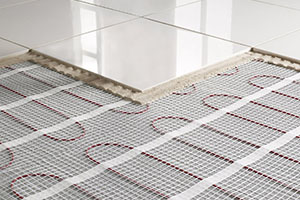
A major consideration when renovating or starting a bathroom from scratch is underfloor heating. Whilst there is an ever-increasing range of designer bathroom heating to choose from, many homeowners are now turning to underfloor heating as an alternative. Here’s why. Itreduces costs and improves efficiency The common-or-garden radiator requires a greater output and therefore more energy to heat a bathroom. Thanks to a design which covers the whole floor space, underfloor heating can be set to a lower temperature yet still achieves the same results. This can save around 10% on energy bills. Saves on space With no clunky radiators or visible pipework, homeowners are free to add extra elements to their bathroom design. Only use it when needed Homes are certainly getting smarter and bathrooms are getting smarter too! By using an individual thermostat, the bathroom can be heated exclusively at the times it’s used. Typically, this is first thing in the morning and in the evening. Safer and more hygienic With no radiators, there are fewer hard and hot surfaces to contend with, which is ideal for families with young children. Also, as underfloor heating results in less air circulation, fewer dust particles containing germs and allergens are spread around. Consistent comfort and warm feet Unlike a bathroom heated by a radiator, the floor will remain nice and warm when the system is switched on. If you’ve ever stepped onto cold tiles in the middle of winter, you’ll understand why this is desirable! Plus, with the system positioned evenly below the floor, heat is more consistent throughout the space. Underfloor heating is a great option for many homes. Just make sure you pick a system that’ll work with your client’s chosen flooring. Preferably, look out for systems which come with a lifetime warranty and full accreditation, so, if there are any issues, you are fully covered. For more infromation about Underfloor heating please visit www.uswitch.com
Glenn Christie of Tungsram Lighting joins Recolight Board

Recolight, the leading WEEE compliance scheme, is pleased to announce the appointment of Glenn Christie from Tungsram Lighting to the Recolight Board. Glenn, a Product Line Leader for lamps and drivers at Tungsram, brings with him 15 years of experience working in the electrical and electronic manufacturing sector. On joining the Recolight board Glen said: “With the introduction of WEEE Open Scope, I join Recolight in exciting times. Scheme membership is increasing, and there is a great team of dedicated staff. I look forward to working with the board as the business continues to grow.” Commenting on the news, Recolight Chief Executive, Nigel Harvey said: “We are delighted that Glenn is joining our Board. His knowledge of the lighting sector will be a significant helps as Recolight’s strategy continues to evolve.” About Recolight Recolight is the leading UK WEEE compliance scheme for the lighting industry, taking on responsibility for its members’ WEEE compliance, giving their customers access to the UK’s most comprehensive free lamp collection and recycling service, and helping to ensure that as many lamps as possible are kept out of landfill. Recolight’s comprehensive offering makes it the preferred WEEE scheme for the lighting industry, setting the standard for the sector. It is the only WEEE compliance scheme in the UK to provide integrated Lamp and Luminaire collection and recycling. It has the biggest UK-wide network of collection points for all WEEE lighting. As a result, since its founding in 2007, Recolight has funded the recycling of over 300 million lamps, LEDs and luminaires, more than all other UK WEEE schemes put together. For more ifnromation about the WEEE compliance scheme visit the Recolight website www.recolight.co.ukor follow Recolight on Twitter @Recolight
Selecting the correct Type of RCD – 18th Edition BS7671
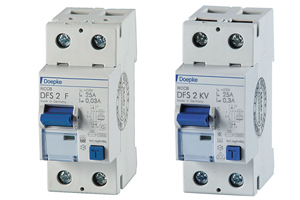
In the UK, residual current protection has been installed with little consideration for the nature of appliances and loads connected downstream of the RCD, this can affect the operation of the RCD. Appliances used in domestic, agricultural and commercial premises, including certain types of washing machine, induction hobs, LED lighting, pumps etc. can produce residual currents that are not compatible with type AC RCDs. The general safety guidance given in the 17th Edition for RCDs, is no longer appropriate for many appliances and loads connected in these installations. Consequently the 18th Edition Wiring Regulations have been updated to align with the existing Electrical Safety Standards already adopted in other countries. The 18th Edition includes additional guidance on the use of specific Types of RCD, based on the characteristics of the residual current produced by the appliance / load. These changes are covered in more detail later in the article – see Regulation 531.3.3 RCD:Generic term for devices that can detect residual currents and are suitable for fault disconnection. Customers and even manufacturers use the term RCD, when they are talking about an RCCB or an RCBO. The 18th Edition Regs list the following RCD formats: RCCB:Residual current protection only. Must be used with MCB for overcurrent and short circuit protection. RCBO: MCB + Residual current protection. Final circuits providing 30 mA protection. CBR:MCCB + Residual current protection (Non-domestic >100A) AFDD: RCBO* + Arc Fault protection. Final circuits *Check functionality offered by the manufacturer. MRCD:Residual current module used in association with a Circuit Breaker to provide protection. Note: RCMs(Residual Current Monitors) are not suitablefor providing residual current protection and cannot be used in place of an RCD – see note in clause 411.1 Terminology To select and apply residual current devices correctly, requires a basic understanding of the associated Jargon. The term RCD in its self is often incorrectly used – Definitions for some common terms are listed below, refer to Part 2 of BS7671 for a full list associated with the Regulations. Earth Leakage Current (Protective Conductor Current): Electrical appliances, connections and cables allow some current to leak to earth, due to internal or natural capacitance associated with the installation. This current should travel to earth via the PE (protective earth) conductor. If the PE conductor is disconnected or faulty (high resistance), a person touching uninsulated parts of the equipment would be subject to the leakage current, that normally flows through the PE conductor. The regulations set limits for protective conductor currents and methods for connecting the protective conductor to the equipment – see 543.7 Residual Current: A fault current that flows to earth, due to an insulation failure within an electrical installation i.e. the difference between the current flowing into and out of system via the live conductors. Types of RCD The 18thEdition includes new guidance on the use of specific types of RCD for Allinstallations. Regulation 531.3.3 refers to the use of AC, A, F and B Type RCDs, along with the details of the associated residual current limits. This information is summarised in the table on page 3. When dealing with customers, get into the habit of verifying the Type of RCD to ensure you supply the correct device. Manufacturers use standard pictograms (see table page 3), to indicate the different types of residual current that can be detected by the device. Transient Resistant Switching on specific appliances or a combination of electrical loads such as LED lighting can produce electrical transients in the order of several 1000 amps for a very short duration. These transients can cause nuisance tripping of standard non-delay Type AC and A RCDs. To overcome this problem, RCDs including 30mA devices, can be manufactured with transient resistant features- see right hand column in the table. Type AKV, F, B and EV RCDs can withstand a fast transient <3kA/20µs. e.g. the Regulations recommend the use transient resistant RCDs, if the circuit contains surge protection devices (SPDs) on the load side of the RCD. Selective / Time delay These devices have extended tripping times and a transient resistant feature as standard. For reasons of safety, 30mA devices cannot be supplied with time delay characteristics. To achieve full discrimination with a 30mA device, the upstream RCD must be at least 300 mA Selective. i.e. the characteristics of the devices do not overlap at any point in the diagram opposite. Using a 100mA with 30mA device could result in both devices tripping under certain fault conditions. Selective RCDs are available in Type AC, A and B versions. Ask the right questions Specifying or ordering the wrong product can be very costly and annoying for your customers. You cannot resell a safety product that has been installed, and your customer may not realise that they have the incorrect product until they reach the point of testing the installation. Use this 6-point check list to save you, time, money and heartache at later stage. Which RCD format? If you are asked for an RCD, confirm RCCB, RCBO etc. Rating in Amps – Maximum continuous current? RCCBs with higher current ratings can be used, if a lower rating is not available. RCBOs, CBRs, AFDDs; select based on current + characteristic (like an MCB) Number of switched Poles? RCCB:2 or 4 Pole RCBO: 1, 2 or 4 Pole AFDD: 2 Pole (domestic) CBR: 4 Pole Rated residual operating current in mA? < 30 mA People / Additional Protection < 300 mA Fire Protection >300 mA Fault Disconnection only Any other information relating to the application? Selective / Time delay characteristics for 100 mA or greater Any specific requirements relating to the Location / Application? Types of RCD? Confirm the Type of RCD required with the Customer. 18th Edition future-proof The new Regulations incorporate existing electrical safety standards, recognising the need to verify the selection of the RCD, based on the residual current characteristics of the appliance or loads connected to the installation. Specific applications and locations may require specialist knowledge and specify minimum RCD requirements such as EV Charging Installations and Medical Locations – Refer to Section 7 of the Wiring Regulations and any associated Codes of Practice.
