



WORCESTER INDEPENDENT CONNECTIONS PROVIDER CONTRACTED TO COMPLETE COMPLEX ELECTRICAL SUPPLY FOR CITY CENTRE DEVELOPMENT
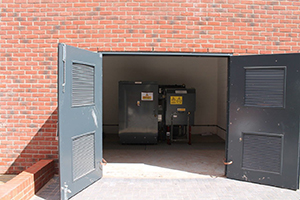
Worcestershire based Independent Connections Provider, Rock Power Connections, hasfinalised the installation of the electrical supply to ‘Kettleworks’, an ambitious residential development in Birmingham’s Jewellery Quarter. Converted from the Swan Kettle Factory, Kettleworks has successfully been converted into a 292-apartment block building, with finished apartments now available to rent or purchase. Fast-becoming one of the West Midland’s leading Independent Connections Providers, Rock Power Connections were appointed to complete the full design and installation service for the new development, which included the installation of two 1MVA substations in order to provide single phase electrical supply to each of the 292 units. A complex installation, which also included the installation of a three-phase electrical supply to an associated commercial unit, the works resulted in a temporary road closure within the busy city-centre location, prior to completion of the development in October 2018. Reece James, Operations Director of Rock Power Connections explained: “Rock Power Connections comprises of a team of multi-skilled engineers, who deliver the highest standards in electrical connections. We were delighted to be awarded Kettleworks, and although a challenging and complex job, the installation was completed on time and within budget, ensuring the development was finalised and introduced to the property market on schedule.” Kettleworks is one of the latest connection projects to have been completed by the growing independent connections provider; where the development sold out in a matter of weeks. Colin Green, the Project Manager for the Kettleworks development, confirmed: “Despite the challenging environment, we still led the project to success, with a very satisfied client.” Founded in 2012, Rock Power Connections is a family-run Independent Connections Provider, which specialises in the design and installation of new and upgraded electricity connections to business, industrial and commercial properties UK wide. For more details about Rock Power Connections, please click here
Are Solar Roof Tile Worth It?

While domestic solar panels have been around for such a long time now, they’ve failed to become a hugely mainstream application enter Solar roof tiles. This is usually due to the sheer cost of installing and maintaining solar panels, although the cost is lowering, they continue to be very expensive and slightly out of the average budget for most, not only in the UK but all over the world. The UK has a reputation for miserable weather and a cloudy forecast which means that the investments of your customers are less likely to bring a good return on investment. As most people know, it takes a long time to allow your solar panels to pay themselves off and while the technology is getting better and cheaper all the time allowing for a shorter payback period, it’s still longer than you’d like. With that in mind, solar roof tiles have been floating around in the world of energy for a while too. But is the technology good enough to recommend to customers? And what are solar roof tiles? What Are Solar Roof Tiles? Solar roof tiles in the simple sense are exactly the same as a normal solar panel, they convert the same sunlight into the same energy the same way (more or less). They are sometimes referred to as; solar tiles, solar shingles or solar slates. We’ve seen a few iterations of these roof tiles and in that time, they have a number of styles. Some look like an ordinary roof tile, that blend in and don’t look the same as your existing tiles, some don’t even look like a solar roof tile at all. The Advantages One of the biggest advantages of solar roof tiles is that they look just like a normal roof tile if you purchase that style. While you can buy solar roof tiles that look like tiny solar panels in a tile, companies do offer those that look like a low-profile slate tile or even a more traditional pan-and-cover tile. Regardless, being able to replace only a few of your roof tiles will also mean that you’re saving money if you plan to only cover a small area rather than your whole roof space again. You’ll also be able to skip the process of reinforcing your roof for the larger, heavier solar panels to sit on top of the roof tiles. Reinforcing your roof isn’t always necessary, most solar panels will sit within the acceptable weight limit of your roof but if you do have to reinforce the roof of your home it can be costly. Using Solar roof tiles means that there will be less strain on your roof and offer easier installation too. The Disadvantages The cost is one of the main reasons that most people are put off by the idea of getting regular solar panels. Now, the fact that companies have miniaturized them and given them shape and style which means they are less of an eyesore. This is likely to mean that they’ll have a greater cost attached to them due to the extra work that goes into making them. Using the Tesla solar roof tiles as an example we can see that with a $200 electric bill and a 3,000 sq. ft. roof, you’d be looking at 30% coverage (in solar tile) with a cost of $60,900. This would also mean that it would take around 15 years to breakeven and cover the cost of the solar panels. Installation can sometimes be a bit of a pain too, with different tiles comes different mounting and connections. Having to learn new techniques for fitting these solar roof tiles might take a while and could even result in a costly course for existing roofers. So, if the cost is going to be higher for you, it will also be higher for your clients/ customers too which might put them off. Top Brands While we have had these solar roof tiles around for a while, they haven’t really become a well-known product as of yet. There aren’t as many companies in the mainstream market as you’d like to think either. Obviously, Tesla is one of the biggest companies in the mix at the moment. Due to the fact that they are usually at the forefront of developments in all things electric we’d expect nothing less really. Tesla In November 2016, Elon Musk gathered a number of stakeholders and presented their version of the solar roof tile. It was quite revolutionary due to the fact that they’ve been designed to look just like a regular roof tile/shingle. Most other designed just simply look like a miniaturized solar panel which is still a bit of an eyesore. Tesla’s solar roof tiles come in four varieties; Tuscan Glass, Tuscan Glass, Textured Glass and Smooth Glass. This means that there will more than likely be a style that matches your existing roof already, so if your customers are hoping to only replace a specific number of roof tiles, they could do so. CertainTeed’s Apollo II Although CertainTeed is a new(ish) name, they are still the old company at heart. Originally in 1904, they were called General Roofing Manufacturing Company but now they offer a number of different services and products after becoming a subsidiary of Saint-Gobain. One of the main appealing factors that CertainTeed has to offer is that their Apollo Tile II solar shingles have been readily available for around 5-6 years now. Whereas Tesla’s solar roof tiles haven’t really been a widely available product like the Apollo Tile II’s have. You can purchase these solar shingles from an installer and get the price of the install and the shingles in one go. These tiles, however, have only one style that doesn’t exactly blend in. These Apollo Tile II’s have been designed to “match the profile of flat concrete tiles” and blend in to provide a clean look but they definitely do stand out. This is likely to make them less desirable than the tiles from
New Year, New Supplier

For product development to be successful and efficient, strategic outsourcing is often needed to reduce lead times, cut production costs and ensure improved product quality. This means selecting the right contract manufacturing partnership. When it comes to choosing your contract electronics manufacturer (CEM), there are five key factors to consider: 1. Contractor relationship You should always know who your point of contact is and feel comfortable communicating your needs, concerns and project requirements with them – and should be able to trust them to tell you if problems crop up or if there are any issues you need to address. 2. Capacity It is important to research a manufacturer’s suitable capacity for your production. If you have prototypes you could be better off choosing a CEM that can do a low-volume quick turnaround, for example. You also want to be sure your contractor has room to accommodate your business and grow production, so ask what their plan of action is if they earn enough business to operate at maximum capacity. 3. Cost Firstly, determine if price or delivery is of most importance to you; it may be that to achieve the cost required, you need to look at longer-term coverage and delivery options. Quick turn manufacturers may also cost more than those on standard lead-times. And if you have requested a quote from a company, don’t be shy in asking them to justify their price. 4. Location You should be able to communicate freely and effortlessly with your CEM on a potentially daily basis, so it’s important to consider whether to choose a UK or offshore contractor. A good CEM will be able to tell you why you should use their company as opposed to a foreign or domestic source, in relation to your specific project. Remember to clarify where they manufacturer the product as well. 5. Quality control Always ask your CEM if they have a dedicated quality manager and what quality control procedures they have in place. They should have the proper certifications for your specific product application if required and should be able to answer any questions you have about the production of your product; for example, what their corrective action process is or how they implement ‘new product integration’. Short-listing candidates Once you’ve narrowed down your potential manufacturers, it’s important to visit candidates in person to observe their operations and determine their capabilities. Enquire about their equipment purchases and look at their electric components stock as well; a financially stable company will be able to make significant hardware investments and can support advanced component purchase, which will create a smoother manufacturing process and reduce lead times. References from previous customers or past partnerships also offer valuable insights about the manufacturer’s capabilities, so be sure to consider these as well – especially references from companies which have outsourced similar processes to yours. There are many things to consider when choosing a CEM, but if you factor all of the above points into your decision-making, you will be able to make a more educated choice when it comes to beginning production on your project. Why work with EMS? At EMS, we offer class-leading PCB, cable and turnkey assembly solutions – as well as supply chain management, Automated Optical Inspection, and a range of Automated Test Solutions. All of our inspectors and operators are fully qualified to guarantee high-quality assembly processes at all stages of production, with all assemblies manufactured to the highest standards. We can offer fast turnaround times to meet your requirement and provide clear visibility at all stages of the EMS process to guarantee the required delivery date. Our purchasing power also provides significant cost down opportunities whilst maintaining on-time delivery and high-quality assemblies. To find out more about CEM or how we can help you, please visit https://www.emsolutions.uk.com/ or get in touch today to discuss your specific requirement in further detail with one of our sales representatives.
Gas Safe Europe calls for even tighter safety rules on smoke and gas alarms

New rules introduced in Scotland to improve household safety could be even tighter, according to an industry specialist. Under the regulations, every home in the country must have a smoke alarm fitted in the living room and in areas such as hallways and landings. There must also be carbon monoxide – CO alarms where there are fixed combustion appliances. Until now, such standards had only applied to private landlords and new builds but, as of February 2021, will apply to all homes in Scotland. John Stones, Managing Director of Gas Safe Europe, whose products ensure smoke and gas alarms are working properly, said: “While these new regulations are to be welcomed and are ahead of England and Wales, they still do not go far enough. While it is easy to realise if a smoke alarm is working when you burn the toast, a CO alarm is an entirely different matter because the sensor may be defective and therefore incapable of detecting an CO that might be present in a room. You can’t fully test a CO alarm without exposing it to a test gas.” John was the first person in the UK to sell carbon monoxide alarms to the public in volume by mail order, sat on the first British Standards Committee for CO alarms and acted as a Government adviser on alarm legislation. He moved his business away from alarms to develop a range of products aimed at ensuring that the sensors on CO alarms were working properly. Gas Safe Europe’s award-winning products, including Detectagas for CO alarms and Detectasmoke for smoke alarms, are now widely used by fire and security and health and safety and maintenance companies to test alarms to ensure they can detect traces of gas and smoke. John added: “Research has shown that around 15% of CO alarms are defective before they even get out of the box and a further 45% have been found to fail within three to four years – despite the 10 year warranties given by the manufacturers with their alarms. Just because the battery is working does not mean you are safe. Without a fully functioning CO sensor, the alarm is not going to warn a homeowner or tenant that they are at risk from deadly CO. There are currently more than 30 million CO alarms in the UK that could be providing consumers with a false sense of security and putting lives at risk.” Detectagas, the company’s first product, checks the battery and sensor in alarms in one test by injecting a specific and safe level of test gas into a specially designed transparent cover over the alarm. Detectasmoke is used by maintenance companies to test smoke alarms in multi-occupational housing and offices. Other products, including Detectaleak and Detectadusta, were subsequently developed due to customer demand. For more informatin about the CO alarms from Gas Safe Europe please visit www.gassafeeurope.com
PREDICTING THE FUTURE OF HOME HEATING
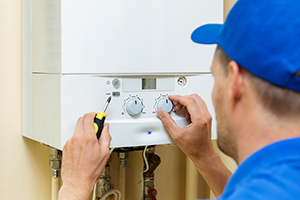
David Holmes, Founder of Boiler Guide talks about the problems with the current solutions available and identifies some of the new innovations set to shape how we heat our homes in the future. The Problem In very simple terms, the problem with using fossil fuels for heating can be broken down into 3 parts: Burning fossil fuels produces carbon emissions; this is causing global climate change which is now an international concern. Fossil fuels are running out. Fossil fuels are a costly fuel for homeowners to rely on. We need to completely overhaul the way we generate both electricity and heat for our homes by switching to renewable energy, i.e. energy which is naturally sourced from our planet and will naturally replenish in a human time scale. In 2008, the UK government passed the Climate Change Act in an effort to achieve an 80% reduction in carbon emissions by 2050 while simultaneously: Keeping energy bills as low as possible; Ensuring the UK has a secure and resilient energy system; Avoiding unreasonable upfront costs for homeowners. The writing is very much on the wall for traditional oil boilers as the government would like to see them phased out by 2025 (although OFTEC are working to find a low carbon liquid fuel to replace oil so homeowners avoid having to replace their whole heating system) and natural gas boilers are heading for the same fate by 2050. However, the big question remains unanswered: how will be heating our homes in 2050? The Potential Solutions Air Source and Ground Source Heat Pumps use on a small amount of electricity to draw natural heat from either the air or ground (even in temperatures as low as -20°C) to produce hot air or hot water for taps and central heating systems. Biomass Boilers are fueled by solid biological material such as wood logs, chips or pellets rather than gas or oil. Burning wood is a carbon neutral process which means it only produces as much carbon as the tree absorbed while it was growing. Solar Thermal Panels are installed on the roof and use heat from the sun to produce hot water for heating and taps. Solar PV Panels with electric heating could enable us to harvest energy from the sun to power electric heating systems. Hydrogen Boilers produce no emissions creating only water vapour and heat. 1kg of hydrogen has the same amount of energy as 2.8kg of gasoline. Switching from the gas network to a hydrogen one seems the logical solution, but that’s not without its challenges. Hydrogen is highly flammable and, while it emits zero emissions when burner, the process of creating it does produce carbon. A massive production system of steam methane reformers will need to be developed to capture the carbon so it doesn’t get released into the atmosphere. What’s the Future of Home Heating? New builds are our best opportunity to ensure renewable heating is integrated into our homes for future generations, but the decarbonisation of existing homes is more complex. The CCC (Committee on Climate Change) has recommended an interesting 2-stage approach to the issue: Stage 1: Alongside improvements to insulation, we install air or ground source heat pumps to generate the bulk of the home’s hot water while keeping gas boilers in situ as a backup. Stage 2: Gradually replace gas boilers with hydrogen boilers as the technology becomes more widely available and hydrogen stores are built up. Lord Deben, Chairman of the CCC, recently commented on the urgency of the issue if the UK is to meet the 80% carbon reduction target: “The time for the Government to move from theory to practice has arrived […] The future now rests on Government making a quick decision and fully committing to low-carbon heat within the next three years.” For more information about Boiler Guide, please clcik here. Boiler Guide is the smarter way for UK homeowners to find and compare new boiler quotes from local, Gas Safe and trustworthy heating engineers.
Over 22,500 Brits fall victim to garden and shed burglary every year

Scouring government data and looking into the nation’s opinions and experiences, new research from Tiger Sheds can reveal how many of us have had our sheds broken into, and what precautions (if any) we are taking to protect our garden buildings, tools and garden furniture from thieves. After analysing four years of data[1] (2014 – 2017) from police forces across the nation, Tiger Sheds can reveal that, on average, over 22,500[2] instances of garden and shed burglary are reported each year. The locations that reported the most shed and garden burglaries over the four year period were: Lancashire Constabulary – 11,226 Greater Manchester Police – 10,408 Humberside Police – 9,022 West Yorkshire Police – 8,604 Cleveland Police – 6,827 Of the police forces that were able to supply data for 2018 as well, Humberside had the most reports of theft (1,711), beating Greater Manchester (1,538)[3] and Essex (1,525). In 2017 however, Essex came out on top, ahead of Greater Manchester (2,351) and Lancashire (2,292). The good news is that the volume of garden and shed theft being reported to police is generally decreasing. 2018 saw a fall in the total number of burglaries in almost every location, especially Nottinghamshire, where instances of garden and shed burglary decreased by more than half (1,794 in reports in 2017 vs only 781 reports last year[4]). Perhaps unsurprisingly, bicycles top the lists of items taken from gardens and garden buildings, while electric appliances like power tools and lawnmowers also proved susceptible to thieves. Among the more surprising objects stolen were hairdressing equipment (Hertfordshire), ornaments (Humberside), a painting (Lancashire), and even rodents (Lincolnshire) and reptiles (Merseyside)! Speaking about her terrifying experience with shed theft, Sam (24) from York says, “The night before, there had been a fire in our house. Thankfully, no one was hurt. The fire had started from the shed and spread to the house, but the firefighters were able to get there before it spread too far. “The next day, we went out for a meal, mostly just to get away from the smell of smoke! But when we came back, all the scrap metal from what was left of our bikes, and anything else that had been in the shed, was all gone. It’s terrifying to think that people were willing to put me and my family’s lives in danger, just to get their hands on whatever they could find in a garden shed.” Tiger Sheds also polled the nation[5] to find out what precautions, if any, we take to secure the items within our garden buildings from theft. Reassuringly, four in five (83%) people take steps to keep their sheds and summer houses secured but this takes form in different ways. Padlocks are the most common security precaution, used by two-thirds (68%), while almost half make use of outdoor sensory lighting (46%) to deter would-be criminals. Stronger measures like alarms (16%) and anti-tamper screws (13%) are less common and, surprisingly, only 15% think to remove valuables from their sheds/outbuildings overnight. Commenting on the findings, Jack Sutcliffe from Tiger Sheds said: “A lot of us have the ‘out of sight, out of mind’ mentality for our sheds and garden buildings, and don’t always spare much thought for keeping them safe but, as the research shows, this lack of security can prove irresistible for burglars. This needn’t be the case as there are plenty of ways to secure our gardens and outdoor buildings that don’t require too much effort. A strong and thick padlock is of course a great starting point, and anti-tamper screws or a security bar can go a long way. If your shed is only used for storage, blocking out the windows is also helpful as thieves are more likely to break in if they can see your valuables, while using opaque stick-on security sheets also has the benefit of making windows more difficult to break and preventing glass shattering.” Experts at Tiger Sheds offer their top tips on how you can protect your garden buildings from theft please click here
Fine Reminder For Van drivers

Experts from leasing giant LeaseVan conducted research and outlined the costly fines van and truck drivers could face if prosecuted on Britain’s roads. The research highlights the cost of fines for road users who commit minor and serious motoring offences. While the study looked specifically at van and truck drivers it highlights issues that all motorists face. Penalties can range from a £2,500 maximum fine for speeding to a £20 on-the-spot ticket for leaving a vehicle’s engine running. Tim Alcock from LeaseVan said: “Recent changes have been made to increase fines for offences such as speeding, which could result in hefty costs for many of Britain’s most frequent road-users if they aren’t careful. As van drivers are regularly out on the road travelling between jobs, we wanted to make them aware of the possible fines they could incur while behind the wheel. Fines always seem to come at the wrong time of the year, when money is tight and the last thing you need to do is fork out tens if not hundreds of pounds on avoidable fines. This is why we have outlined the substantial costs some fines can carry so that drivers think twice next time they are over the speed limit or gamble on an amber light.” Here are the costs of some of the most common motoring offences: 1. Speeding New laws put forward last year have increased fines for serious speeding offences. A £100 fine and three penalty points on the driver’s licence was the maximum penalty speeders faced. Now, fines have been split into three bands, A, B and C, where the most serious Band C offences carry a maximum fine of £2,500. Most Band C cases will now take the equivalent of 150% of a prosecuted driver’s weekly income – which is no small fee. For example, someone earning a salary of £25,000 a year will have to hand over a minimum of £720, plus six penalty points for the pleasure. 2. Mobile Phone Drivers could get a £200 fine and six penalty points on a licence, if caught using a hand-held mobile phone while driving. The maximum fine for this offence is £1000 if the driver is taken to court. It is also important to be aware that drivers can still be prosecuted even if you are using a mobile phone in your van while stopped at traffic lights or queuing in traffic. 3. Failing to stop at traffic lights Being an amber gambler could save two minutes on a commute to work but could also end up being a £100 fine with three penalty points. If a motorist has failed to stop at a red light they may be offered to participate on a driver awareness course as an alternative. However, the course will still cost around £90 so don’t take the chance. 4. Careless driving Driving in an inconsiderate fashion could get drivers an on-the-spot fine of £100 and three points on their licence. In West Yorkshire, a man was fined almost £1000 and given five penalty points for hogging the middle lane on the motorway. 5. Smoking inside a vehicle An inconspicuous offence but one that could cost van drivers an on-the-spot fine of £50. If an apprentice or anyone else under the age of 18 is in the van while a driver or passenger smokes, it is illegal. 6. Switching off the engine A lesser known law but one that van drivers should be aware of is when the driver is sitting in their van – either eating lunch or waiting for another worker – they must turn their engine off. If not the driver could face an on-the-spot fine of £20. For more information from LeaseVan please click here
Trace Software International sells elecworks™, the electrical CAD software, to Dassault Systèmes Solidworks.
Trace Software International announces the signing of a definitive agreement for the sale of elecworks™, the software for the design of electrical and automation projects, to Dassault Systèmes Solidworks. Trace Software International is the global expert in the design of professional engineering software solutions, with a unique specialization in the electrical industry since 1987 electrical design, electrical calculation, and photovoltaics. The company decides to sell the elecworks™ electrical and automation design software product line to Dassault Systèmes Solidworks. The maneuver is due to the strategic commitment of the company to refocus its core expertise on the development of software for the electrical calculation and photovoltaic industries to further strengthen its position in the global market. ELECWORKS™: THE ELECTRICAL CAD FOR THE WORLD elecworks™, translated into 12 languages, was introduced into the market of electrical schematics design and automation projects in 2009 at the SOLIDWORKS World in Orlando. In 2012, Dassault Systèmes Solidworks, the world leader in 3D solutions, signed an agreement with Trace Software International to complete its schematic design offer. elecworks™, developed by Trace Software and Certified SolidWorks Gold Product, had been then marketed as SolidWorks Electrical. Seven years later, Dassault Systèmes Solidworks acquires the software. “The investments necessary to continue to improve the solution and meet all the needs of an electric CAD solution had become too important for our SMEs: we have logically agreed to sell this unit of the business to Dassault Systèmes,” said Etienne Mullie, R&D Manager and President of Trace Software. In addition, Dassault Systèmes acquires the intellectual property of software and its development team. elecworks™ and SOLIDWORKS electrical™ are exactly the same product and have followed the same pace of development and updating. For elecworks™ users, there will be no change in the work habits and customers will benefit from the expertise of the vast network of SOLIDWORKS distributors in the world. Now marketed as SOLIDWORKS Electrical, the software will benefit from the worldwide leadership of Dassault Systèmes Solidworks. In addition to 3D design, this acquisition allows Dassault Systemes Solidworks to meet all the needs of the mechatronic design chain: electricity and automation, mechanics and applied electronics. After more than 30 years of experience, Trace Software International leaves the electrical design industry world. The company will intensify the investments in the construction industry, where the disruptive force of BIM is unlocking business opportunities, in the photovoltaic and energy markets. By choosing to focus its research and development efforts on the latest advances in the construction and energy markets, Trace Software once again confirms that innovation is firmly rooted in its DNA. For more infomration about Trace Softwareplease visit www.identeco.co.uk
Access Control: Getting It Right

Access control is one of, if not, the most important element of building security. It is vital in so many ways, not only from an anti-intruder or theft perspective but also in terms of health and safety. In almost every building – whether that’s an office block, a school, a hospital or a shopping centre – many people enter, exit and move around the premises. It is crucial therefore that access into and around buildings, where people are granted or denied entry to certain zones at different times, is managed effectively. Every building is different and presents its own challenges. It is therefore important to find a flexible door entry system which can be adapted to that particular building to meet a client’s requirements. During the planning stages, it’s important to understand the function of the building and the type of use the system will have. You have to ask yourself (and know the answer to) a range of questions. For example, which entrances and exits require access control? Should the access control be in the form of coded keypads, proximity fob readers or a type of biometric reader? Should the door entry include video as well as audio communication? Do these entrances need to service tenants or employees? Do they also need to service visitors or customers? The exit of buildings in particular requires additional thought. For instance, in the event of an emergency how would someone negotiate the access control to exit the building? Solutions to this would normally include break glass units and links to the fire alarm to automatically release the doors. An appropriate access control system can also generate reports to show who is in the building at the time of the alarm so you’re aware of peoples’ location in the event of an emergency. Legislation also plays a key role in access control. Building regulations must be followed when putting an appropriate system in place and thought must go into how access control will, for example, affect users with disabilities following the Equality Act 2010 guidelines. Secured By Design, the official UK Police flagship initiative supporting the principles of designing out crime, may also be specified which means only those products that have passed the stringent tests of Secured By Design should be used. When installing an access control system, there are also physical challenges to be aware of. Most access control and door entry systems are connected together throughout the building using low voltage cabling. Quite often, the cabling is installed as part of the first fix and sometimes the access control and door entry equipment has not been fully specified at this stage. It’s a good idea therefore to know what the right cable to install is because, in the long run, this will save you time and money. A common cable type installed at the first fix would be Cat. This cable is suitable for many door entry and access control systems but care must be taken to fully understand the distances between devices to ensure the cable resistance falls within the manufacturer’s guidelines. An issue that has become increasingly apparent is the need to know the difference between solid copper and copper coated cables. In most instances, solid copper must be used on door entry and access control systems due to the need for these cables to carry current and have a low voltage drop. Copper coated cables such as copper coated steel (CCS) or copper coated aluminium (CCA) although may look attractive when comparing the price between that and solid copper will have a much higher resistance and therefore will suffer from much greater voltage drop than a solid copper cable. Not knowing this difference can prove costly in the event the system is unable to function correctly due to a voltage drop. When choosing a system, it is also important to know that it can be modified in the future if a building is expanded or undergoes a change of use. Product support, which is what we offer at Videx, is crucial when dealing with a customised solution. Knowing that there is support available either online, via phone or on site, can offer reassurance should you run into a problem that you can’t resolve on your own. Videx offers bespoke systems designed with individual requirements including the facility to create customer firmware and software should a particular feature not be available as standard. We can, for example, create bespoke wiring diagrams, panel layouts and offer training to installers. New access control systems are constantly being developed so it’s important to keep abreast of the latest offerings. Ultimately, the best advice I can give in choosing the right system is that you need to first understand the client’s needs and any specifications they’ve requested. An out-of-box solution isn’t always available therefore it’s always best to talk to the manufacturer who will be able to listen to your requirements. Using their knowledge of access control systems, they can then help you find the one that best suits your requirements and, critically, meets the client’s needs. For more informtion about Access Control please click here
