



GE Announces Multi-Million Pound Investment to Create Diverse New Generation of UK Engineers

‘Next Engineers’ programme to attract 3,500+ young people from all walks of life General Electric (GE) has announced a five-year, $3.5 million (£2.5m) investment in the UK as part of its global Next Engineers programme, to increase the diversity of young people entering engineering. The UK programme will be based in Staffordshire, where GE operates three sites that design, develop, and service products used throughout the power and renewable energy industries. Next Engineers aims to inspire more than 3,500 local students aged 13-18, providing first-hand experiences of engineering, and awarding financial support to pursue further education in engineering. Kevin O’Neill, President & CEO, GE UK, said: “Our growing global economy will require more engineers to solve society’s most pressing challenges – from clean energy to quality healthcare and more sustainable flight. Next Engineers will provide a platform for Staffordshire’s young people from different backgrounds to bring their unique perspectives to engineering and help address these important issues, enthusing and introducing them to the hands-on learning experiences they will need to pursue engineering careers.” Staffordshire is one of four global locations so far announced by GE, joining Johannesburg, South Africa, along with Cincinnati and Greenville in the United States. Theo Clarke MP, Stafford, said: “Having an initiative like Next Engineers coming to our community is fantastic for young people locally. We were already fortunate to have a top global employer like GE in the region, but local students now have the opportunity to explore viable engineering careers that they had previously thought were unattainable. It really is an amazing opportunity for our young people.” Next Engineers is a signature programme of the GE Foundation, an independent charitable organisation funded by GE. The GE Foundation is partnering with MyKindaFuture, the UK’s leading HR tech company specialising in engaging and onboarding underrepresented talent, to implement Next Engineers in the UK. Next Engineers will offer one-hour sessions and hands-on activities for the youngest (Year 9) students. Weeklong Engineering Camps will be run during the school holidays for those in Year 10. There will also be an Engineering Academy providing three-years of out of school coaching for Year 11-13 students. Those accepted onto engineering apprenticeships or engineering degrees will also receive a funding contribution from the GE Foundation. Students in Staffordshire wanting to apply for the Engineering Academy, or teachers wanting to know more about how the Next Engineers programme can benefit them, their students and their schools, should visit www.nextengineers.org to learn more. The Staffordshire investment is part of a $100 million, long-term, international Next Engineers programme which GE Foundation unveiled earlier this year, designed to reach more than 85,000 students across 25 locations globally over the next decade. With 125 years of experience in the U.K. and Ireland, GE employs approximately 9,000 employees across the region.
Support through testicular cancer with the Electrical Industries Charity
November is men’s month, and the Electrical Industries Charity is highlighting how important it is to be in the know about testicular cancer. Testicular cancer is mostly diagnosed in young men and men who have undescended testes at birth or have a family history of testicular cancer are most at risk. Being diagnosed with cancer can be incredibly scary. James, a power station worker, was diagnosed with testicular cancer aged 27. James contacted the charity after being diagnosed with stage 1 testicular cancer. James had managed to catch his cancer early and was advised his cancer had not spread – a positive sign but the first treatment option was to remove his right testicle. Understandably, James was distraught at the prospect of surgery and was struggling to cope with the impact surgery may have. James believed post operation he would be less of a man and unable to have children. James and his fiancée had always wanted a family and he feared he would be left infertile and their relationship irrevocably damaged. James had not spoken to his doctor, his partner or family about his concerns and instead had let them bottle up inside of him – he was riddled with anxiety and stress and was increasingly tearful. The Electrical Industries Charity encouraged James to speak to his doctor to understand the likelihood of infertility and impotence. James had done his own research but found himself overwhelmed whenever he read about testicular cancer. The Charity welfare team understood James’ fear but told him knowledge is power. Although there may be a chance of infertility or impotence the doctor is the best person to advise and help him understand further treatment options. James was also anxious to speak to his fiancée, he feared rejection should he be infertile and felt his place as the protector and solid support structure would be destroyed. The charity team also funded counselling sessions to give James a safe non-judgemental outlet while he was struggling to speak to his partner and his family. Through counselling James worked through his grief and anxiety and after two sessions he opened up to his fiancée. James’ fiancée reassured him they were a team, and they will remain a team to find the best support possible. James’ partner then attended the doctor’s appointment with him to establish the likelihood of infertility, impotence and return of cancer. James’ doctor advised that by removing James’ right testicle his chances at making a full recovery are greatly improved and his sex life and fertility should not be affected. About 1 in 50 will get new testicular cancer in their remaining testicle but in such circumstances, there is the opportunity to only remove part of the testicle. With James’ fears eased and his fiancée’s support James underwent surgery and a single dose of chemotherapy to eradicate the cancer. Post operation James attended two more charity funded counselling sessions and felt equipped to face life post cancer with the support of his fiancée. Since James’ doctor has confirmed the cancer was successfully eradicated and he is now having bi-yearly follow up appointments. James and his fiancée married in the Summer and are now thinking about adding to their family. The Charity continue to check in on James and should he need further support the Charity would be more than happy to help. It is so important to check your testicles and know how they should feel. If you spot anything unusual, please seek medical advice. The Electrical Industries Charity are here to help you through any stage of your diagnosis. Please contact the welfare team on support@electricalcharity.org or call 0800 652 1618.
Over half of UK electricians experience mental health problems due to work
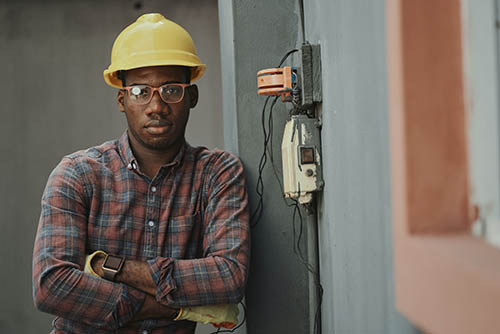
Over half (51%) of UK electricians experience mental health problems due to work-related issues, a new study1 has found. The research, commissioned by IronmongeryDirect, the UK’s largest supplier of specialist ironmongery, found that 93% experience some form of mental health problem, such as stress, anxiety or depression, at least once a month. Tensions with suppliers worries cause the most stress, with 48% of electricians blaming such disagreements for giving them anxiety. Tensions with suppliers are the most common cause of stress IronmongeryDirect is working with mental health charity, Mind, to raise awareness of the issue Other issues, such as tensions with customers (46%) and high workload (36%), are also major causes of concern. For UK tradespeople in general, these are the 10 issues which cause the most stress: Finances (38%) Tensions with customers (31%) Tensions with suppliers (29%) High workload (26%) Tensions with business partners (26%) Job security (21%) Doing the best job for customers (12%) Making mistakes (11%) Abuse from customers (6%) Lack of work (5%) Female tradespeople (57%) are significantly more likely to experience work-related mental health problems than their male counterparts (41%). Additionally, the main causes of stress and anxiety differ between the genders, with women more likely to feel stressed due to finances (39%) and tensions with business partners (29%), whilst men are more affected by high workloads (39%) and tensions with suppliers (37%). When it comes to age, middle-aged tradespeople experience the most work-related related mental health issues. Nearly three in five (57%) tradies aged between 45-54 report stress and anxiety due to work. Bricklayers are the most likely tradespeople to experience mental health problems, with a shocking 73% admitting to dealing with issues such as stress and anxiety. In contrast, surveyors (18%) are the trade least likely to have poor mental health. The trades which are most and least likely to have mental health issues are: Bricklayer (73% say they have them) Joiner (62%) Builder (57%) Electrician (51%) Plumber (50%) Carpenter (49%) Landscaper (42%) Painter/decorator (36%) Plasterer (22%) Surveyor (18%) When dealing with mental health problems, nearly half (48%) of tradespeople said they choose to talk to friends and families about their issues. Less than a third (32%) choose to seek counselling, while more than a quarter (28%) take medication. The research also found that a similar number (29%) do not feel comfortable talking to people close to them about their mental health. Furthermore, more than a third (34%) do not know how to access support services. As part of the attempt to raise awareness of mental health amongst tradespeople, IronmongeryDirect is partnering with Mind. Emma Mamo, Head of Workspace Wellbeing at Mind, said: “We know that issues like stress, anxiety and depression are common in all workplaces, but that there are some sectors where poor mental health is even more prevalent, including construction. “Because men generally find it more difficult to talk about how they’re feeling, in male-dominated industries such as construction, employees are often less willing and able to open up about their mental health and ask for support. This can be problematic because mental health problems often become worse if left untreated, and the consequences can be fatal. “We’re pleased to be working with IronmongeryDirect to launch our ‘Mental Health in the Trades’ report highlighting the scale of poor mental health across the sector, and urging employers within construction to create cultures where employees can speak openly and honestly about their mental health.” Marco Verdonkschot, Managing Director at IronmongeryDirect, said: “It’s shocking and saddening to see that mental health problems are so widespread in the industry. “We feel that it’s vital for the stigma of mental health to be removed from the industry, and whilst we understand it can be difficult to open up, we encourage all tradespeople to talk about their problems. Whether this is with friends and family, your employer, or professional counsellors, speaking about your problems can often be the first step to addressing them.” For the 2021 report of mental health in the trades industry, visit: https://www.ironmongerydirect.co.uk/research/mental-health-in-the-trades/
The New Snickers Workwear Body-Mapping Pile Jacket

Taking working comfort and layering systems to a whole new level. The Snickers Workwear climate control system includes functional base layers, insulating mid layers and weather-protective outer layers. These technically advanced working clothes allow craftsmen and craftswomen to adjust to changing weather conditions on site so they’re always working effectively – with maximum comfort and protection. Take the new FlexiWork Inverted Pile jacket for example. This warm and versatile pile jacket can be used both as a jacket in cooler conditions or a mid layer when the weather is more inclement. Made of laminated polyester fabric with a furry pile lining for optimal warmth and comfort, its ergonomics also feature shaped shoulders for a great fit and optimum freedom of movement. Hi-tech, advanced fabric technology like this is integral to all Snickers Workwear’s Base-, Mid- and Top-Layer garments for both men and women that always combine well with the Snickers Workwear hallmarks of best-in-class durability, comfort, ergonomics and fit. Snickers Workwear
Five resources all trainee and apprentice electricians should know about
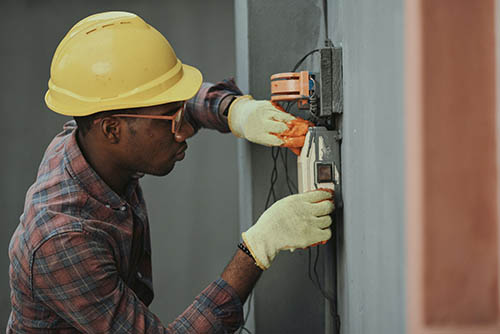
Many budding electricians have begun taking their first steps into the industry in the form of trainee schemes and apprenticeships. While the electrical industry is desperate to attract new talent, the competition for jobs is fierce meaning new sparkys will be more eager than ever to nail their first few weeks in the role. To help up and coming electricians hit the ground running as they start, electrical wholesaler ERF has pulled together a handy guide identifying some of the most insightful and informative resources within the industry. Electrodoc app Gone are the days where trainees and apprentices have to open up a book to find key information. Electrodoc (formerly called ElectroDroid) is available on iOS and android and is known by many as a portable electrician’s bible. From its Ohm’s law calculator to its voltage divider, the app breaks down the complexities of electrics into easy to consume information – perfect for young adults who are typically glued to their phones. People learn in a variety of different ways and this app caters for all capabilities allowing electricians to quickly search for an answer on the go or learn something new about a core topic. Electrodoc is one of the best ‘toolkits’ any aspiring electrician could carry around..and you never know, you might end up teaching the boss a thing or two along the way. Talk Electrician’s forum Talk Electrician’s forum (TEF) is an online community with more than 30,000 fellow electricians – in fact, you’ll do well to find anywhere else with so many sparkys in one place. For this reason, it’s a brilliant group for trainees and apprentices to be a part of, with endless advice, information and help at your fingertips. Even if you just fancy a chat with another electrician, the TEF is known for the friendliness of its members. There are a number of different forums with many threads to read through and get involved in. For example, the ‘Question & Answer Board’ is the perfect place to ask all of your burning electrical questions and receive replies from people who know exactly what they’re talking about. There are as many as 129,309 posts on that forum alone, so never be too shy to ask a question! Other forums include industry news and updates; one for job openings and apprenticeships; a forum with learning resources to help those who are training… and even a jokes thread. There’s a diverse range of content available on the forum and it also provides people with the ability to interact with other electricians in the industry. Electricians on YouTube As well as apps and forums, electricians are taking the world of YouTube by storm. The accessible and practical nature of video clips make YouTube an ideal platform for learning, especially for the more technical elements of the trade. Electrician-come-Youtuber, John Ward is one for aspiring apprentices to watch. JW’s videos are full of practical snippets of information, with a slightly more formal tone to his channel. Uploading a new video every week, John puts electrical theories to the test and shows off different experiments and demonstrations. GSH Electrical is a perfect example of a YouTube channel providing a useful (and professional) overview into the electrical world. With a large following of 69.6K subscribers online, the channel showcases the best practice in testing and installation. Helpful for any beginner, there are practical demonstrations to support learning as well as useful advice from a fully-qualified college teacher. The short, snappy, videos are engaging and cover a range of electrical qualifications to suit different abilities. N Bundy Electrical is an upbeat and fun YouTube account and is also well worth a follow. It’s run by Nick Bundy who is a self-employed electrician with a big personality. His videos are entertaining to watch as well as being informative with their ‘how-to” style. Structured as more of a vlogging ‘series’, this channel accurately documents a day-in-the-life as a sparky – warts and all. #sparky TikTok Even electricians can’t stay away from the TikTok craze at the moment. TikTok isn’t just for funny dance routines and memes, it has soon become one of the best platforms for learning too. The popular social media tool has been designed so that anyone can easily create and upload videos, and electricians are getting involved too; sharing their expertise, jumping on trends and networking. #sparky is a hashtag worth following, along with 390 million other people who also watch these short videos. For apprentices and trainees, this hashtag on TikTok will make learning a bit more fun and engaging, with a range of more educational clips to funny moments from electricians all over the world. We can’t talk about #sparky TikTok without giving a special mention to Kimmy The Sparks who is an inspiring TikToker that uploads snappy, upbeat videos throughout her work day. She not only offers knowledgeable content on electrical tips, but also helps to bust any myths about female electricians. The Electrical Show Podcast Podcasts are another clever way to learn more about a topic without having to concentrate too hard on the content. They are becoming more and more popular, being easy enough to follow whilst completing other tasks, and so they never feel too time consuming. One podcast all newcomers to the industry show be aware of is The Electrical Show. Every Friday lunchtime, Thomas Nagy discusses the latest and most relevant topics in the world of electricals, often being joined by special guests within the industry and commenting on the latest news. Each episode is around 20 minutes long and Thomas invites his audience to send in their opinions; sparking up some interesting debates. The podcast also gives out handy advice for junior electricians, such as the problem with short courses and top tips for packing your toolkit… every episode is well worth the listen!
Why diversity is key to industrial success

By Mark Yeeles, Vice President Industrial Automation UK & Ireland, Schneider Electric Diversity is now undeniably critical for corporate success, especially in this era of digital transformation. Every industrial organisation must be committed to building an inclusive community; a hub where people of various ethnicities, genders, educational levels, and ages can share ideas and foster innovation and fresh thinking. Across process industries, teams are frequently staffed exclusively with like-minded, culturally similar individuals who mean well and are incredibly knowledgeable of present processes, but who lack the vision to drive meaningful change across process industries. Out-of-the-box thinking is tough to achieve in such a setting. Industrial businesses will need to rethink how they incorporate their people into the digital transformation process, as well as how they establish new partner ecosystems, if diversity-driven modernisation efforts are to succeed.. Less successful vendors work alone at one end of the spectrum, providing technology, integrations, and services straight to the end customer. On the other hand, providers who are experiencing substantial company growth use a diverse partner network to propel innovation forward. If the industrial marketplace is to reach its full potential, break free from its existing restrictions, and adopt automation successfully, corporate stakeholders must design a total change to a more collaborative partner ecosystem model. To ensure that innovation thrives, we must learn from the limits of prior decades and make variety of partners a fundamental pillar within this new ecosystem. Some prerequisites are necessary for this collaborative approach to take hold in industry. First and foremost, technology providers must provide open and interoperable goods, software, and solutions. Second, a network of trusted partners must be established that is capable of effectively and collaboratively adopting contemporary digital technologies on a local level. Diversity to drive innovation The marketplace needs technology vendors to invest heavily in R&D and to create complete portfolios of industrial products, services, software, and solutions that embrace the notion of universal automation (the world of hardware decoupled from software and “plug and produce” automation software components). While the vendors have to create the technology innovations that help to drive the industry, delivering the solutions to the market will involve the collaboration of several organizations that make up the “ecosystem of partners.” Below is a partial list: · Distributors who offer product availability, proximity, and support. More customers, from machine manufacturers to end-users will expect distributors to add value in the form of knowledge and technical support. · System and machine integrators who put forward their knowledge of the end user and machine manufacturers needs and processes. This includes knowledge of specific applications, as well as a unique understanding of a given customer and the existing technology install base. · Panel builders who bring the efficiency, knowledge, quality, and compliance needed in the electrical world. Traditionally, choosing the right partner has been a daunting and time-consuming exercise for end users. Today, however, technology providers approve and classify their distributors, integrators, and other partners according to product knowledge, service record, application knowledge, and industrial segment knowledge. For example, BPX, is staffed with a team of dedicated sales and technical experts who serve OEMs and end users in the Consumer Packaged Goods and Water / Wastewater segments. An extended and diverse ecosystem of such partners allows both machine manufacturers and end users to be much more confident that they are accessing the right partner for the job. At the same time, they embrace greater project diversity and therefore, increase the chances of introducing new thinking and innovation into the digital transformation project. Diversity in action Over the last year, due to marketplace evolution and the global pandemic, we have seen an increasing need for industrial automation remote operations. This business need provides a great illustration of how the right ecosystem of partners can help make remote monitoring and remote asset management a viable option for most industrial applications. Distributors have stepped up with the technical knowledge needed to choose the right solution and to provide pre-packaged simple solutions for the “mass market.” This has included solutions from remote operations of a single machine or a set of machines, to remote operations of a plant, to remote operations of several plants. System integrators have played their role by providing complete solutions, adapted to the unique needs of specific customers. Panel builders have contributed by designing solutions that offer built-in connectivity for easy remote management of electrical infrastructure. The smart investment The options for assisting clients in achieving their business transformation goals are vast when using a global and varied workforce and a diverse and highly skilled network of partners. Companies may gain access to fresh expertise from across the sector by extending and opening up their partner network, allowing them to accelerate innovation and digital transformation.
Ellis champions the importance of green credentials
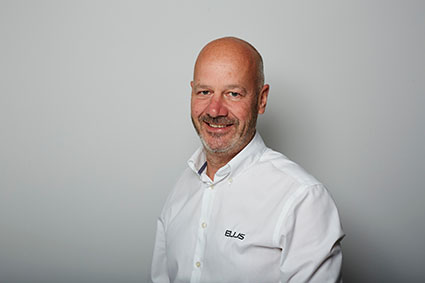
One of the world’s leading cable cleat manufacturers, Ellis Patents says that a business’s green credentials will soon play a major role in its success. The North Yorkshire business has found it is being called upon with increasing regularity to provide a “green CV” when seeking to secure specifications for its electrical safety products, which are in demand around the world. Richard Shaw, Ellis Patents’ chairman said: “The focus on green initiatives and the need for a business to boost its green credentials has been steadily growing over the last decade, but it’s a fair assessment to say that for many it was question of doing the bare minimum in order to tick the necessary boxes.” “That though is all about to change. Evidence of climate change is unarguable and we now all have a moral obligation to play our part in helping to save the planet. As a result, those businesses with the most impressive green CVs will rightly be given a greater opportunity to thrive.” Ellis Patents has a green culture that pervades all aspects of the business and can be dated back to Monday 5th February 2001. What’s more, it came about as a matter of necessity. On his first day at the company, new managing director, Richard Shaw toured the site and was introduced to the factory substation, which he was told was at capacity and if you want to grow the business, you’ll have to invest in a new one. “Financially that wasn’t an option and from that point onwards, energy consumption was a factor in every investment decision,” explained Richard. “We began planning for the long term and accepted from the very start that energy efficiency justified a longer payback.” “Things didn’t change overnight; it was a slow process which advanced as finances allowed, however because it happened slowly the culture became truly embedded in the DNA of Ellis Patents.” One of the first things to change was the purchasing of machines for the factory. New machines were chosen ahead of second-hand as they were more energy efficient, faster and more reliable – and because of their quality the increased investment in their purchase was quickly forgotten. Since 2001, Ellis Patents’ Rillington headquarters has expanded considerably – with five new buildings, exceeding 30,000 sq. ft. constructed. Every new building has been built to the highest standard of insulation, using rapid-close doors, and making the best use of natural light. The company was also an early adopter of LED lighting in the factory and the offices. Meanwhile, Ellis Patents has invested heavily in all of its legacy buildings. All asbestos cement cladding was removed in 2015 and replaced with modern insulated materials. In its injection moulding facility, natural ventilation was introduced, which dramatically improved working conditions and all but eliminated forced ventilation. This not only saved power but reduced noise, improving environmental conditions for the neighbouring homes in the village. Completed as lockdown began in March 2020, the latest new building was the most ambitious yet. It includes 408 solar panels, capable of providing up to half the company’s electricity needs. They also provide electricity for eight charging points for a fleet of electric and hybrid vehicles. The calculated payback for this investment was eight years, but Ellis Patents bought the best and the installation is already exceeding expected output. Ellis Patents is also a partner of Circular Malton & Norton – a York and North Yorkshire LEP initiative aimed at developing local, collaborative circular economy approaches that will see the two towns become the first circular market towns in the region. “This green investment and culture not only helps to save the planet, it keeps energy costs low, which protects margins and keeps us competitive,” concluded Richard. “And what about the substation? After twenty years of growth, incredibly it is one investment we haven’t had to make.” For additional information on Ellis Patents visit www.ellispatents.co.uk or call +44(0)1944 758395
How employers can safeguard men’s mental health in the construction industry

After years of going under the radar, the men’s mental health crisis is finally getting discussed in mainstream media. While dealing with mental health conditions is hard for everyone, many men feel under pressure to keep their feelings to themselves, which ultimately leads to them struggling for longer. The crisis is so severe that suicide is currently the leading cause of death for men under 35 in the UK (safeline). But male mental health statistics are even worse for men in the construction industry. Recent research has found that 58% of tradespeople have experienced poor mental health, and 91% experienced work-related stress at least once a month (Ironmongery Direct). These shocking statistics show just how vital it is to safeguard men in this industry. For men’s health week, industrial tool supplier Zoro will share actionable tips for employers to protect the wellbeing of their staff. Provide mental health training Mental health is a complex topic that often feels uncomfortable to talk about. That’s why so many men sweep it under the rug and ignore it until they reach breaking point. The truth is that many of us don’t truly understand mental health issues. This makes it even harder for people to talk about their own experiences, as they may not know how to express their feelings. To help workers understand their own mental health, and spot when someone else may be struggling, provide staff with mental health awareness training. Not only will this help break the stigma surrounding the topic, but it will help the team look out for each other. This is important for all workers, but especially for team leaders who are there to support their colleagues. Mental health training courses are beneficial for the whole team, and they take up very little time. Many courses take just half a day, and some can even be done virtually. Give staff enough time off Whilst some businesses were forced to shut completely over lockdown, many construction companies reported being busier than ever in 2020. Although this sounds like good news for the industry, it’s anything but if it’s damaging employee’s mental health. Recent research has found that construction workers are more at risk of suffering from burnout than people in any other sector (pbctoday). It is vital that all companies obey the laws on maximum working hours. Employers cannot make employees work more than 48 hours per week, and workers must have either one full day off a week, or two per fortnight (acas). Although these conditions seem more than reasonable, unfortunately many construction companies have been found to break these laws (Construction News). Employees should also be encouraged to use their paid time off. One study found that on average, UK workers use just 62% of their holidays (Glassdoor). Managers should take the lead by using all of their annual leave, to show workers that it’s okay to do the same. Employers should also remind staff they have a right to take sick days for both mental and physical health. And if it seems like work is getting on top of employees, managers should aim to lower their targets to ensure that staff don’t spend hours doing overtime to catch up. Provide wellbeing services Having a supportive workplace is vital for employee mental health. Giving team leaders mental health training and encouraging workers to communicate with their manager about mental health issues is a great way to protect the mental wellbeing of the staff. But some people find discussing mental health issues with people that they know far too uncomfortable. So, help these employees get things off their chest by providing a workplace wellbeing service. There are many companies out there dedicated to workplace wellbeing that can be accessed for a reasonable price. They offer a range of services, including counselling, life coaching, and wellbeing resources such as podcasts and articles. As well as implementing wellbeing programmes, managers should also encourage workers to protect their mental health outside of the workplace by visiting their GP. Be flexible when it comes to GP appointments, as this will help employees prioritise their mental health. Create a positive safety culture Protecting mental health in construction isn’t just about giving workers a shoulder to cry on — managers should aim to reduce employee stress by protecting their physical health at work. Construction is one of the most dangerous industries in the UK, with workers being four times more likely to die in a workplace accident than any other industry (Health and Safety Executive). With this statistic, it is no wonder that male construction workers mental health is at an all-time low. To keep employees safe in the workplace, getting the right equipment is vital. Buy high-quality tools from a trusted supplier, and make sure that workers are fully trained before using the equipment. Ensure that employees are wearing the appropriate protective equipment at all times, and display clear signs around the site to keep them aware of their surroundings. “The recent statistics on the mental health of men in the construction industry are devastating. Managers should respond to these stats speedily and effectively, by prioritising safeguarding in the workplace. Providing mental health training is a great way to start. This will help employees spot when something doesn’t seem quite right with their colleagues, and it will help them understand their own mental health too. “Looking after employee safety is absolutely crucial for protecting mental wellbeing, especially in the construction industry. Workers should always be provided with reliable tools from a trusted manufacturer. And make sure to supply them with high-quality protective clothing and equipment, such as safety goggles, ear defenders, and work boots.” Kelly Friel, Digital Product Manager at Zoro
Keep Your Hands Comfortable and Protected -Snickers

Work Gloves for Healthy Hands that deliver Precision and Protection Snickers Workwear now has an extensive collection of Work Glove styles in a wide range of sizes, developed for different workplaces and tasks – designed for dexterity, durability, comfort and precision. With advanced features and material combinations, there’s something to suit a wide variety of trades, and workplaces, weather conditions and hazardous environments. Added to which the advanced ergonomic designs ensure strong, secure grips while sophisticated patterns, vents and ribs combined with durable materials deliver cut-protection, ventilation, waterproofing and insulation. What’s more, for specialist use where health and safety standards are key requirements, the Gloves are EN certified for performance and protection in hazardous and foul weather environments. Getting more information on the Snickers Workwear Gloves Range is easy. You can call the Helpline on 01484 854788; check out https://www.snickersworkwear.co.uk/products/109 and download a digital catalogue or email sales@hultaforsgroup.co.uk
