



The top paying trades jobs for young people revealed

New survey reveals young people’s perceptions towards the trades industry Young People’s Survey reveals trades jobs overlooked by young people due to a major salary misunderstanding The findings have been released after the launch of Get In, a campaign looking to encourage more young people into trades careers The prospects and earning potential of trades jobs such as electricians, carpenters and plumbers is misunderstood by Generation Z, a new survey commissioned by Checkatrade has revealed. The Gen Z Trade Pulse report has been released today and highlights how young people feel about the trades and construction industry, as well as their views as to why they may or may not choose it as a career. Launched as part of Get In, a campaign looking to encourage more young people into trades careers, the report’s findings are important as the sector is facing a huge skills gap. The survey of people aged between 14-25 revealed that the most important factors to them in considering a career in the trades are choosing their own hours, having more money, running their own business and being able to earn additional income outside of normal work. But it also uncovered a major misunderstanding in their perception of trade salaries, with the majority predicting that traditional trades earnings were in line with the national average. In fact, of the 11 traditional trade professions, 7 boast an average income surpassing it. More interestingly, all the 11 traditional trade professions offer the potential for six figure salaries when self-employed or by setting up a business. For example, when asked if a plumber earns above, below or in line with the national average of £27,800, 17% of respondents answered ‘below’, with 36% answering in line. In reality, this is the highest earning trade job with an average take home salary of £33,900 per year – substantially more than the national average. This also applies to trades such as electricians, plasterers, scaffolders, bricklayers and carpenters. The Get In campaign is being led by Melanie Waters, Managing Director of Get In and Trade-Up, and spearheaded by Richard Harpin, Founder of HomeServe and Chair of Checkatrade. Melanie Waters said: “Our survey has made clear that many young people are unaware of the income tradespeople take home, and with good pay being one of the main draws to trade careers, it’s important we change young people’s perceptions urgently. “These perceptions are contributing to a skills gap which is already having a detrimental effect on the industry, so it must be corrected to encourage young people to consider a career in one of these exciting, secure jobs.” Earlier this year, Checkatrade’s Trade Skills Index Report revealed the vast extent of the construction and trades skills gap, with the sector needing almost a million new workers over the coming decade just to meet demand. Melanie Waters said: “Another huge draw for young people considering trades jobs is the role they will play in the UK’s green agenda – particularly the mammoth task of retrofitting the existing housing stock. “Additionally, with an ageing workforce including 35% being over 50 and no pipeline of young talent in place, the UK will struggle to meet construction demand and environmental targets once this demographic reaches retirement age. Melanie Waters added: “The UK must ramp up the number of completed construction apprentices to avoid the skills gap worsening – an increase of around 34 per cent above the current levels. “This is an urgent problem, but there is a solution. We must do everything we can now to encourage younger generations to consider a career in the trades. “It’s important we recognise that young people are going to be crucial to the future of the industry in helping bridge that divide. “Expect our new campaign, called Get In, to make waves in terms of tackling this challenge, and we’re looking forward to working with the industry, government, and regional decision makers to take action and inspire a new generation of tradespeople.”
Checkatrade quotation and invoicing tool making tradespeoples lives easier

Checkatrade, the leading UK online trade directory, connecting quality tradespeople and homeowners, has launched a new innovative quotation and invoicing tool. Free to Checkatrade members and available on the Checkatrade mobile and web-based trade app. The easy-to-use tool is designed to streamline the customer quoting and invoicing process saving tradespeople on average 2 hours and 24 minutes each week and can be used for all jobs, regardless of whether they come via Checkatrade or not. Set up, particularly for service, repairs and maintenance jobs, the quoting and invoicing tool will also make it easier for members and homeowners to agree on job details and payment terms. Jambu Palaniappan, CEO of Checkatrade said: “Our members often tell us quoting is a pain point in the day-to-day running of their business and homeowners want quick, detailed breakdowns for jobs to avoid surprises after the work is done. Our new easy-to-use quoting and invoicing tool helps members quickly price jobs, create detailed quotes and send invoices in a few clicks, saving them time and giving homeowners peace of mind.” To create a quote, the tradesperson can use the guided workflow on the app to input details about the job, such as the scope of work, time, material costs, and any miscellaneous items including certificates or assessments required. Through the tool, trades can also apply discounts and automatically calculate tax. Quotes are personalised using your business profile including a logo and can be tailored for homeowners with notes and messaging. Once the homeowner approves the quote and the job is done, it can easily be converted into an invoice with payment due dates. All quotes and invoices are stored in the Checkatrade app and can be downloaded to help trades with their accounting and bookkeeping. The quoting and invoicing tool joins other Checkatrade membership benefits including a wide range of discounts across training and accreditations, materials, work tools, vehicles and fuel, workwear, and insurance. To find out how to use the tool, click on this tutorial here. To learn more about how to become a Checkatrade member, and the different membership options available please visit: https://join.checkatrade.com/sign-up.
Leading the charge: industry pioneers unite to announce major shake-up of the UK’s electric vehicle charging market

A major partnership that will significantly accelerate the rollout of the UK’s public and private Electric Vehicle (EV) infrastructure has been announced today. Tech-first utility company and the UK’s largest independent energy supplier, Pozitive Energy, and leading Swiss energy management solutions provider, Landis+Gyr, have joined forces to deliver the country’s most substantial gear shift in EV charging. The partnership will see a unique delivery model rolled out across the country, with businesses able to access the complete end-to-end EV charging infrastructure, including full installation and management of Landis+Gyr’s premium EV charging solutions, fixed national pricing, ‘tap and go’ payment processes, and the ability to earn revenues or offset energy bills from chargepoint use. Not only will this make EV charging as accessible and easy as possible for both businesses deploying it and their customers who use it, but it will also help expedite the expansion of the UK’s EV infrastructure, which continues to lag behind other European countries. Nathan Daniels, Head of Electric Vehicles at Pozitive Energy, commented: “Our partnership with Landis+Gyr represents the largest advancement in the UK’s EV market in decades, and will see us together, driving forward Britain’s ability to reach its Net Zero and low carbon targets. “For too long, the country’s EV charging infrastructure has presented a barrier to consumer adoption. Working with Landis+Gyr to develop this unique approach to EV charging will see UK businesses gain access to revenue generating charge points, while also offering drivers access to a much more robust and easier to use charging network thus benefitting us all in an expanding EV infrastructure. “As a tech-first energy supplier to businesses, we are in a unique position to deliver a future-proof EV charging solution, that ensures all regulatory and legislative changes are accounted for while providing unrivalled automation and ease of use. Once deployment has been completed, the partnership will see Pozitive Energy provide the largest network of EV chargers in the UK. Rob Harper, Director of Sales, UK & Ireland, Landis+Gyr, concluded: “This partnership provides business customers with a unique no-regrets decision to boost the growth of a much-needed EV charging infrastructure. The installation of Landis+Gyr chargers and all supporting contactless payment terminals means that drivers can pay without the need for a mobile application. The deployment of the EV chargers is being managed by both company’s advanced IT capabilities. We are looking forward to watching the growth of the network as we look to manage energy better.” Over the next five years, Pozitive Energy expects to install 30,000 of Landis+Gyr’s electric vehicle charging units across the UK, which will make it one of the UK’s largest Charge Point Operators (CPOs).
Selecting the correct Type of RCD – 18th Edition

When it comes to electrical safety, one of the most important components is the Residual Current Device (RCD). This device is designed to protect against electric shocks and fires by quickly shutting off the power when it detects a fault. However, with the 18th edition of the wiring regulations, there are now different types of RCDs available. In this article, we will discuss the different types of RCDs and how to select the correct one for your needs. What is an RCD? Before we dive into the different types of RCDs, it’s important to understand what an RCD is and how it works. An RCD is a safety device that monitors the flow of electricity through a circuit. If it detects an imbalance in the current, it will quickly shut off the power to prevent electric shocks or fires. This is especially important in areas where water is present, such as bathrooms and kitchens. Type AC RCD The Type AC RCD is the most common type of RCD and is designed to protect against AC currents. This type of RCD is suitable for most domestic and commercial applications, as it can detect imbalances in both live and neutral currents. However, it may not be suitable for some electronic equipment, as it can cause nuisance tripping. Type A RCD The Type A RCD is a more advanced version of the Type AC RCD. It is designed to protect against both AC and pulsating DC currents, making it suitable for electronic equipment. This type of RCD is recommended for areas where electronic equipment is present, such as offices and workshops. Type F RCD The Type F RCD is the most advanced type of RCD and is designed to protect against all types of currents, including DC, AC, and pulsating DC. It is recommended for areas where electronic equipment is present, such as hospitals and laboratories. However, it is also the most expensive type of RCD. Selecting the Correct Type of RCD When selecting the correct type of RCD, it’s important to consider the type of equipment and the environment it will be used in. For most domestic and commercial applications, a Type AC RCD will suffice. However, if electronic equipment is present, a Type A or Type F RCD may be necessary. It’s also important to consider the sensitivity of the RCD. The higher the sensitivity, the quicker it will trip in the event of a fault. For areas where water is present, such as bathrooms and kitchens, a higher sensitivity RCD is recommended. Conclusion In conclusion, selecting the correct type of RCD is crucial for ensuring electrical safety. The Type AC RCD is suitable for most domestic and commercial applications, while the Type A and Type F RCDs are recommended for areas with electronic equipment. It’s important to consider the sensitivity of the RCD and the environment it will be used in when making your selection.
BGEN Fuels Journey to Net Zero with Electric Vehicle Scheme
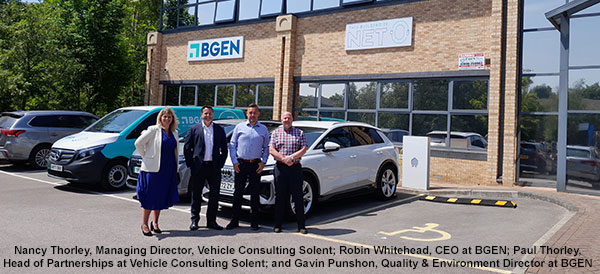
BGEN, one of UK’s largest engineering firms driving the energy transition, has announced its partnership with Vehicle Consulting, in collaboration with franchisee Vehicle Consulting Solent, to substantially lessen its carbon emissions. It’s a move that aligns seamlessly with its ambitious sustainability roadmap – to “reduce CO2 emissions by 25% by 2025 and achieve net zero carbon by 2035.” BGEN has always been committed to delivering comprehensive engineering solutions. Recognising the importance of aligning their operations with its ambitious ESG plan, BGEN identified a strategic need to curtail its scope 3 emissions. The electric car salary sacrifice scheme is a clear reflection of this commitment. Not only does it offer employees an environmentally friendly transportation option, but it also serves as a testament to BGEN’s dedication to sustainability and enhancing employee welfare by providing them with tangible financial benefits and the pride of contributing to a greener future. Paul Thorley, of Vehicle Consulting Solent, said: “Securing the trust and partnership from a company with the stature of BGEN is a testament to our capability, dedication and professionalism. We’re not just facilitating access to electric vehicles; we’re helping businesses drive tangible change in their environmental footprint whilst enhancing employee satisfaction.” The scheme emphasises vehicles from eminent brands such as Mercedes and Tesla. The collaboration is set for an initial duration of three years, but both parties are enthusiastic about a prolonged and evolving relationship. Keybenefits ofthepartnershipinclude: Tailored Solutions: By understanding BGEN’s specific vehicular requirements, Vehicle Consulting tailored a solution to prioritise a mix of vehicle types that fit within BGEN’s value parameters, ensuring that employees have access to a wide range of sustainable transportation options. Streamlined FleetManagement:Through an integrated fleet management platform, BGEN can seamlessly track mileage allowances, ensure driver’s license validity, and maintain vehicles efficiently – thereby reducing overheads and ensuring compliance. EmployeePerks:Positioned as a cornerstone of this partnership, employees stand to gain substantial financial savings through payroll tax reductions and reduced fuel costs. More importantly, this scheme empowers them to be at the forefront of environmental change, driving vehicles that align with BGEN’s commitment to sustainability. Vehicle Consulting is Solent pledges unwavering fleet management support to BGEN, with regular reviews to guarantee consistent high service levels. “Our adaptable solutions ensure that as the landscape of technology and products evolve, so will our offering to BGEN,” Thorley added. This agreement not only fortifies Vehicle Consulting’s presence in the Isle of Wight but also signifies the potential for further collaborations in adjacent regions. For more information about salary sacrifice, please visit www.vehicleconsulting.com. For further information on BGEN, please visit https://b-gen.co.uk
Major conference on electrical safety tackles full lifecycle of products

The clear focus of the 2023 Electrical Product Safety Conference was the importance of the whole product lifecycle – from design and pre-market, to on the market and end of life – the full circular economy. Held at Church House in Westminster, London on 16 November, the day-long event brought together experts and leaders from across government and industry to investigate critical issues, offer solutions, and share insights on the growing need for electrical product innovation to support the UK’s transition to a net zero future. Attended by more than 240 delegates from government departments, manufacturers, retailers, importers, lawyers, fire and rescue services, and test houses, the conference explored key themes and trends affecting consumer safety and the electrical product industry. Sarah Smith, OBE, Deputy Chief Executive of the Office for Product Safety and Standards (OPSS) at the Department for Business and Trade, was among the panelists for the session on regulation and she noted: “This is the moment to set the framework for the next 30 years.” This year’s theme “To market and beyond” saw experts examine each stage of a product’s life with sessions focused on safety in design, pre-market, on the market, and end of life decisions. This led to discussions on issues such as how to ensure safety from the outset of product design, the legal responsibilities and due diligence needed to take a product to market, supply chain issues, service and repair, the lack of global regulation, and the pros and cons of product removal versus extended life. Attendees gained insights from renowned experts and industry leaders at the forefront of product safety and learned about the latest legislation and regulations affecting the safety of electrical products. They also saw innovations in electrical safety and how they can help consumers and engaged in discussions and networking with a wide variety of key stakeholders. The conference featured the announcement and presentation of Electrical Safety First’s prestigious and coveted Safety Innovation Award, sponsored by ProductIP, which recognises and rewards innovators, designers, and creators delivering forward-thinking approaches to product design and safety. The 2023 winner is HobSensus, designed by Prefect Controls Limited specifically for student accommodation, communal kitchens and people living in sheltered or assisted-living property. It makes kitchens safer by ensuring that hobs are not left switched on if the person preparing food is distracted, and by alerting residents if there is potential for a pan fire. In addition to the award winner, the Highly Commended entry for 2023 went to South Tyneside Homes for its Post Occupancy Electrical Safety Check initiative, which educates tenants on electrical safety risks. This improves awareness of how tenants can keep themselves and their families safe in their homes over the short and long-term. And it offers protection by reducing issues of disrepair, electrical faults, electrical fires, and overspending of budgets. Sponsors and supporters of the 2023 Electrical Product Safety Conference were Connected Innovations, Eurofins, ICPHSO, OPSS and ProductIP.
Major safety award won by innovative product that switches off overheating kitchen hobs

Electrical Safety First’s prestigious Safety Innovation Award for 2023 has been won by HobSensus, which makes kitchens safer by ensuring hobs are not left switched on and alerts residents to potential fires. The award, sponsored by ProductIP, rewards organisations which have developed an innovative product or project that has made – or will make – a significant improvement to consumer safety. It recognises innovators, designers and creators delivering forward-thinking approaches to product design and safety. HobSensus is a safety device that turns hobs off when left unattended. It is particularly useful for student accommodation (2022/23 saw a five-year high for electrical fires in student halls of residence), communal kitchens, and people living in sheltered or assisted-living property. Designed by Prefect Controls Limited, the device uses an integrated timer and a 64-zone sensor which reads temperatures across the hob, identifying hot spots with pinpoint accuracy. This enables the unit to react before flashpoints are reached. Users simply press the red button to activate the unit and start the timer. When the time elapses, the hob is switched off. But if the temperature on the hob approaches 280°C, the unit flashes and emits an audible alarm. If no action is taken the power is shut off. When connected to an alarm system, HobSensus can cut power to all hobs in a block if there is a building evacuation to reduce the risk of secondary ignition from kitchens which have been cleared. Glen Golding, Managing Director of Prefect Controls Limited, says: “Whatever the situation, the hob cannot accidentally be switched on. It will be turned off, if forgotten about. Or it will turn off because dangerous temperatures are being approached. “Kitchens are safer with HobSensus on the wall. Recognition by way of this award from such an authority as Electrical Safety First is testament to the logic, design, and functionality found in HobSensus.” The judging panel’s comments on HobSensus were that it is “tested and approved to BS EN 50615 Category B, affordable and able to be retrofitted to existing installations, can be integrated to other fire systems and controlled centrally via IRUS, can identify patterns of risk in suites of accommodation, is targeted to higher risk installations such as student accommodation, and is robust and tamperproof.” As the award winner, Prefect Controls Limited had the chance to present HobSensus at the 2023 Electrical Product Safety Conference on 16 November to an audience of more than 200 manufacturers, retailers, importers, product testing houses, safety advocates, and lawyers, as well as government and enforcement bodies. In addition to the award winner, the Highly Commended entry for 2023 went to South Tyneside Homes for its Post Occupancy Electrical Safety Check initiative, which educates tenants on electrical safety risks. This improves awareness of how tenants can keep themselves and their families safe in their homes over the short and long-term. And it offers protection by reducing issues of disrepair, electrical faults, electrical fires, and overspending of budgets. If an organisation wants to enter the Safety Innovation Award for 2024, its idea does not need to be on the market already, it can also be in the concept, design or prototype stage. Find out more about the award and how to enter for 2024.
SELECT launches SQA-accredited electric vehicle charge point training course as demand for safe and competent installations continues to grow
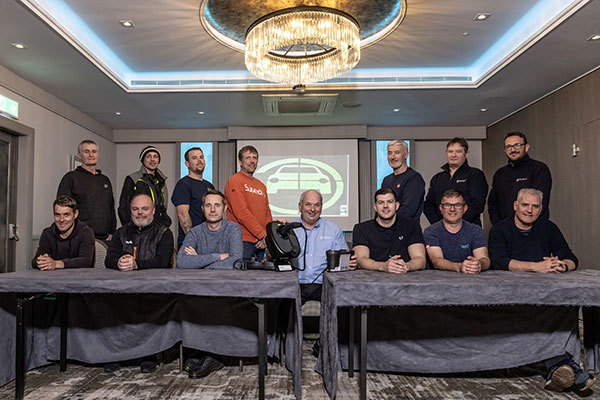
Modules set to be rolled out across Scotland after successful first session for electricians in Ayrshire. Scotland’s largest construction trade association, SELECT, has responded to the rising demand for electric vehicle charge points by launching its first installation training course. Scotland’s largest construction trade association, SELECT, has responded to the rising demand for electric vehicle (EV) charge points by launching its first installation training course. Developed after extensive consultation with its 1,260 member firms, the one-day module can be delivered in person or online and aims to ensure that EV technology is installed safely and competently by a qualified electrician. Rated at Level 7 on the Scottish Credit and Qualifications Framework (SCQF) by the Scottish Qualifications Authority (SQA) the first SQA Customised Award in Electric Vehicle Charging Equipment Installations was delivered at the Gailes Hotel in Irvine on 7 November. Delegates were given an introduction to the technology and an overview of its electrical requirements before getting hands-on with the units and being talked through the installation process. Jenny Cryans, SELECT Training Manager, said: “There’s no doubt that the demand for EV charge points is rising all the time and that installations are becoming part of the modern electrician’s world. “It’s also essential that such work is carried out safely and efficiently, which is why SELECT spent the first half of 2023 speaking to members and responding to feedback as we created and shaped this comprehensive new training resource.” The course was created by Training Development Adviser Stuart McKelvie and Consultant Technical Adviser Billy McRobert, who both delivered the first session in Ayrshire, with Technical Adviser Robert McGoogan sitting in to experience things as a delegate. Bob Cairney, Director of Technical Services at SELECT, said:“The future is electric and with this course SELECT is reinforcing its position at the forefront of the green revolution as the electrification of society continues. “With EVs and charge points becoming more popular, the module helps SELECT members add another string to their electrical bow and provide more business opportunities as they learn how to work with EV technology safely and efficiently.” Following the successful launch, more courses will be delivered across Scotland in the coming months, with the in-person sessions completely mobile thanks to the donation of two top-of-the range charge points by SELECT Associate Member Luceco Group. The course is designed for qualified electricians with a current BS 7671 qualification and who are a minimum of 18 years old. The cost for SELECT members is £230 + VAT (£276), which includes the assessments and SQA certificate on successful completion. SELECT expanded its work classifications and approvals to include EV installation work earlier this year. Three new sub-categories were introduced specifically for those with existing classification and approval in low and extra-low voltage electrical installations who also install EV charging equipment.
Recolight launch “game-changing” Reuse Hub to increase reuse and reduce waste
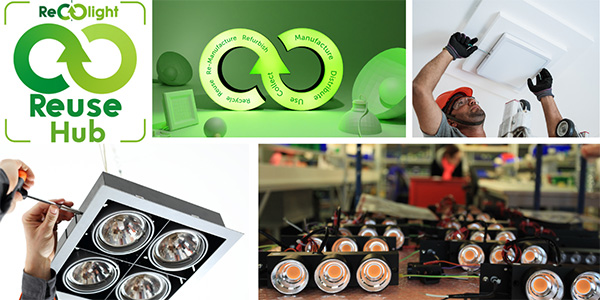
The Recolight Reuse Hub is a new digital marketplace for lighting. An online platform to facilitate the donation of new and used lighting products and equipment. Currently, there are considerable volumes of new and used lighting products that are needlessly recycled when they could be reused. Some are in very good condition before removal and therefore a lot of the value and embedded carbon is lost if they are recycled. Many manufacturers hold unsold stock; surplus new lighting taking up valuable warehouse space Recolight want to make it as easy as possible for companies to hand over surplus and used products to third-parties, who can put them to good use. Helping you to free up valuable warehouse space and allowing surplus stock to have another life. The Recolight Reuse Hub allows donors of such products to link up with potential recipients; companies that could use the donated products. A Reuse Hub for Lighting The Reuse Hub is the first of its kind for the donation, reuse, and remanufacture of lighting products. Donors can offer both unused, unsold lighting stock and used but reusable lighting equipment that may be suitable for remanufacturing, including those from CAT A and fit outs. Any type of organisation can sign up, including manufacturers, remanufacturers, specifiers, end users, charities, and more. Even those lighting producers that are not yet members of the Recolight compliance scheme may participate. Companies can register as donors, recipients, or both. The Reuse Hub is currently free of charge for both donors and recipients. It includes a template agreement between both parties, that clearly limits the liability of donors, to de-risk the process. Francesca Cameron, Membership Coordinator at Recolight, and project manager of the new platform said: “Recolight are thrilled to be launching this new platform. This is intended to become a vital way of avoiding waste, reducing unnecessary recycling, stimulating reuse, and responding to the climate emergency.” Recolight CEO Nigel Harvey added: “At Recolight, we recycle, but as we move towards a Circular Economy model, recycling is not always the best solution. We hope that the Reuse Hub will be a real gamechanger. It shows our commitment to encourage and facilitate reuse in the lighting industry. We hope it will help avoid unnecessary recycling and ensure retention of more embedded carbon.” Visit the Recolight website www.recolight.co.uk or follow Recolight on Twitter @Recolight
