



1.4mil Business at Risk of Power Shortages
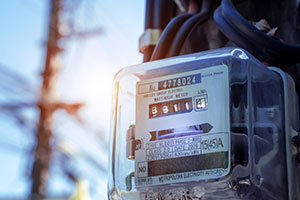
A new survey reveals how power disruptions might bring at least 1 in 4 business to a halt causing significant loses in revenue, data and staff hours. • 75% of senior professionals said that all or most of their workforce use computers and rely on information stored on local servers • 72% of businesses said operations and revenue would be disrupted by electricity related issues • 62% of employees have experienced a failure at work • 39% either don’t have a power continuity plan in place, or didn’t know Data collected by UPS Systems, a leading supplier of business power continuity solutions, reveals that three-quarters of businesses rely on powered devices and information stored on local servers in order to function. 71% said business operations would be disrupted by a power cut with 49% stating that a power failure would impact every single person within the business. Despite the obvious impact issues might cause, over a third of the senior professionals surveyed said they do not have a power continuity plan in place (23%) – or they don’t know what it is if they do (16%). As a result, it is no surprise that 62% of businesses in the UK have lost power at some stage with staff complaining that they can last from either a few hours (40%), most of the day (10%) or even longer (12%). Meanwhile, there is increasing concern among politicians that these figures could get even worse. In January 2018, a House of Lords committee warned that Brexit could leave the UK more vulnerable to energy supply shortages1. Power issues do not just cause disruption to staff and operations. Even the smallest drop in power can damage servers resulting in data losses and system failures – with long-lasting effects. Therefore, it is vital that businesses consider protecting themselves and seek advice. John Peers, CEO of UPS Systems says: “This new data doesn’t surprise us. We’ve seen a great uptake of our products in recent years as more and more businesses realise the importance of protecting their systems and data. Though sadly, we still get the odd client who has suffered a great financial loss to their business as a result of not having protective systems in place – which is why it’s so important to us that we share this insight.” It is said that there are 5.7 million businesses in the UK3. If the UK were to experience Brexit-related power shortages and 1 in 4 business do not have any kind of power continuity plan, it would impact over 1.4 million business potentially costing the UK several billions in lost revenues. Whilst this number may seem steep, it is believed that Google’s 2013 outage cost them £100,000 per minute2, and Amazon domain outages may have cost $1,104 (£859) per second4. Meanwhile, Datacenter Dynamics magazine published figures that downtime incidents might cost £412,800. To view the full survey and results, click here
Contractors undertake latest training in variety of ways
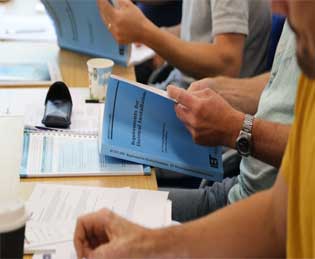
Have you taken your 18th yet? Contractors undertake the latest training in a variety of ways. More than 1 000 conscientious contractors have now successfully taken and passed their 18th Edition training with NICEIC and ELECSA. The 18th Edition officially launched in July this year with electrical contractors given a six-month transition period to get up to speed with the changes. While some contractors have decided to delay any training – others have been keen to get cracking straight away. Neil Vincent, Training Manager at NICEIC and ELECSA said: “It has been interesting to see people’s attitude towards training since the 18th was launched. “Some have been extra keen and jumped straight in and others are still biding their time and looking to do it over the next 3-6 months. “Everyone is different and with the six-month window we know everyone will have a different approach. We have had more than 3000 bookings in total so far with many preferring to take the course over the next few months so it is going to be busy in the run-up to January.” NICEIC and ELECSA have been at the forefront of delivering training packages to suit contractors’ needs.
Top tips for cable management

All too often, cable management is specified towards the end of a project, with little thought given to the impact it can have on a building environment as a whole. However, if carefully considered and installed properly, it could make all the difference and garner repeat business. Emma Segelov, head of marketing at MK Electric, gives her top tips for specifying cable management products. Cable management products are often essential in environments such as hospitals, schools, and offices. However, each project will require a different approach in the specification of these products. For example, in light of the constantly evolving modern workplace, operating with more technology than ever, it can be difficult to select the correct cable management products. All parameters should be taken into consideration, such as bend radii, as they will paint a much clearer picture of what solutions will be required – products such as multi-compartment wall trunking or mini-trunking and conduits for local distribution will likely prove the ideal solution. With businesses aiming to make as much profit as possible, this can likely lead to the specification of the cheapest products, bringing down the cost of a job. However, this can negatively affect all parties, as cheaper solutions will often be of a lower quality – making them harder to install and less hard-wearing. Therefore, an electrician needs to look beyond the initial purchase price, and recommend solutions that will stand the test of time and provide long-term. MK Electric’s Prestige 3D, for example, contains pre-drilled trunking bases, eliminating the need to measure and drill fixing holes, and open top/bottom back boxes which allow unhindered, tool-free cable entry through divider knockouts. Trunking hinge lids, meanwhile, enable cables to be supported by the trunking cover. The product also supports cat 5e, 6, 6a and 7 compliance, it includes numerous well-engineered design features including flat angle and tee curved divider walls that allow data cables to lay in with no loss of capacity and a patented Data Sweep which maintains cable capacity while eliminating the need for bulky corner covers. Innovative and easy to install, the Prestige 3D family comes with features such as pre-drilled trunking bases and open top/bottom back boxes, whilst offering hinged lids to enable cable support during installation. For more information please visit www.mkelectric.co.uk
As Dark Nights Draw In, Health & Safety Has To Be Priority
Visible changes highlight the brand’s ongoing commitment to industry safety ProGARM, the UK’s leading specialist in Arc Flash protection understands the need for clothing that is comfortable, warm and importantly visible during the winter months, the hardest time for workers in the electrical industry across the UK. While those across the UK at risk of an Arc Flash are already encouraged to wear full protective PPE throughout the year, workers crucially need to be very visible once dark mornings and afternoons become a daily occurrence. Yet highly visible Arc Flash resistant clothing is often disregarded in winter due to lack of flexibility and warmth. In addition to this, many workers don’t realise the many risks involved when working in a dimly lit location and the working rights they have when it comes to demands for more lighting. In fact, employers are required by law to look closely at lighting in the workplace to see what may cause harm or injury and should be aware of the following important points when it comes to lighting: Lighting must allow people to notice hazards Lighting must allow people to see properly and discriminate between colours Lighting must not result in excessive differences in illuminance within an area or between adjacent areas Lighting must be suitable to meet the special needs of individuals Working in areas that are not properly lit can be extremely dangerous since one incorrect move and an Arc Flash incident can be triggered. Pair this with incorrect clothing and a lack of knowledge surrounding which are the safest garments to wear and the result could be a life altering experience since an Arc Flash event is so serious that it could disable the casualty, effecting their ability to work for a long while afterwards and leave them with fatal injuries. Understanding the need for practicality as well as safety, ProGARM clothing includes ThermSAFE stretch tape, an innovative development that ensures the flexibility of ProGARM garments. This is particularly notable when it comes to knitted clothes which are often the biggest culprits when it comes to the lack of flexibility and stretch. Allowing a full range of movement for the wearer, ProGARM’s ThermSAFE Stretch Tape has also been certified to the new EN ISO 20471 High Visibility standard, ensuring fully compliant visible, yet comfortable workwear. Mark Lant, Technical Sales Manager at ProGARM, said: “We frequently see PPE clothing being worn incorrectly or not at all because a lot of it is bulky, rigid and impractical – it’s all too easy to wear something comfortable and warm in the winter months, but all this seriously compromises the safety of an individual against an Arc Flash. “While many industry workers forget how important it is to be highly visible on-site, in reality this is one of the key elements to ensure when working in an environment where Arc Flash is a risk. “As part of our ongoing commitment to safety and industry innovation, we’ve identified this area to pose a risk to workers especially at this time of year and have created a comprehensive product range that keeps the wearer visible without obstructing day to day tasks.” For more information on how you can protect your workforce and receive a free Arc PPE consultation, please visit http://www.progarm.com/.
Birmingham electrical business shortlisted for two prestigious business awards
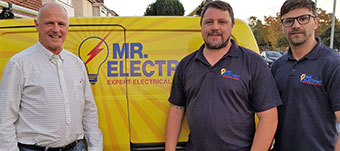
Mr. Electric, a leading UK electrical franchise, has been shortlisted for two categories in the prestigious annual Birmingham Post Business Awards 2018 – the ‘Business Entrepreneur of the Year’ and ‘Family Business of the Year’. Run by the Birmingham Post, these widely-respected awards recogniseachievement and highlight the innovative people and companies in Birmingham who are boosting the economy while making a positive contribution to the local community. Jeff Longley, Mr. Electric Birmingham North franchise owner, joins two others on the shortlist for both of the awards. The Family Business of the Year is for established family businesses that can demonstrate sustained success across a broad range of measures, whilstensuringall family values are followed and how both current and future family generations will be involved in the growth of the business. The Business Entrepreneur of the Year award looks at the individual achievements of the entrepreneur, the results returned by their business and their unique approach to the marketplace they operate in. Covering Birmingham, Jeff acquired the Mr. Electric franchise in 2008 and turned it around to become a well-respected, high-performing local business. Working with his two sons, Luke and Dominic, Jeff has since grown the business significantly from £80,000 to £1.2 million in the 10 years and is on target to achieve its biggest turnover yet of £2 million next year with the growth of electric vehicle (EV) charging installations. With a fleet of 16 electricians and four support staff, the Longley’s have strong family values which they bring this into their day-to-day work, from increasing their operational efficiency to providing customer service that truly stands out. Spearheading EV charging across Birmingham, Mr. Electric was one of the first companies to qualify as an authorised installer from the Government’s Office for Low Emission Vehicles (OLEV). The business is now winning both domestic and commercial work from the majority of the UK’s major EV charger manufacturers and is developing relationships with local councils and large companies that own and manage car parks nationally to install EV charging points. On being shortlisted for these awards, Jeff said, “It is fantastic to be a finalist for two highly regarded awards and to be considered amongstmany of the county’s best companies. As a family, we are honouredto have been selected and it provides us with even more motivation to grow the business further. We are really looking forward to the awards final on the 1st November and it will be a great celebration for everyone.” “The nominations for our prestigious black-tie awards ceremony are always of such a high standard – and this year we were delighted with the huge range of companies and organisations who put forward entries,” added the Birmingham Post. The Birmingham Post Business Awards category winners will be named at an exclusive black-tie ceremony held on 1st November 2018 at the ICC in Birmingham. Mr. Electric is the UK’s leading electrical franchise brand with expertise in electrical installation, maintenance and repair. With over 17 years of experience and over 200 locations aroundsthe world, the business provides electrical services to both domestic and commercial customers, both emergency and non-urgent work, with no call-out fee and transparent pricing. For further information about Mr. Electric and the services it can offer, visit www.mr-electric.co.uk/ or call 0800 7311 606. Mr. Electric Drain Doctor is one of the trade service brands for Neighborly, formerly Dwyer Group. For more information about Neighborly’s service brands visit www.NeighborlyBrands.com.
New energy efficient Domus Ventilation MVHR wall units launched
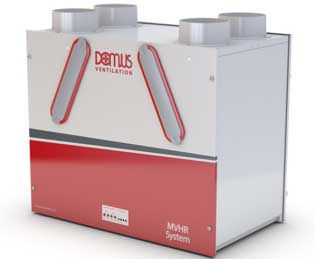
Domus Ventilation, part of the Polypipe group, has launched the HRXE range of high-performance Mechanical Ventilation with Heat Recovery (MVHR) units for small to medium size residential properties. MVHR systems combine supply and extract ventilation in one system. They efficiently recover the heat typically lost in waste, stale air and use it to temper the fresh air drawn into the building via a heat exchanger. The filtered, pre-warmed air is distributed to areas of the home such as living rooms and bedrooms, effectively meeting part of the heating load in energy efficient dwellings. Building on its success in MVHR, Domus has developed the HRXE units to provide even greater efficiency through advanced heat exchange proficiency and low Specific Fan Power (SFP). When used with a kitchen and one wet room, a typical installation, the HRXE provides a 90% heat exchange performance and boasts a very low SFP down to 0.57W/(l/s). The new HRXE range is not only efficient but also exceptionally quiet, with background (normal) ventilation at 24dB(A) (typically whisper quiet). Noise reduction can be further reduced through the use of an Anti-Vibration tray, which isolates the unit from the wall to reduce any low levels of vibration induced noise which can be distracting to residents. There are four models in the HRXE range, all with a two year warranty and all featuring 100% thermal (summer) bypass which automatically activates when the air temperature reaches a pre-set level, allowing in cooler, fresh, filtered air without warming it through the heat exchanger. The smart design of the HRXE means there is no reduction in airflow when operating in bypass mode. Within the range, models are available with integral humidity sensors, which is much in demand. By accurately measuring air humidity, the HRXE’s extract speed automatically changes from background to boost as the level of humidity increases, thereby providing optimal ventilation performance. When it comes to installation, Domus Ventilation has designed the HRXE units to be even smaller than their predecessors making them ideal for wall-mounted cupboard installation, with opposite-handed models available to meet different on-site requirements. Spigots on the top of the HRXE are 125mm, but with Domus Ventilation’s extensive duct portfolio, adaptors are available to enable direct connection to the most common ducting size – 204x600mm flat channel duct –for quicker and more cost-effective installation. Furthermore, integrated controls are accessed via a front panel for easy commissioning. The HRXE range has been designed to work most efficiently when used with Domus duct systems, including its Flow Control Plenum and High-Efficiency Green Line Bends, which reduce duct bend resistance by up to 60%. Domus duct systems offer improved system performance through the exacting tolerances and engineered fit of the system, whereby pressure drops are minimised and air leakage virtually eliminated. Domus Ventilation has a well-deserved reputation for quality, supported by an excellent technical support, from a market leading manufacturer and designer. It is well placed to offer immediate, practical solutions to Building Regulations Parts F & L. For further information on the Domus Ventilation HRXE MVHR appliances, please contact vent.info@domusventilation.co.uk or visit www.domusventilation.co.uk
The new Falcon and Apollo From Solid Gear
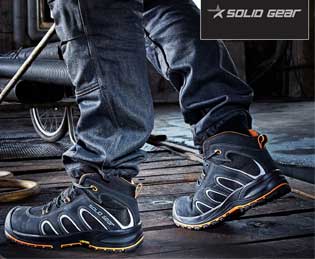
The new Falcon and Apollo From Solid Gear High Tech Safety Boots For The Winter Incorporating some of the most advanced technical features in safety boot design. With a focus on comfort and S3 safety, Solid Gear’s Falcon (shown left) and Apollo boots are probably the most robust boots you can get for the winter months. With durable uppers, these heavy-duty boots will keep your feet dry and insulated so you can work comfortably in the roughest conditions on site. What’s more, the new oil- and slip-resistant Vibram soles deliver outstanding grip on snow and ice – even at low temperatures. The Apollo has a premium full-grain impregnated leather upper while the Falcon is a mix of full grain leather and a Cordura Rip Stop fabric. Both boots deliver better water repellency and breathability than many other boots, while their fibreglass toecaps feature multilayer technology for a roomier toe box, while the new thinner and stronger composite plates add extra flexibility. There are over 30 boots and shoes in the Solid Gear Safety Footwear range, all of which integrate modern designs and sporty looks with best in class materials for comfort, protection and durability. To get more information on Solid Gear – the Next Generation of Safety Footwear, visit the website at www.solidgearfootwear.com Alternatively, call the Helpline on 01484 854788.
Transformers: the hidden fire safety risk?
Transformers power a wide range of infrastructures, including hospitals, transport hubs and any number of commercial buildings. However, given their importance, any failings can present a major risk to a company’s reputation, continuity and bottom line. Most transformers today are cooled by mineral oil. However, this is a flammable liquid so mineral oil transformers are prone to fires, which can endanger lives and damage nearby property and land. Companies must let them burn out, which can take days, or extinguish them with nitrogen – but even then, they’re left counting the cost. Added to that, if a mineral oil transformer leaks, it can create environmental damage as the liquid itself is not biodegradable. With mineral oil transformers, there will always be risks, so businesses need to evaluate the dangers and safeguard against them. The first risk factor is location. The transformer’s proximity to people, combustible materials or environments will determine just how destructive a fire or leak could be. The second factor is what the transformer is powering. If it feeds electricity to a retail operation, loss of electricity could have massive commercial consequences. If it powers a hospital, it could even jeopardise lives. Many companies may not realise there are safer alternatives to mineral oil. Ester-based fluids are one example, which remove the risk of transformer fires and are now proven as best practice in fire avoidance. That’s because they have a relatively high fire point – nearly double that of mineral oil – and significantly lower calorific value. At a board level, esters provide a mechanism to not only mitigate risk but also to boost corporate CSR programmes and green strategies. Because esters are biodegradable, they are the natural, environmentally-friendly option. There is a major barrier to switching though – and that’s the perceived cost of ester-based fluids. However, the truth is esters can actually reduce a transformer’s overall total cost of ownership. Because companies don’t need to include as many safety features with ester transformers, companies can save money on installations. They also need considerably less space, which creates further cost-savings, particularly in expensive urban locations. As a result, any initial capital increases turn into significant savings. Some estimates suggest the companies can save as much as 30% over the lifespan of an ester transformer compared to mineral oil. For too long, companies have been limited by commercial constraints or simply because they weren’t aware of the options. Simply put, alternatives to mineral oil are available and they’re not only safer but also commercially viable. For companies, that means more possibilities to minimise risk, ensure business continuity and bolster CSR programmes. By Barry Menzies,Managing Director of MIDEL, the global producer of ester transformer fluids
