



Rapid rise in female tradespeople over past decade

There are more than twice as many women working in trade professions including electricians, plumbers and construction workers in the UK than ten years ago, reveals new analysis1 from tradesperson insurer Direct Line for Business. The analysis shows that there were an estimated 33,000 female tradespeople in 2019 – a 120 per cent increase on the 15,000 reported in 2009. Over this time the total number of people working in construction, electrical and plumbing has risen by five per cent to 743,000, meaning that whilst women currently account for just 4.4 per cent of all tradespeople, this is considerably higher than the 2.1 per cent representation a decade ago. When broken down by industry, the majority of female tradespeople can be found in building, with 24,000 females employed in jobs including bricklayers, roofers and scaffolders, accounting for five per cent of the total workforce. There are an estimated 8,000 women working as electricians, accounting for three per cent of all tradespeople and 1,000 female plumbers, accounting for two per cent of those working in this trade. While the number of women working in these trades has been steadily rising over the past decade, the figures show that female representation is rising at an increasing rate, with more than half of the 18,000 new female workers in construction since 2009 being registered in the last five years. Nandita Borkakoti, Business Manager for Tradesperson, Direct Line for Business said: “While jobs in construction have traditionally been dominated by men in the volumes employed, it is encouraging to see that this notion is being increasingly challenged, with around 33,000 women across the UK currently working as builders, electricians or plumbers. “With around 34,000 more tradespeople in the UK now than a decade ago, we hope that the coming decade sees further inroads being made for women in trade businesses, as the focus shifts away from gender and towards ability and expertise. It is important for any new entrants to the industry to have the strongest foundation possible to start work, with an insurance policy that can be tailored so that they only pay for what they need to include a range of covers such as public liability, employers’ liability or for cover for their tools including when left in their work vehicle overnight.” Based on population projections 2, there are expected to be a further 221,000 more women of working age (18-65) in the UK by 2029. If the proportion of working women in construction remains constant over this time it could result in a further 5,700 women in the industry by 2029. However, if the industry sees the same rate of growth as it has done since 2009, then there could be as many as 51,000 women in construction by the end of the next decade. When looking at mean wages for tradespeople, women are still paid less than their male counterparts, though the analysis reveals that trade professions are more equitable than other industries. Female tradespeople earn an average of 11.3 per cent less than their male counterparts. With the average salary for male tradespeople standing at £32,755 in 2019, this translates into an income of around £3,700 less for women tradespeople than for men. This is lower than the gender pay gap across all industries, which in 2019 stood at 16.2 per cent. For more information about Direct Line for Business’ tradesman insurance visit the website: https://www.directlineforbusiness.co.uk/public-liability-insurance/tradesman-insurance
Small business in USA seek support over COVID-19 outbreak
The members of the Small Business Legislative Council (SBLC) held a special Legislative meeting, on March 18th, 2020 to discuss COVID-19 and its impact on the workplace. Yesterday, over 100 business groups, including NEMRA, wrote to the Congress and the Administration requesting that the response to the economic crisis confronting us is on the same scale as steps being taken to response to the virus itself. Entire portions of the economy have been shut down, and already businesses are closing their doors and laying off workers. For the economic response to be effective, it needs to be broad and it needs to be in place quickly. “As a Board Member of the SBLC, I not only have the privilege and responsibility of participating and representing NEMRA, but in providing input on specific matters that are important and relevant to our specific membership,” said Jim Johnson, President of NEMRA. “Our membership is comprised of individually and family-owned businesses that operate on their cash flow and while the country will overcome this in the coming months, the negative impact this will have on our membership will last beyond that.” You can access the letter with the signatories here (https://s-corp.org/wp-content/uploads/2020/03/Main-Street-Reponse-to-COVID-19-3-19.pdf)
Humane jobs for humans

We are on the cusp of a new industrial revolution. Industry 4.0 is coming. AI will transform the global economy. Robots will be able to undertake roles never before possible. This will allow the greatest revolution within the global workforce in generations. While there will be scepticism and nervousness, the opportunities far outweigh the risks. Throughout time humans have always been able to adapt to and benefit from new technology. Years ago, people were concerned with horses being replaced by tractors, today that isn’t an equation we even consider. In 2020, in the United States alone, we are forecast to see a 22% year on year increase in robotics installation, and 12% Globally. While many in business think the real economic benefit of AI will be through greater profits from fewer people in manual repetitive jobs, the real benefit will be in what these people will do next. For the first time in history, humans will be allowed to do more humane jobs. Caring for the elderly and sick, teaching and transferring knowledge, and working in the arts. These jobs cannot be replaced by AI, they require compassion and emotional intelligence. Another point is that the machines of the near future will be able to effectively undertake tasks that members of society would rather not. Corporate coffee chains around the world are renowned for one thing, and it is not their coffee. It is the welcome, the smile, and the conversation. Of course, a robot could make and serve a great cup of coffee, but will mainstream society want to lose the personal touch? Collaboration between humans and AI will be important. AI can transform healthcare as we know it, spotting cancers in scans or fractures in X-Rays, for example. This can hugely accelerate the process of diagnostics. However, AI is not known for its bedside manner, but AI working to support doctors can democratise healthcare like never before. The number of people ready to help humane industries boom is huge. Globally, 20% of the workforce are in the industry and agriculture sectors. If a chunk of these could be transferred to humane jobs, the benefits would be staggering. And of course, with AI, the benefits would not stop there, they would speed up our industrial processes, enabling more products to be made. But in agriculture, the effects are even more profound. The world’s population is growing fast. More people require more food. Using AI and robotics may provide an answer to this shortfall in food, helping to tackle hunger and maximising the amount people getting good nutrition. Once these people are fed, often in developing countries, they will be free to take on some of these new humane jobs. The human brain is capable of more than they currently deliver, some studies think we use as little as 3% of its processing power. AI will be able to remove some of the primal concerns that have used bandwidth since the dawn of time if these can be removed by technology, we are capable of more. Humans would be free to not just unlock their creativity, but also devote more time to their wellbeing, and allow them to nurture their intellect – in modern society, we focus on both less and less. This is the era of the next 3%. The workplace of the 20th century fostered a damaging culture in which people worked in high-pressure jobs only for a pay check. In the 21st century, we are already seeing new generations of workers looking for manageable workloads and rewarding working environments. The traditional, repetitive and menial jobs of the past do not meet these requirements. AI allows human workers to step away from these jobs, and find employment in sectors which better utilize their time – and unlock their potential. While this technology will be good for the whole world, developing countries have the most to gain from these advances in technology. If you look at the adoption of the mobile phone, there are some interesting points. One of the countries with the fastest adoption at the beginning of the technology was Italy. People might think it would have been the US, maybe Japan, but it was Italy. This is because of the comparatively low penetration rate of landlines in the country – meaning that mobiles became attractive at once. It will be the same with these AI machines, and that is something that could do a great deal for the economic, and then social development of these countries. We describe the coming of AI as if it were a breach of a dam, the growth doesn’t come at 10% on year 12% another, it comes exponentially. Investment in to robotics has a greater positive impact than almost any other area. A 1% investment correlates to a growth in GDP per capita of 0.03%[1]. Providing self-actualisation to everyone in the world should be of great concern to everyone. The world faces a great threat of climate change. It has the potential to interfere with everything, and it needs addressing. AI and the rediscovery of human creativity, the human touch, will allow us not just to feed more people with less, but can help with desalination, power generation, and the democratisation of healthcare. Some people may say this sounds like a pipe dream – but the process is already starting, whether it be the world’s first robot employment agency, placing robots just like humans on production lines, or a South Korean city being designed with AI in mind. AI is truly the democratisation of the human experience. https://cebr.com/reports/new-study-shows-u-s-is-world-leader-in-robotics-automation/#download-pdf
JTL partners with PHX Training to introduce new fast track course
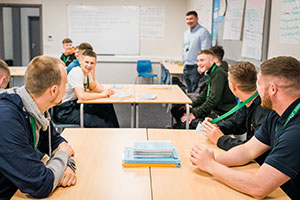
JTL, the leading national training provider for electrical and heating & plumbing apprenticeships, has joined forces with regional training provider, PHX Training, to introduce traineeships designed to help young adults in Cumbria get their first taste of work. This 12-week course, which has been organised by PHX Training, will support young people aged 16-24 years to acquire the functional skills needed to succeed in the workplace. It is also designed to develop their English and maths, as well as enhancing their basic employability skills including CV writing, interview techniques, timekeeping and teamwork. PHX Training will be delivering classroom-based activity at their training centre, located in Victoria Place, whilst the nearby JTL Carlisle training facility will be providing practical sessions. PHX Training will also be supporting learners to acquire four-week work placements, which will ensure the Traineeships provide learners with a varied programme of high-quality work-based learning and on the job experience. John Cramphorn, business manager at JTL, said: “This new partnership is a fantastic opportunity for young people to obtain significant work experience in a valuable trade, whilst gaining life skills that could help them progress onto an apprenticeship. “Learners will for the first time have the opportunity to learn from two different training providers, who will be working together to prepare them for the realities of the construction industry, helping them progress into young adults ready for the world of employment. This in turn will benefit local businesses by creating more job-ready apprentices, so we look forward to working with PHX Training to welcome both trainees and employers onboard.” Helen Macnaughton, business manager at PHX Training, said: “Taking the first step into work can be tricky, particularly for people who haven’t gained any previous work experience or for people who didn’t learn well in a school environment. “Alongside JTL, we have developed a traineeship which is designed around the learner. Along with basic employment skills we will also help them find work placements that are relevant, with a view to helping them find a job they can enjoy and excel at.” The course is available for any learners aged 16 or over with little or no previous work experience and will start on Tuesday, April 14 and will take place at PHX Training, 3-5 Victoria Place, Carlisle. For more information about JTL, visit: www.jtltraining.com. Interested employers should contact PHX Training in Carlisle to enquire about work placements, by calling 01228 810 960 or emailing carlisle@phxtraining.co.uk.
Tamlite eliminates 10,000kg of plastic waste as part of circular economy strategy

Tamlite eliminates 10,000kg of plastic waste as part of circular economy strategy Tamlite Lighting has eradicated more than half a million plastic bags from entering the supply chain over the last 12 months. The leading independent lighting manufacturer says the move to reduce its reliance on plastic, which has saved the equivalent of 10,000kg of plastic waste in just one year, is part of its on-going award-winning circular economy strategy. The project has seen the company invest in alternative sustainable packaging materials, such as recycled cardboard corners or shredded cardboard. In order to make such substantial savings, plastic packaging has been removed from a number of products, including LED batten and flat panel lighting ranges. With sales of these involving very substantial quantities of fittings every year, the savings rapidly add up. In addition to this, Tamlite is taking steps to ensure that all new products are plastic free, including its new downlight products. Tamlite’s Managing Director John Allden comments: “We are witnessing an enormous global shift in attitudes in tackling climate change and protecting natural resources. As a responsible manufacturer, we take pride in leading by example so it’s incumbent upon us to drive positive change within our operations and processes in a bid reduce any negative impacts on the environment. “Our aim is to build a circular economy for the lighting sector. We have a responsibility to ensure our processes and products are in line with our commitment to ensuring a healthy planet for all. This is why reducing our reliance on plastic is an important part of our strategy and will help us make real strides in being more sustainable. “We have always acted responsibly with regards to recycling but we felt it was paramount to remove any non-essential plastic, as well as other non-recyclable materials, from our products. Making this change has had significant benefits, reduces our reliance on landfill, and most importantly, is helping reduce our impact on the planet.” www.tamlite.co.uk
Basec gains notified body status in Europe (Ireland)

BASEC has now achieved notified body listing in Europe (Ireland) for BASEC Conformity Limited, NB 2851 via INAB to sit alongside that of BASEC UK LIMITED NB 2661 via UKAS. As a Brexit contingency back in early 2018 we applied for CPR status via INAB, which was granted in September 2019 and on 18th February 2020 Nando approved BASEC Conformity Limited under the directive, regulations (EU) No 305/2011 Construction products. This means that regardless of the trading relationship established now, that the UK has left the European union. After the transition period ends on 31st December 2020, we will still be able to manage your CPR certification via BASEC UK or BASEC Conformity, giving our customers reassurance as to the longevity of their certificates. BASEC’s understanding of the AVCP system 3 requirements are that any test and classification report issued prior to the end of the transition period will remain valid and recognised throughout the EU and will then be subject to any changes introduced by the new trade agreement. We feel that this is an important milestone to ensure that BASEC can provide certainty for our customers that their certificates, test and classification reports will remain valid (unless a product construction or material changes) and will not be impacted by the UK leaving the EU. For more information please visit https://www.basec.org.uk
The Future of Electric Cars
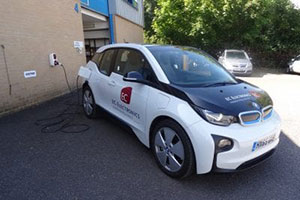
It’s been a long time coming, but electric cars are finally set to make a breakthrough… EC Electric Car 2020 is expected to be the year when they become a realistic option for most new car buyers. In fact, by the end of the year, an estimated 25 different electrics vehicles will be on sale — from family-style SUVs and high-performance sports cars, right down to a small city run-around. Manufacturing a more sustainable future The majority of greenhouse gas emissions in the UK now come from transport, which contributed to 33% of the 2018 total according to government figures. So, the rising popularity of electric cars is excellent news when it comes to cutting back on carbon emissions and saving the planet — a current hot topic of conversation! In 2017, the UK Government committed to disallowing the sale of new petrol and diesel vehicles by 2040. Then in June earlier this year, the UK became the first major economy in the world to pass laws to end its contribution to global warming. These laws will require the country to bring all greenhouse gas emissions to zero by 2050. When it comes to meeting these climate targets, adopting more eco-friendly cars is a vital part of the puzzle. Improvements on the horizon Other than sustainability, there are a number of benefits associated with switching to electric vehicles. Firstly, with the ever-rising price of petrol, electric cars offer a much more cost-effective solution — plus, they’re exempt from emissions charges and vehicle tax too. The purchase price of electric cars is also just about coming down to more affordable levels, while the increasing supply of vehicles is improving the selection of used models available. Until recently, the only major downside to electric cars was the lack of charging locations around the UK. But this all looks likely to change in the near future. There have been talks of charging lanes, which would enable drivers to wireless charge their vehicles while driving across a specially made road. Equally, some energy providers are already offering charging solutions for businesses, such as retailers and hotels chains, in their car parks — helping to satisfy the increase in demand. As part of the efforts to achieve zero emissions by 2050, the government is also looking at plans for all new homes to have electric charging points for cars. Homes like these, which help residents to reduce their carbon footprint, are growing rapidly in demand. Same same, but different While this may all sound somewhat futuristic, electric cars look a lot like conventional ones from the outside. Tesla has long been leading the way in the market, but its models tend to be on the pricier end of the scale and have often been thought too ambitious for most car buyers. However, a number of the mainstream car manufacturers — such as Nissan, Hyundai, Renault, BMW, Audi and Jaguar — are now also starting to introduce electric cars to their ranges. Top Gear recently did a roundup of their top 10 everyday electric cars from these brands. But although they may look the same from the outside, look inside and you’ll see they’re an entirely new breed of automobile. So, what makes these exciting new developments possible? Electronics of course! In an electric car, you’ll find several key components. For example, instead of the usual fuel cap, these vehicles have a safety socket for users to plug an electrical cable into. This high-voltage cable then connects the charging socket to the lithium-ion battery (which is controlled by a special battery management system, often via a smartphone) and allows power to flow. How much charge a battery holds and for how long will depend on its size and efficiency, but most will keep going for around 100 miles. Power electronics then ensure the flow of energy is delivered as a constant, steady supply rather than in one big burst. EC Electronics As manufacturers and developers, it is our responsibility to ensure trends such as technology and sustainability are at the forefront of the projects we work on. Which is why we always make sure we’re up to date with the latest advancements in electronics, such as the rise of innovations like electric cars.
81% of people expect mates rates from friends working in a trade

Leading power tools supplier Howe Tools has asked people around the UK about the discounts they expect on trades work carried out by friends and family, along with what they deem as the most useful trade. You can view the full findings here. When time and skillset is in low supply, and something in our homes needs to be fixed or maintained, it’s often an easy option to go to a friend or family member in a trade and ask for some help. While pay is sometimes included in these deals, generous discounts, or ‘mates rates,’ can make the job unprofitable for the tradesperson. In light of this, we’ve asked people in the UK to reveal their typical expectations around hiring a friend/family member for trades work. So, what are the true costs of mates rates and which trades do we value most? The most valued trade So when it comes to which trade we find useful, which ones come out on top? 41% of people would find an electrician the most helpful tradesperson to have as a friend or family member. Plumbers come in close second, with 39% of people finding them the most useful person in a group of friends. This could actually be down to the fact these trades are some of the most expensive to pay for and they’re two of the highest paying trades available. Discount disbelief In total, 81% of people expect discounts on work done by friends in a trade. This reveals that mates rates are a standard expectation when work is carried out, and suggests a pressure for tradespeople to provide discounts on a regular basis. With 43% of people claiming they’d be annoyed if they didn’t receive a discount from a friend in a trade, tradespeople could be put in an unfair position, choosing between friendships and earnings. Which location wants discounts the most often? Even though living costs in London are three times higher than Sheffield, residents from Sheffield come out on top when it comes to expected mates rates, with 36% of people surveyed wanting discounts. London is in second, with 34% wanting discounts, and Glasgow is in third at 32%. In comparison, Belfast and Edinburgh are the best cities for tradespeople to be paid in full, with only 1 in 5 friends and family asking for mates rates, making them the lowest in the UK. Manchester comes in at 4th overall, with 31% wanting mates rates, while Liverpool is much lower, coming in at 12th, with a quarter wanting mates rates. Does age affect mates rates? The overall average expectation of mates rates is a 25% discount off trade work. People between 16-24 years of age expect the highest discount, at 33%, while those over 55 years old expect a lower discount at 20% off. This correlation between age and discount expectations could be due to younger people having less money for trades work – Millennials are the most reliant on mates rates, with 13% suggesting they’re not able to pay full price for it. Are mates rates down to cost? All of these expectations surrounding discounts could lead you to believe that trades work is priced higher than the average person can afford. However, the data reveals that income doesn’t exactly correlate with requiring a discount, as 44% of people earning over £55,000 would delay work without a discount, compared to only 24% of those earning under £15,000. This suggests lower earners feel less comfortable asking for mates rates and would rather pay full price for the work they have done. Tim Howe, Managing Director at Howe Tools comments: “A lot of tradespeople are happy to offer a little bit of discount here and there to loved ones to help them get the job done cheaply and efficiently. However, taking the survey results into account, it seems that some tradespeople could be missing out on some crucial hours of work based on the number of jobs they’re doing for friends and family. Success of a tradesperson can often come down to word of mouth, so it’s understandable why adding a discount here and there can be appealing in order to create more work, however, it’s a fine line between friends and family appreciating a discounted rate and coming to expect it.” To find out more about our expectations on mates rates, visit Howe Tools.
Industry bodies hail rise in female electrical apprentices

Industry bodies hail rise in female electrical apprentices – but say more should be done to inspire next generation A group of respected industry bodies have hailed the recent rise in female electrical apprenticeships – and say more should be done to encourage other young women to pick up the tools. The Scottish Joint Industry Board (SJIB), Scottish Electrical Charitable Training Trust (SECTT), SELECT and Unite the Union all welcomed recent figures which showed that 13 female apprentices are currently training to be electricians in 2019-2020, compared to seven in 2018-2019. This increase in female applicants overall in 2019/2020 saw 70 per cent of those applying being taken on to the Electrical Installation Modern Apprenticeship. Fiona Harper, The Secretary of the SJIB and Director of Employment and Skills at SELECT, said: “In the month that we celebrated both Scottish Apprenticeship Week and International Women’s Day, it’s heartening to see more young women than ever taking up electrical apprenticeships in Scotland. “It’s also heartening to see that all these women are there on merit. Like all apprentices, they were required to pass an assessment before they were accepted onto the apprenticeship programme, and each demonstrated the aptitude and competence to do so. “There is clearly a growing realisation among young women that being an electrical professional is a viable career. “The rise of renewables and the next generation of electrical technology is making our industry more attractive to would-be electricians of both genders, so it is now up to all of us to tap into this enthusiasm and ensure we keep a pipeline of talent – both male and female – coming through.” Anne Galbraith, CEO of SECTT, echoed Ms Harper’s enthusiasm for the rise in female apprentices, saying: “These figures, although modest, are extremely encouraging and show a definite upward trend in women wanting to become electricians. “It is a testament to the hard work of the SJIB and SECTT that these young women are now succeeding in their apprenticeships and are working side-by-side with their male counterparts. Female apprentices always do extremely well both on site and at college and are respected by their colleagues. “Over the past 30 years we have helped 20,000 apprentices realise their potential. Today we have 3,000 electrical modern apprentices, work closely with 22 approved training centres and enjoy 800 employer partnerships. However, there needs to be a concerted effort to attract even more women to take up this extremely rewarding career.” Unite the Union claimed that the Scottish Government should be doing more to encourage young women to take up electrical apprenticeships. Scott Foley Regional Officer for Unite the Union, said: “Seeing the rise in female apprentices is encouraging – but just think what could be achieved if Holyrood encouraged our young women to do so. “We know that there is an untapped seam of female talent out there – what we need is a concerted government campaigns and programme of investment to inspire them.” Scott, who is also Lead Trade Union Officer for the SJIB, added: “If the Scottish Government was to actually help encourage more young women to become electrical apprentices, the benefits would be two-fold. “Firstly, we would help to address the skills shortage that currently affects the sector. And secondly we would demonstrate that Scotland is a progressive, forward-thinking country that encourages its young women to break down boundaries and succeed in what is perceived as a traditionally male-oriented industry.” Founded in 1969 by Unite the Union and SELECT, the SJIB regulates between employers and employees, providing benefits for people engaged in the industry, and stimulating industry progress. It also has oversight of employment, skills and proficiency, health and safety competence, wages and welfare benefits across the electrical industry in Scotland. SECTT was established in 1990 by SELECT and Unite the Union to manage the SJIB Training Schemes and today runs the only industry approved training scheme for electrical apprenticeships in Scotland. SELECT is Scotland’s largest trade association. Founded in 1900, it has nearly 1,250 member businesses with a collective turnover of approximately £1bn, employing more than 15,000 people and 3,500 apprentices.
