



Plans to transform a new 55,000sq ft facility, designed with excellent customer service in mind
Red Arrow are working towards a robust and positive future with plans to transform a new 55,000sq ft facility, designed with excellent customer service in mind: Equipped with viewing galleries, full support and technical advice all under one roof Higher quality products with unique design features and competitive benefits Putting the emphasis on quality, supported by a full ISO9001 accredited UK HQ with NPD, testing, design, technical, stock management and customer service for products With availability, quality, reliability, performance and trust at the heart of the business, Red Arrow are focused on getting their products to market faster, while offering a new experience to their customers. And with a Wholly-Owned Foreign Enterprise (WOFE), the lighting manufacturer and distributor can control their own processes and product development, differentiating themselves from their traditional competition and holding a stronger position in the industry. While also allowing them to speed up the introduction of new products to their customers. It’s a win-win. Quality-first mindset In an incredibly competitive marketplace, the team at Red Arrow are expanding their service by implementing their Product Development initiative. Aimed at bringing improved quality and unique design features to their products, this new initiative will give customers a commercial advantage for their clients, installers and end users. And with an extra ongoing technical programme for the entire team, the lighting manufacturer and distributor is planning to upskill their workforce, allowing them to train customers in the best use of the products. Working towards a quality-first mindset, Red Arrow achieved ISO9001 certification in January this year, with plans already advanced for ISO14001. We caught up with Graham Lewis, Sales Director, to find out why their new facility will transform the whole look and experience of the new brand, and how their plans for the future are unfolding… Designed for customers Currently standing as an empty shell, the new facility will be transformed into a state-of-the-art warehouse and office space, designed with electricians and wholesalers in mind. ‘If all goes to plan, our sales, customer service, marketing, technical and finance teams will all be based in the new building, together.’ Graham revealed. ‘This will allow us to offer a co-ordinated customer experience. And with facilities such as the dedicated lighting scheme design, we can take out the guesswork when choosing the right products, while also providing full calculations, support and tech know-how. All under one roof.’ With plans to move stock from their existing third-party warehouse, Red Arrow’s new facility will feature viewing galleries to showcase the latest products in operation, alongside practical demonstrations, testing facilities and technical support areas. ‘At Red Arrow, we are committed to creating a newly-energised company. Building on the old strengths of the business, the overall experience of Red Arrow is transforming,’ Graham told us. ‘We are also changing our logistics processes – by moving away from Third Party Logistics, we can gain control of our own stock, allowing our customers to minimise their stock holding and maximise their profitability.’ The re-branding process is continuing to grow at an astonishing speed – with increased social media activity, a new website and a fully redesigned product guide coming soon, Red Arrow’s new look reflects their goals for the future. Making it easier for their customers and installers to see exactly what Red Arrow’s products do with new data, better packaging and improved customer service, the business is working through the current climate with positive plans and a resolute commitment to their customers. About Red Arrow Electrical Distribution Red Arrow Electrical Distribution is a streamlined, quality-focussed manufacturer and distributor of competitively priced lighting and electrical products to the wholesale industry. We are committed to providing an excellent sales and customer service experience, whilst providing a wide range of quality products at very competitive prices. We build strong, long-term relationships with suppliers ensuring quality and continuity of product supply and ongoing product development. For sales enquiries, please contact Red Arrow: Graham.Lewis@redarrowtrading.com 0114 279 8999 For further media enquiries, please contact Nutcracker Agency: Gemma.turner@nutcrackeragency.com 0203 941 0305
Switch actuator range delivers next generation switching
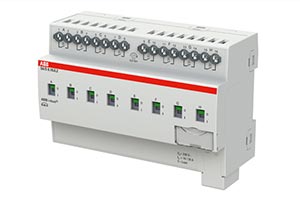
Following the successful launch of its compact Combi actuators range in 2019, ABB has further extended its portfolio with its new Standard and Professional versions, to offer the widest range on the market. Based on its vision to offer next generation switching for increased comfort and versatility in both residential and commercial applications, ABB has enhanced its KNX Switch Actuator portfolio with updates to its Standard and Professional ranges. Oliver Iltisberger, Managing Director of ABB’s Smart Buildings business line said: “Our main priority is to ensure that our technology solutions are enablers for our customers. They need to be user friendly but, more importantly, as we continue with our Smart Cities’ Mission to Zero initiative, they also need to optimize energy usage. That’s why we’ve extended our range to offer three different options – from Combi for residential installations where space is at a premium, to our latest Standard and Professional versions – to offer the most comprehensive choice in the market.” The new ABB i-bus® KNX Standard Switch Actuator range offers the largest and most universally used selection of components to cover all standard switching requirements in today’s commercial projects. With a broad range of devices available with different outputs, from 2- to 12- fold, customers can now find a switch actuator that is a perfect fit for their application, delivering further savings on costs in the distribution board. These 12 devices are ideal for use in modern buildings and provide cost-effective and time-saving commissioning, with template pages and central functions for all outputs. Screw-head terminals make installation simple and no tools are required for DIN-rail assembly and disassembly. ABB i-bus® KNX Professional Switch Actuators offer devices with high switching capacity and enhanced energy management functionality and are ideal for use in high-end applications. Suitable for large commercial projects, the series includes eight switch actuators, designed for reliable switching of high and capacitive loads of up to 20 A C-Load. Reinforcing ABB’s commitment to help customers optimize energy usage, the Professional range features four enhanced load and consumption control functions, for measurement, monitoring, metering and management. This provides total transparency over energy consumption and availability at the lowest level, so that flows can be controlled without any loss to availability, function or comfort. When Professional switch actuators are parameterized, users can program different settings or scenes to make sure that they are using energy in the most efficient way. For example, lights can be switched off when they’re not needed to cut down on unnecessary energy use and ultimately avoid higher tariffs. Alternatively, users can switch off certain loads while using battery-based power, to reduce obtaining energy from the grid. “We are constantly looking for ways to help customers to increase comfort and versatility, without compromising the end-user experience. With these latest additions to our switch actuators range, we now offer the largest portfolio on the market, with a solution for every type of building. More importantly, we are giving customers the tools they need to ensure buildings only use energy when and where they need to,” added Oliver Iltisberger. For similar articles visit our features section
Cost-effective door entry range that doesn’t compromise on security or style

Suitable for all requirements from end users to specifiers of the largest developments, Legrand has refreshed and expanded its Bticino Classe 100 range. With products to suit a variety of buildings, the Classe 100 range equips developers with affordable door entry solutions at every level. The standard two wire installation, across the stylish range means internal units can be easily installed into new developments as well as providing a quick and simple upgrade to be retrofitted in existing dwellings. A cost-effective range that offers a multitude of benefits such as video feedback and connectivity with smartphones, Classe 100 provides an economical upgrade to door entry systems. Once installed, both the video and audio interfaces provide end users with brilliant functionality. The hard keys to answer and hang up make for more positive engagement and simplicity of use, whereas the configurable keys allow for personalised, convenient accessibility for every occupant. For added ease of use, the handsets light and flash the appropriate buttons when in use, helping to guide the user and preventing the need to refer to a manual. On top of this, the 100X model enables end users to quickly and easily connect the handsfree unit to their smartphone for increased convenience and security. Also available in a variety of kits to suit a number of applications, Classe 100 can be quickly implemented to suit a range of new and existing premises, such as schools, hospitals and reception areas as well as residential properties. Richard Hopkins, Lead Marketing Manager for Legrand’s wiring devices business unit, said: “With the Bticino Classe 100, we seek to offer customers a complete and affordable range that suits any number of requirements and allows them to provide end users with an array of easy-to-use functions. Bringing together economy and style, the range is easy to install thanks to the straightforward two wire installation and, once in place, provides any modern home with great functionality and security.” For more information about Legrand’s door entry and home automation solutions, please visit www.legrand.co.uk
Engineers’ concerns ignored, puts energy infrastructure at risk

Only 44% of recommendations to improve the safety and performance of critical energy infrastructure are fully implemented, new research reveals. A survey, conducted with transformer professionals, shows disconnect between transformer operators and budget decision makers, with some decisions unduly increasing the risk of failure, fatality or fire posed by transformers. The findings, released by MIDEL, reveal that while safety is perceived to be a top boardroom concern, over half of recommendations are being denied or delayed with cost cited as the key cause in 56% of these decisions. More pressing commercial (38%) and engineering (36%) priorities also score highly. In turn, 44% of respondents lack confidence in their board’s ability to properly mitigate transformer-related risk. Barry Menzies, Managing Director of MIDEL, says: “In the face of failure, the impact on business continuity and reputation will always far outweigh the cost of mitigating transformer risk. Evaluating risk mitigation recommendations solely on the grounds of capex short-sighted. Many improvements – both for safety and for optimisation – have far-reaching benefits that are only properly captured when considering the lifecycle of the improvement. Indeed, when factoring in reduced insurance and maintenance costs, as well as improvements to reliability, resiliency and sustainability, many more risk mitigation strategies stack up financially.” As the world’s transformer fleet ages, and more demands are placed upon them by continued electrification and intermittent renewables, the environment in which transformers operate is increasingly challenging, creating more maintenance issues, overloading and winding failure. Concurrently, the survey revealed a noticeable shift towards condition-based maintenance, with nearly half of respondents having recommended it to mitigate transformer related risk in the past 12 months. Changes to maintenance regimes (34%) asset replacement (34%), asset repair and reconditioning (32%) and substation upgrade (33%) recommendations were also popular. “Decision makers are being presented with a range of options to reduce transformer risk which makes it even more concerning that many respondents do not see their recommendations implemented fully. This suggests that the benefits of these recommendations are getting lost in translation. It may be that engineers need to reframe these recommendations to catch the ear of decision makers, for example, by conveying the commercial implications of transformer risk for aspects such as insurance” Menzies adds. The survey, which attracted responses from transmission and distribution operators, original equipment manufacturers and commercial and industrial operators across EMEA, the Americas and APAC, aims to enhance board level understanding of transformer-related risk. The report assesses key concerns and risk mitigation trends as well as garnering opinion on board awareness and priorities.
Migrating to an ERP solution increases electrical wholesalers and distributors’ routes to market

The importance and demand for a high-quality online shopping experience are continuing to grow, and for electrical wholesalers and distributors, having an ecommerce website is becoming a more important element of their sales pipeline, says Nick Davies, Head of Software Development, OGL Computer. As in all industries, efforts to increase revenue and profitability are critical and technology is at the heart of this. A recent survey we conducted showed that 85% of wholesale respondents agreed that technology is vital to the efficient running of their business, while 80% agreed that automating business processes helps their companies stay competitive. This is where migrating to a single ERP (enterprise resource planning) solution is fundamental to growth. Wholesale businesses use a range of software systems to function: from warehouse management, inventory/stock control to accounting software and CRM (customer relationship management). But, with so many electrical wholesalers and distributors still using some level of manual processes and disparate systems to run their businesses, they are missing out on the benefits that come from centralising systems into one ERP solution. Single ERP systems connect all of the key areas of a business – stock control, sales order management and customer service, so they work better by enabling full visibility business-wide, which makes them ideal for ecommerce. With stock sitting at the heart of the business, the ERP solution ensures that stock control is connected to the sales department, finance team and purchasing, so electrical wholesalers and distributors can run a smooth, streamlined order process. An ERP solution also improves efficiencies by removing duplication of work across different departments. Gain control via accurate centralised data A single view of a business, with the same information available to multiple users, will lead to better profitability, increased productivity and accurate data for planning purposes. It also enables wholesalers to extract data much more easily, and analyse and manipulate the data to assist with reporting. Improving your routes to market as an electrical distributor or wholesaler is more than simply achieving sales from different channels. To increase audience reach, businesses have to be visible to potential customers online and provide them with the valuable data and product information that they are looking for. ERP software offers the ability to control the information you hold and improve accuracy. With access to up-to-date data, accurate forecasting becomes much quicker and easier and you gain control over your company’s performance. Improve visibility and efficiency Data and stats of a customer journey, sales, warehouse efficiencies, stock control and team performance from an ERP system all give you the ability to spot trends, know your best performances, but also where to improve so you can always strive for better. For wholesalers and distributors, taking control of stock and warehouse operations has a knock-on effect for customer service, reputation, team morale and ultimately their bottom line. With an ERP solution, visibility of customers, products and sales data can be crucial to driving business forward, as it gives a 360-degree view of your data and performance that disparate systems lack. When your processes are based in a centralised solution it means you’re not trying to communicate and transfer data between the different systems which can introduce errors and duplication of work. With a single ERP solution, even your trade counter staff, remote workers and sales reps on the road can access the same data and follow the same processes. Removing manual tasks, digitalising processes and taking out the duplication of operations across systems removes time-consuming admin, increases accuracy and most importantly improves efficiency. By streamlining your warehouse, optimising picking processes and sending out more orders in less time, you will essentially be maximising order efficiencies from any order source, be it online or via another channel. For similar articles visit our features section
How to maintain productivity while working from home

The Government’s instructions on social distancing have been very clear – employees should be allowed to work from home where possible to slow the spread of coronavirus. Whilst many businesses already encourage remote working, there are many owners and managers who are not as comfortable with the idea, lacking confidence that work will be done productively while working from home. Much has been written about various tools and techniques, however it’s individual’s attitudes that will have the greatest impact on successful remote working. If employees have a clear goal to work towards and are taught the essential skills needed to lead themselves, then there should not be any negative impact on results or productivity, despite colleagues being in different locations. Personal leadership pillars It’s important, especially during a period of uncertainty, to instil confidence in your workforce, equipping them with essential qualities, such as purpose and passion, to ensure the work continues to the standards expected despite the many legitimate challenges of a new working environment. These qualities fall under the six essential pillars of personal leadership that are crucial to developing the self-motivation and self-discipline needed to overcome challenges and deliver results. Personal responsibility, plan, positive expectancy and persistence are the other essential elements that make up the six pillars of personal leadership. It’s through a combination of these qualities that workers will learn to lead themselves effectively in extraordinary times. It’s this independent, self-leadership that holds the key to maintaining high levels of productivity when working from home, which is why it’s crucial to help employees develop these attitudes. Through experience fuelled with positive expectancy, employees can crystallise their thinking and effectively focus their efforts, using this challenge to stay motivated and ensure high quality work is delivered. Persistence will then become the vital ingredient needed to overcome procrastination and manage the avoidable distractions at home whist still giving necessary care and attention to family members who may be sharing the same space. Clear direction Whilst it’s important that employees are taught the skills needed to become effective personal leaders, the collective productivity of your workforce relies on their understanding of the ‘common goal’ – having clear direction; understanding what success looks like. Goal setting is a fundamental part of personal development and essential for managing teams remotely, giving individuals clear and realistic targets to aim for, boosting self-motivation and delivering better results in work, and all other areas of life. In the current time, clear goals are more important than ever to ensure everybody in the team is pulling in the same direction, as each person understands their role and recognises their importance in helping the entire team succeed. During an uncertain period, one shared goal could be as simple as reminding employees that only through hard work and continued productivity, will the business be able to overcome the financial challenges brought about by the outbreak. Personal goal setting In order to harness the power of goal setting, individuals need to be personally invested in achieving their targets, fuelling self-motivation far greater than simply completing tasks that have been assigned to them. This means taking the time to understand the benefits to be gained by the accomplishment of each goal, including the personal satisfaction of the progress that’s been made and the achievement of large and small victories. For employees working from home, it’s a powerful practice to set clear and attainable goals, in line with the greater objectives, on a weekly and daily basis. Remember, there’s a good deal of evidence to suggest a stronger commitment to our goals occurs when we write them down on paper rather than in digital format. Encourage your employees to set personal goals as well as business ones as success in one area breeds motivation in all others. Effective time management With strong personal leadership and an understanding of clear direction through goal setting, employees are well-prepared to practice effective time management. Their ‘must do today’ and ‘do today if possible’ lists can be formed around the tasks and priorities that will generate the most progress towards achieving goals. This is true productivity. Otherwise known as ‘high-payoff activities’, the most important work can be prioritised, not necessarily the latest request to arrive by email. Each morning, staff will benefit tremendously from creating a written plan for how they’re going to spend their day, designating sections of the day for focussed project work, checking emails and lunch. With a clear direction for the day ahead, employees will find they get a lot more completed in the time available, which then frees up more time for personal activities. If legitimately distracted, they have a clear plan to return to without the wasted time and effort to rethink the day’s priorities. Maintain productivity… During a period of uncertainty, it’s crucial that businesses maintain their productivity levels and standards do not slip because they are away from the office. Whilst there may be some apprehension around home-working, there is no reason why work should slow if employees are given the skills needed to motivate themselves. Essential personal leadership skills combined with a deeper understanding of goal setting and time management should allow business to continue as usual, despite employees being in separate locations. If your workforce requires training, there are online personal development courses that will give them the tools needed to remain productive over the coming weeks and months. For similar articles please visit our features section
Nittan sponsors ‘Outstanding apprentice fire alarm engineer of the year’
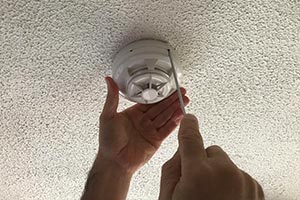
Nittan Europe – a leading manufacturer of conventional and addressable fire detection products – is a proud sponsor of South Eastern Regional College’s (SERC) ‘Outstanding Apprentice Fire Alarm Engineer of the Year’. Nittan has supplied a prize and trophy, plus free of charge fire alarm products for students to train on. SERC, based in Northern Ireland, provides a wide range of courses, apprenticeships, professional development training, online learning and tailored training for businesses. The college has close links with specialist fire and security companies which enables students and apprentices on Fire and Security Engineering programmes to gain valuable knowledge and experience. Nittan was introduced to the college through its Bangor-based customer Solutions for Systems – an independently owned business providing design, supply, installation, commissioning, integration and maintenance of fire, security, electrical and satellite & aerial communication systems. Solutions for Systems hasa close working relationship with SERC and has actively supported the Fire and Security Engineering Apprenticeships by helping lecturers to develop demonstration models and help promote the programmes. Lee James, General Manager – Product Marketing at Nittan, comments: “we see industry specific training and apprenticeships as vital to the long-term health of the fire industry. Nittan can make the best fire safety products in the world, but if those products aren’t correctly installed or if the system design is poor, then the fire detection system does not perform to its best. We value the work being done by SERC, and by installers such asSolutions for Systems who take the time to support these apprentices.” The Nittan Group has been at the forefront of the international fire protection industry since 1954. It continuously innovates and strives for exceptional quality products of the highest standards. For more information go towww.nittan.co.uk
Understanding the COVID-19 Support for the Self-employed

Some new and positive updates were shared by Chancellor Rishi Sunak in his update on 25th March 2020 specifically for the self-employed who until this point had been not included in the Government help. To better understand this, Sam Rollins from Trinity Accountants has taken a look at what this means for your business. 80% of self-employed income up to £2,500 The big news was that sole traders and partnerships will be entitled to a taxable grant of 80% of their monthly net profit (averaged over the last three years) of up to £2,500. This will be paid ‘no later than the end of June’, according to Chancellor Rishi Sunak. What this means to you You must still be self-employed. This grant is based on your profits and the Government will use an average of the last three years tax returns (or less if you have been self-employed for less time). This is fine if you’ve submitted healthy profits. This is not so helpful if you’ve been building a business over the past few years and have had a lot of start-up expenditure, leading to your taxable profits being low or even non-existent. So, if you’re self-employed you’ll get 80% of your averaged out taxable profit for up to the three previous years. For example, if your average taxable profit per year was £24,000 then that would be £2,000 per month, and 80% of that would be £1,600 per month. This will be a taxable grant and will appear on your tax return for the relative year. In order to be eligible for this grant, your average annual tax able profit must not exceed £50,000. You must have filed a 2019 tax return. You will also now have an extra four weeks to file this, if you haven’t already done so. Of course, this doesn’t help the newly self-employed at all. Our concern here is that some early year businesses will have made little or no profit in the previous year, but more in this year, which isn’t being included. Access to the online application form mentioned by the Chancellor is likely to be released in June. Until then the only real option for the self-employed looks like Universal Credit or a Business Interruption Loan. Deferral of Self-Assessment One measure that’s not hitting the social media headline right now is news of the self-assessment deferment. If you have a July payment on account due on 31.07.2020, this can be deferred until 31.01.2021. Please be careful with this as you’ll obviously still have to pay the next year’s tax at that point also! Job retention scheme One of the key messages throughout the Governments updates has been that they want to retain jobs by keeping viable businesses afloat and try and prevent them having to be made redundancies. Here’s what the job retention scheme looks like for your employees: 80% of any furloughed employees’ wages (up to £2,500) will be covered. A furloughed worker must not undertake any work, so no emails, phone calls, digital marketing or suggestions of income generating activities. We’re still waiting the new HMRC portal and reimbursement system to be set up and this will give us more detail and clarity on all this. This is expected to be released before the end of April, ready for payroll run April. VAT Deferral If you have a VAT payment due from 20.03.2020 to 30.06.2020 this can be deferred until 31.03.2021. This will be automatic, so there’s no need to apply, but do not forget to submit your VAT Return by the due date as normal. Clearly, you will need to work with your accountant to ensure that you build up your reserves for the extra payment next year. SSP Employers rebate One clear issue for companies is Statutory Sick Pay (SSP) and covering this cost for the businesses. Companies will be reimbursed for any SSP paid from day one. They must be a small employer with less than 250 employees. Again, the system for allowing this reclaim is still in development, so more details to come soon. Ensure you keep up-to-date with the support for the Self-employed Clearly these are complicated and fast-moving times so you’re wise to keep checking on the Government updates https://www.businesssupport.gov.uk/coronavirus-business-support/ and https://www.gov.uk/government/publications/guidance-to-employers-and-businesses-about-covid-19/covid-19-support-for-businesses
Wet underfloor heating blows electric out of the water

When it comes to underfloor heating systems, there are two types, water and electric. Both warm an area from the floor up and unlike central heating warm the people and objects in a room rather than just heating the air. Central heating is still used in millions of UK homes and causes a massive amount of energy wastage. Underfloor heating offers much greater freedom from a design perspective as it saves around 15% more space and eliminates the problem of visible pipes and radiators. But which one wins the race, water or electric? Electric underfloor heating costs far more to run than warm water UFH, in fact a system like Wunda Group plc’s over floor heating system Wundatherm could save you 65% when compared. Wundatherm is a rapid response wet system that doesn’t require digging up floors and is perfect for both new and existing properties without the need for screed. So what do homeowners need to know about electric and water UFH? An electric system Electric UFH is readily available as either a heated mat or as a cable system that converts electric energy into radiant heat. The mats use thin pre-attached electric heating wires that are rolled out under the floor finish and the heating cables can be installed directly on or within the subfloor. A water system Wet systems, which are also known as hydronic, involve pumping the heated water through the underfloor heating pipes/circuits which have been laid on top of or in the subfloor, underneath the floor finish. What are the financial savings? Wet UFH uses much less energy than central heating as it is designed to run at a lower temperature whilst still providing the same level of heat. However, costs and efficiency will differ depending on construction, insulation, energy tariffs and how the heating is being controlled. For example, a room size of 40m² would cost around £900 per annum to heat using electric UFH, whereas a wet UFH system would only cost about £180 per year. Electric UFH Running an electric underfloor heating system will cost more than a water system due to current energy tariffs. Water UFH In contrast, hydronic heating systems deliver reduced long term running costs when compared with electric systems and homeowners can benefit from even greater savings by using more efficient heating sources and controlling it via a thermostat. How long does it take to install? Installing underfloor heating is often simpler than you may think, but it is recommended that systems are installed by a qualified installer who has worked with UFH before. Electric system installations Electric systems are often very quick to fit with some products claiming they can be installed in under 30 minutes. Water system installations Water systems do often take longer to install as time is needed to test the flow and pressure of the water. What are the costs of installation? When choosing whether a water or electric system is most beneficial, it’s worth doing some research first. Like what is the price difference between a plumber installing a wet system and an electrician wiring the electrical system to the mains? Homeowners can expect to pay around £200 plus per day for a competent tradesperson to install a heating system, but in the case of Wundatherm, up to 150 sq. metres takes two people just two days to install and only requires a plumber when it comes to commissioning the system on completion. Wunda prides itself on first class quality and customer service, providing free technical support six days a week, and provides the specialist service of detailed layout plans for all bespoke systems free of charge to trade customers. With these layout plans to hand, tradesmen can have complete confidence in laying the boards and installing the Wundatherm system. For further information on the Wundatherm underfloor heating system or a free estimate, call 0800 083 2677, email plans@wundagroup.com or visit the website www.wundagroup.com
