



Hultafors Tools – NEW Range of SCREWDRIVERS
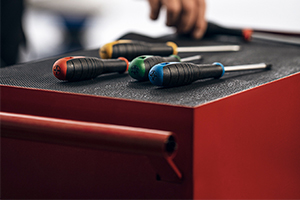
Precision, quality and ergonomics are the hallmarks of these superb new products. Hultafors Tools has launched a new range of Screwdrivers for professional craftsmen and women. With VDE Screwdrivers specially designed for electricians – including tested and certified SL/PZ and VOLTAGE TESTER models – theres over 80 other SLOTTED, PHILIPS, POZIDRIV, TORX® STUBBY Screwdrivers, plus Hex Drivers and Bit Holders that can be bought individually or in sets – or by size – to suit the jobs you have in hand. Researched and developed with craftsmen and women for professional use, they all have a superb ergonomic design for optimal comfort. The long rubber-coated handles ensures grip for precision and maximal transmission of power. The handle is made from durable PPC plastic with a coating of age-resistant and easy-to-grip rubber. The permanent marking of type and size on the top as well as the handle’s colour make it easy for the user to select the right screwdriver. Blades are manufactured from high-quality hardened steel for long life. The handles have a hole for hanging or securing with a design prevents the screwdriver from rolling on inclined surfaces. Getting more information on the Hultafors Tools product range easy. You call the Helpline on 01484 854788 or check out www.hultafors.co.uk and download a digital catalogue.
Making a relationship better with EIC
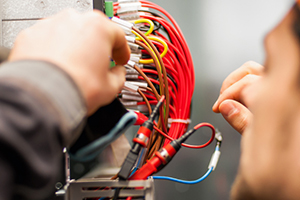
Our sector has one of the highest divorce rates of all industries with 69.8% of relationships ending in divorce. This is largely due to long hours, time away from home, infidelity or caring for a sick child or parent. This ongoing difficult period has tried a lot of our relationships. We have spent prolonged periods in each other’s company and experienced the confinement of just one home for weeks. As the world begins to open up and we start to leave our homes we may be thinking more about what our relationships mean to us. These unprecedented times may have reinforced our feelings of love for our partners or they may have driven you to despair. The Electrical Industries Charity are here to support you if you are going through relationship breakdown or are trying to repair your relationship. Meet Craig and Donna. Craig and Donna have been having difficulties with their relationship since the birth of their second child 2 years ago. Donna had previously struggled with severe post-natal depression but with the birth of their first child and again suffered with the birth of their second baby. Post-natal depression symptoms affect 30-80% of women within the UK and while these symptoms usually dissipate after a few days post birth they can stick around resulting in more severe depression and anxiety disorders. Donna began to experience depression and battled more than ever with her mental health. Both Donna and Craig struggle with communication. Communication is one of the key pillars in a strong and healthy relationship, especially during trying times. With two young children in the house and their personal difficulties with communication it became even more difficult to talk to each other. Craig struggled to show his emotions, something more commonplace in men, and Donna thought Craig was simply unfeeling. When Craig and Donna would argue Donna would shut down or hibernate or get angry and defensive. Their lack of effective communication meant their relationship was becoming more and more fraught. Recognising the issues in their relationship Craig and Donna began to have relationship counselling – sourced and funded by the Electrical Industries Charity. Relationship counselling can help you and your partner both you have reached crisis point or once you are there. It can be beneficial to talk with a stranger about your issues and how you can resolve them. Just as Donna and Craig began to attend therapy the lock-down happened and they were unable to attend sessions nor embed new practices and their communication and relationship has suffered as a consequence. Again, their relationship began to suffer. They reached back out to the Electrical industries Charity welfare team. With a limited number of charity funded sessions, the couple were fearful the relationship therapy may not be enough to save their relationship and understood they had their own issues to work through. The charity continued to support both Craig and Donna separately through the pandemic. They were referred to separate therapists to work on their selves and establish different coping mechanisms and communication techniques. Once they have worked through their own issues the Charity will support them in further relationship counselling so they can look forward to a future of being a happy family. The Electrical Industries Charity are here to support you through relationship breakdown and repair. They understand the challenges which face relationships every day and will work with you to help try and repair your relationship or cope post separation. If you are struggling within a relationship or need help, please contact the welfare team on 0800 652 1618 or support@electricalcharity.org www.electricalcharity.org
Take steps to protect your workforce from coronavirus
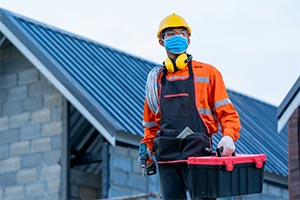
To encourage sick employees to self-isolate, the Government recently confirmed that statutory sick pay will apply from the first day off work, not the fourth, arguing that workers should not be penalised for protecting others. Understandably, this decision has raised more questions about sick pay and working from home. Reducing the risk to employees As an employer, it’s your duty to take on board the official advice and share it with your employees, whether that’s via emails or team meetings. It may also be wise to designate an ‘isolation room’, where sick employees can retire to contact 111 for further medical advice. Other steps to take include: Update the contact numbers and emergency contact details of employees Ensure that managers are aware of the symptoms of the virus Disseminate information across management on issues such as sick leave and sick pay Ensure that facilities for regular and thorough washing of hands are in place Dispense hand sanitisers and tissues to employees Given the advice around handwashing, organisations should advise all their employees to wash their hands thoroughly and let them know they will not be penalised for the extra time taken. What to do if an employee becomes unwell If an employee exhibits the symptoms of the virus, they should be removed from the proximity of other employees, placed in the designated ‘isolation room’ and encouraged to follow precautions. The employee when calling NHS 111 should be advised to give the operator the following details: Their symptoms The name of any country they’ve returned from in the past fortnight Uncertainty over the seriousness of the virus and the exact nature of the symptoms may lead to some employees coming to work despite having contracted the virus, without necessary feeling unwell. If this does happen, then an employer should contact the local Public Health England (PHE) health protection team and they will discuss the details and outline any precautions which should be taken. The Position on Sick Pay If an employee is off sick with the virus then the legal situation regarding sick pay is the same as it is with any other illness however the employee is now entitled to statutory sick pay from the first day of work, not the fourth. The government has stated that if NHS 111 or a doctor advises an employee or worker to self-isolate then they should receive any statutory sick pay due to them or contractual sick pay if this is offered by the employer. In some cases, employees may be able to work from home while in self-isolation. However, in many cases, if an employee cannot attend their place of work, they will be unable to work. Ultimately, there is no obligation on an employer to allow an employee to stay away from work and, if the non-attendance causes issues or extends beyond an emergency precaution, then an employer is entitled to take disciplinary action. No time to be divisive Employers must also take steps to ensure that no members of staff, customers or suppliers are treated differently because of their race or ethnicity. It may be appropriate to remind staff that jokes and banter, even if light-hearted, may easily slip over the line to become unlawful harassment and/or discrimination, for which an employer may be liable. Employers can avoid liability if they can show they took ‘all reasonable steps’ to prevent employees behaving in such a manner. Managers must also be trained about their responsibility to identify and prevent discriminatory behaviour. For similar articles visit our features section.
UK householders rack up annual bill on almost 7 billion for DIY disasters
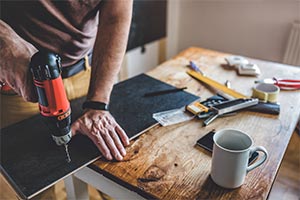
With many UK householders tackling jobs around the home, Aviva is urging people to proceed with caution. New research from the insurer reveals that UK people typically spend £13.5 billion* a year – £488 per household – fixing things that have gone wrong around the home. But 29% of householders also admit they have had to pay for a professional to put things right when a DIY task has gone wrong. In fact, one in eight households (12%) say they have done this on several occasions. The average amount paid out in the event of such DIY disasters is £836 – equating to almost £7 billion** across affected UK households. More than one in 10 households (11%) say they have managed to run up a bill of more than £2,000 in order to put things right. The top five bodged DIY jobs which required professional help were revealed as: 1. Fixing a broken boiler. 2. Unblocking a sink. 3. Fixing electrical wiring. 4. Unblocking a drain. 5. Unblocking a toilet. Sarah Applegate, Head of GI Global Strategy and Insights says for Aviva says: “In recent months, people may have been tempted to turn their attention to ‘doing up’ and tackling those niggly odd jobs around the house. However, our research shows even simple tasks can go wrong. In fact almost a third of householders have ended up paying for a professional to put things right when a DIY job hasn’t worked out. “Home maintenance is very important and we’d always encourage people to look after their properties. But we’d also advise people to work within their limits and not attempt tasks which could be better left to professionals – particularly if they involve electricity, gas or plumbing. Unless people are tackling a simple task, it may be better to call in an expert!” Tips to avoid DIY disasters: If the job requires expert knowledge, leave it to an expert. A bodged plumbing task could be messy at best, while jobs which involve gas or electricity may be dangerous – so don’t take chances. Turn it off. If you’ve got the skills to tackle a job involving water, electricity or gas, don’t forget to turn it off before you begin. Use a pipe and wire detector to check for wires and pipes before you drill or hammer. Keep your carpet covered. And your sofa, and your TV… Countless Aviva claims come from people who have spilled paint while decorating, so be sure to put down decorating sheets – and be careful when you are clearing up. Avoid mess while you work. Tools and toolboxes become dangerous obstacles if they are scattered around, so keep your workspace tidy to avoid trips and slips. Never work with children and animals. Try to keep little ones and four-legged friends out of the work-zone. Tools and tech don’t mix. A number of Aviva customers report dropping tools on laptops, tablets and phones while tackling DIY tasks, so keep tech at a distance while you work. Know how to use your tools. Read the instructions and if you’ve hired or borrowed a tool, such as a sander or a saw, ask for a demonstration first to avoid nasty mistakes. Real examples where Aviva has helped to put right ‘DIY disaster’ claims: Destroy-It-Yourself: A customer removed a bedroom radiator in order to strip wallpaper behind it. While trying to reattach the radiator to its brackets, the customer broke a valve, causing water to pour onto the carpet, floorboards and straight through the kitchen ceiling below. Just smashing: One gentleman was doing DIY around the house when he tripped and dropped a club hammer. Unfortunately the tool crashed into a patio door, causing it to shatter. Painting problems: Another customer had cause to claim after decorating their lounge. The room looked lovely, but the customer managed to drip paint on the lounge and hallway carpets when tidying up. Watch out! Another customer was splitting logs when he lost control of a chisel. It hit his expensive watch, causing the screen to crack. A thrilling drilling: A customer drilled through a central heating pipe while securing floorboards in the master bedroom to allow for new laminate flooring. Water flooded into the living room below staining the ceiling, walls and floor. Thankfully in each of these cases, Aviva was able to help put matters right.
Do electricians have a legal duty to provide asbestos awareness training?

Asbestos awareness training should be given to all employees whose work could disturb the fabric of a building and expose them to asbestos. This includes electricians and employees working in the electrical trade. Training should also be given to those who supervise or influence any work of this kind. The Regulations’ Approved Code of Practice also recommends that a refresher should be undertaken at least once a year. By accessing asbestos awareness training, you protect your own health and safety as well as that of your co-workers and people nearby. Why does asbestos present problems to workers in the electrical trade? The number of older buildings in the UK means asbestos remains a significant threat to health and safety, particularly for those working with the fabric of these buildings. Asbestos was widely used as a building material as it proved to make a great insulator. It was used in buildings from the 1950s onwards and wasn’t actually banned until the end of 1999. This means asbestos containing materials (ACMs) could be present in any building constructed before this date. For example, it was once common for garage roofs to be made using 15% Chrysotile and Portland cement to make the roof sheets. It was also commonly used in large institutional buildings, such as schools, hospitals and prisons. Once asbestos fibres are released, they are easily inhaled and can lead to asbestos-related diseases that only materialise decades later. In the past, little knowledge was passed down to those most likely to be exposed to asbestos, and as a consequence, the mortality rate from asbestos-related disease remains high. In fact, in 2017, there were 2,526 people who died from mesothelioma – an aggressive form of lung cancer. More than 80% of mesothelioma cases are caused by exposure to asbestos with the greater the exposure, the greater the risk. Studies have shown that the UK has the highest number of mesothelioma deaths in the world and, as cases can take so long to become symptomatic, these numbers have remained at a similar level for years, despite the asbestos ban happening more than 20 years ago. How can I access asbestos awareness training? There are many ways to get this training either online or face-to-face. At Acorn Analytical Services, we would always recommend classroom led, face-to-face training. In our experience, questions always come to the forefront of people’s minds during their training and if you are in front of a real person, you can ask them and get the answer there and then. The answers will also be 100% relevant and bespoke to your organisation and situation and not generic. We would advise that any electrical firms looking for asbestos awareness training look for courses that are approved by UKATA (UK Asbestos Training Association) and have been specially designed to promote awareness and reduce ‘accidental disturbance’ for anyone who may come into contact with asbestos materials during the course of their work. What does the training cover? As an example, our half-day UKATA Asbestos Awareness training courses have been tailored to give candidates a comprehensive understanding of the negative health effects and dangers associated with asbestos, looking at: What asbestos is Where asbestos was used What products contain asbestos Why asbestos is hazardous and what diseases and health effects are attributed to asbestos Who is at risk? Emergency procedures Basic asbestos management and an overview of the regulations The idea is that once you know what products contain asbestos and where they were used, you won’t disturb them. And, in the event something does go wrong, you will know what to do in an emergency. You will also know the ways to minimise exposure by following specific procedures – knowledge which is essential to protect yourself and your teams. How much does asbestos awareness training cost? The average cost for an ‘approved’ asbestos awareness training course is around £65. As with most things these days, training and levels of competence should be maintained. Although there is no requirement to complete an asbestos awareness training course every year, the asbestos guidance states that some form of refresher should be given. The sole purpose for any refresher should simply be to help prevent workers putting themselves or others at risk of being exposed to asbestos. We would advise that this training is also introduced as part of any new staff induction process. For further information on training relating to asbestos, visit www.acorn-as.com or contact Acorn Analytical Services on 0844 818 0895 or sales@acorn-as.com.
LG Electronics sets new industry standards for premium solar panels with new investments
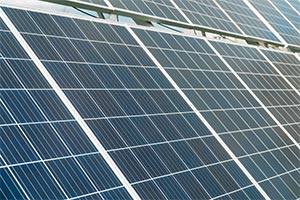
The electronics and solar specialist LG Electronics is continuing its solar journey with the introduction of new products. The most recent highlight in its portfolio is the “LG370N1C-N5” panel (N-type). As part of its strategy on sustainability, LG Electronics will continue bringing new solutions to the global photovoltaic market in the third quarter of 2020. With its leading solar solutions, the company is looking to raise the standard for the global solar market and further expand its expertise. The premium N-type solar panel includes 60 cells and generates 370 watts of electricity. It has a high energy efficiency and converts 21.4 percent of the solar energy captured into electrical energy – an impressive figure given the premium industry standard of 20 percent. In addition to its new products, LG Electronics is continuing its solar offensive by modernising its production lines in Korea. This year will see production lines upgraded to further expand the development of high-performance solar solutions from the start of next year. LG Electronics plans to continue bringing new premium products to the solar market. Greater efficiency, better products The new production facilities will be incorporated into the solar production line in Gumi, South Korea. The construction of the new facilities is expected to be completed by the end of 2020. Within the new line, the company is also planning to produce a new panel with an output of over 400 watts during the first quarter of 2021. For this, LG will rely on “paving technology,” which once again improves performance with minimal cell spacing. These new innovations will help LG Electronics bring new products to market with an improved design and even greater reliability. Forward-looking projects LG Electronics is building on its leadership in the global solar market by continuously developing new products with the latest technologies. Last year, LG Electronics brought its solar roof to the market which enabled users to charge the batteries of electronic and hybrid vehicles. The solar roof consisted of a solar panel mounted on the roof of a car which charges the battery while driving to extend the vehicle’s range. The energy produced by the solution enabled a mileage of around 1,300 kilometres per year for a medium-sized vehicle. At the end of last year, the company also delivered approximately 7,500 solar panels to the Moorebank Logistics Park in Sydney, Australia. The combined output of the panels amounted to 3 megawatts, with which around 4,800 megawatt hours of electrical energy can be generated per year. In total, this corresponds to the supply of electricity to over 1,300 households. High-quality sustainable energy For LG Electronics, ensuring the quality of its solar products will be the focus for the future. The company carries out extensive quality checks for every panel through its own IEC-standardised and internationally recognised laboratory and quality assurance system. The process differs considerably from other solar providers in the market. “We decided to modernise our production line to ensure sustainable growth in our solar business and to be part of the global energy transition,” said Michael Harre, EU vice President Solar at LG Electronics. “We will continue looking to shape the future with our industry leading, highly efficient photovoltaic solutions in the coming years and help to master the challenges of sustainable energy production worldwide.”
Construction firm raises hearing protection benchmark
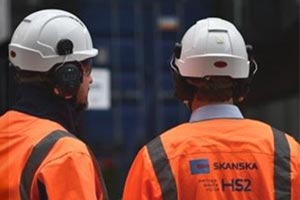
Costain-Skanska joint venture (CSjv) is spearheading industry change with a new hearing protection policy across all of its HS2 enabling works construction sites. Following an incredible journey with smart tech company Eave, who’s innovative hearing conservation solution provides real time noise monitoring on site, CSjv is now mandating this active hearing protection with integrated noise monitoring from 1st September 2020 across its HS2 sites. The two were brought together to trial new developments in Eave’s technology as part of the HS2 Innovation programme. A mandate like this sets a new standard for the construction industry’s approach to noise induced hearing loss (NIHL), which is the most commonly reported occupational disease in Europe. “CSjv aims to support HS2’s mission to eliminate the causes of the top five occupational diseases in construction. Our trial with Eave gave measurable results that radically improved our hearing protection measures on site. We are now implementing this change across all our HS2 sites to ensure a greater level of safety for our operatives. We are immensely proud to bring new innovation to the industry, spearheading major change in health and safety PPE.” explains Sandra Winters, Occupational Health Lead. Eave’s active ear defenders use best in class ‘Hear-Through’ technology, that, unlike passive protection, allow the wearer to continue to hear environmental sound, vastly improving the safety of workers. These smart headsets also monitor and map noise exposure, analysing the data in real time to provide information about each worker’s noise exposure across a site. It is this combination of active hearing protection and integrated noise monitoring that CSjv is mandating on all its HS2 early works sites to raise standards across the sector. The journey began in 2019, when Eave and CSjv won Innovate UK funding from the Department of Transport to trial their hearing conservation solution with HS2. The project reflected HS2’s desire to build a lasting legacy that transforms industry. “With this mandate now in place we witness a transformation in the construction sector that innovation projects like this were intended to generate. It’s exciting to see such a success story that will genuinely impact lives, raise industry standards and ultimately protect the hearing of our workers,” said HS2 Innovation Manager Rob Cairns. Dr. David Greenberg, Eave CEO, said: “It has been a great pleasure to work with CSjv, Innovate UK and HS2 to showcase how innovative smart tech solutions can do so much more than conventional hearing protection to manage noise on site. Their support has been fundamental in the development of our products, testing our active ear defenders and noise monitoring equipment. We are now working with all CSjv subcontractors to ensure they are ready for the 1st September deadline, working together to protect the hearing of workers in hazardous noise.” CSjv subcontractors are invited to join a webinar on 28th July to find out more about the mandate and how to implement active hearing protection with integrated noise monitoring on site. Register here. Read more about the benefits of active hearing protection versus passive hearing protection in a blog from Dr. David Greenberg here. Watch CSjv and Eave’s journey with HS2 here. About Eave Eave is a smart technology company created to help with the prevention of avoidable deafness through the monitoring of, and protection against, damaging noise levels. Founded by clinical and research audiologist, Dr. David Greenberg, Eave’s mission is to prevent occupational hearing loss, while raising awareness of the isolating and often debilitating impact of deafness.
Businesses at risk without a lasting power of attorney

The benefits of a lasting power of attorney (LPA) have been well documented, allowing an individual to nominate someone to take decisions on their behalf, if they become incapacitated in some way. However, not everyone is aware that an LPA can be put in place for a business, which given the ongoing health crisis, could be a smart decision for business owners, especially if an unexpected illness threatens the livelihoods of employees. This lack of awareness is one of the key reasons why business owners do not adopt an LPA, which means that should something happen, the business will have to rely on the Court of Protection to appoint a deputy. Of course, being unable to access business bank accounts or make decisions for months could lead to a swift demise for many businesses, adding to the owner’s problems. Therefore, it is best practice to have an LPA in place, even if never used, so it is there as a safety net should something serious occur. In the event of an emergency, the trusted individual can step up and oversee important business matters, so that operations can continue running in the absence of the business owner. A sensible precaution As a business owner, if you become unable to make decisions for any reason, it could severely impact on a vast number of people and ultimately the fate of your business. The benefits of having an LPA in place for your business are therefore apparent; every person your business comes into contact with, from suppliers and creditors to clients and employees, could benefit from you having a trusted individual nominated to keep things running should you become incapacitated for any reason. The people closest to you can also take peace of mind from knowing that there are measures in place to ensure the continuity of income from the business (from its continued operation) should something happen. So why are LPAs for businesses so uncommon? Lack of awareness seems to be a key reason, with many business owners simply unaware this is an option. Some people fear that even a temporary period of mental incapacity may lead to them permanently losing control of their business interests. The Mental Capacity Act 2005 deals with this concern, requiring the attorney you appoint to ‘so far as reasonably practicable, permit and encourage the person to participate, or to improve their ability to participate, as fully as possible in any act done for them and any decision affecting them.’ Others are content that in circumstances where capacity is lost, the Court of Protection will appoint a deputy. Whilst this is true, it can also present some serious issues. Appointing a deputy can take several months, during which time, the decision-making processes and daily operations of a business, without leadership or direction from the top, can fall apart. The appointment of a deputy is also an expensive process – the combination of the long timescale and costs can significantly impact a business. On the other hand, putting a business LPA in place ensures that a person you know and trust will take the reins immediately, and can begin to deal with the usual running of the business without delay or unnecessary costs. Make the arrangements now A business LPA can be straightforward to organise. A Form LPF1 must be completed and signed by a witness, the chosen attorney and a ‘certificate provider’. The form is then registered with the Office of the Public Guardian (OPG). At time of writing the fee for registering a business LPA is £82. If you arrange a personal LPA alongside a business LPA, then your personal LPA should stipulate that it does not cover your business affairs. Your business LPA must state that your nominated attorney has power only over your business affairs. The choice of attorney to be appointed requires a lot of careful consideration. It is therefore important to consult an experienced team of legal advisors, who will offer support in making this decision, and the factors to consider. Ultimately, the long-term security of your business and employees is at stake. Without an LPA, you risk jeopardising everything you have worked hard to build over the years. For similar articles please visit our news section
Preventing Electrical Fire Ignitions – What to Do and What to Use
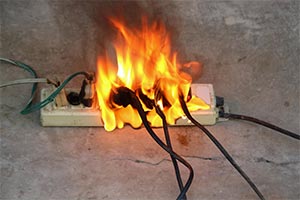
Electrical fires do more than just damage your house – they put your family’s lives at risk. Though dangerous, they can be prevented. Using appliances like circuit breaker box and GFCI outlet wiring, you can prevent electrical fire ignitions at your home that lead to great loss of life and property. Let’s look at some tips that can prevent electrical fires and keep you and your family safe. 7 Tips to Prevent Electrical Fire 1. Replace old wiring If you see frayed, worn or broken wires, that means they are too old and need to be replaced. With old wiring, there is a risk of a short circuit or an electrical fire. Repair or replace such wires immediately. 2. Don’t overburden electrical outlets An electrical outlet gets overburdened when you plug too many appliances into the same outlet, extension or power strip. It is recommended that you use a power strip that is equipped with overload protection. The strip will immediately shut off if it gets overloaded, thus preventing fires. 3. Replace damaged plug or cord Apart from faulty wiring, if the plug is also damaged, there is a chance that it could lead to a fire. A damaged cord would expose the electrical system to several things including water. This could further result in a series of problems that can end in fires. The moment you see a worn out or damaged plug or cord, replace it. 4. Replace unsafe appliances and old sockets All your electrical appliances should fall within the modern safety standards. Don’t buy them if they don’t adhere to the modern safety standards as they can pose serious fire risk. Call a professional electrician to understand how to set up your connections. Ask them which are the best electrical appliances to add to the system to make it more stable. If there are old sockets in the house, replace them too. 5. Unplugheat-producing appliances Do you have heat-producing appliances like kettles, irons, hair straighteners, and curling wands? If yes, make sure you unplug them when they are not in use. If they malfunction or are accidently left on for a long period of time, they can overheat and catch on fire. Be careful about using such appliances and always turn them off after use. 6. Use GFCI outlets Make sure that rooms like kitchens, garages, and utility rooms are equipped with GFCI outlet (Ground Fault Circuit Interrupters outlet). They ensure that you can use the appliances around water sources without being exposed to a risk of short circuit or electrical fires. 7. Look for signs of electrical trouble There may be signs that indicate that one or more of your appliances is overheating. They may even indicate a problem with an electrical socket. Keep an eye out for signslike: An appliance, power cord or outlet feeling warm to the touch Discoloration or burn marks around a socket, light fixture or light switch A burning smell when an electrical appliance is plugged in or is being used Flickering of light even after you replaced the bulb The circuit breakers trip frequently or the fuse regularly blows You feel an electric shock every time you plug in a device Stop using the outlet or the electrical appliance as soon as you notice one or more of these signs. Contact an electrician immediately and get the issue fixed. 5 Add-Ons to Keep your House Safe fromElectrical Fires 1. Circuit Breakers A circuit breaker is a switching device that interrupts faulty or abnormal current in a circuit. It works by limiting the electric flow on the conductor when too many appliances are plugged in a circuit. The circuit breaker is primarily designed for the closing or opening of an electrical circuit. This protects the electrical system from damageand helps in preventing electrical fires. Install a circuit breaker box in your house without fail. 2. Arc-Fault Circuit Interrupter An arc-fault circuit interrupter (AFCI) is a circuit protection device that is designed to protect you from electrical fires caused by arcing faults. It recognizes arc faults and de-energizes the circuit when one is detected. It can detect a wide range of arcing electrical faults and help in reducing the electrical system from being an ignition source of fire. AFCIs are designed into conventional circuit breakers that combine traditional overload and short-circuit protect with arc fault protection. They look similar to GFCI protection and provides protection for the branch wiring circuit. 3. Smoke Detector As the name suggests, a smoke detector can detect fire or smoke. There are different types of smoke detectors like ionization smoke detectors and photoelectric smoke detectors. The smoke detector should ideally have a long-lasting lithium battery. Install them in all the rooms of the house and replace the battery as soon as the old one dies. 4. Out of Parameter Circuit Interrupter – Voltage type (OPCI-V) An out of voltage parameter circuit interrupter (OPCI-V) is capable of detecting and protecting against electrical fires. They help in detecting abnormal line voltage, high-resistance connections, open neutral faults and damaged wiring to name a few. This is an electronic circuit that measures the line voltage and compares it against the safe limits. If it detects abnormal conditions, it disconnects the load. It provides reasonable protection against high-impedance connections and damaged wires, and good protection against voltage fluctuations. The OPCI-V must be located in an electrical outlet, in series with the load and downstream of the fault location. 5. Service capacity If you upgrade your home with more lighting, electronics or appliances, the home’s electrical service capacity may become overburdened. If you experience constant tripping of circuit breaker or fuse blows, you may have to increase the capacity of the electrical service. Call a qualified electrician to determine the appropriate service requirements for your home. Concluding Words Follow the right electrical safety measures to protect your family from electrical hazards. Ensure the circuit breaker panels at your home are in the proper condition along with other protective add-ons.
