



The added value benefits of buying your hardware from a specialist stockist-distributor
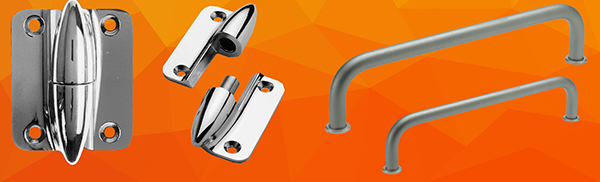
The UK has long been a country that celebrates the benefits of having multiple sources for its industrial products. We recognise the service limitations of a central manufacturer and the beneficial support of specialist suppliers where a distributor of this type can offer a central point of service for major brands and related products, with a geographical and logistical rational – on a local basis or at least in the same country. FDB Panel Fittings have historically found that a distributor can optimise customer needs across the marketplace and provide an extensive knowledge of what is available from large and small manufacturers on the international scene. A good example is the FDB Online store, which is proving a valuable resource to panel builders and installers now that UK manufacturing industry is in a growth phase once again. The FDB Online store features an extensive range of locks, swinghandles, hinges, handles, sealing gaskets, rod locks, door stays and other enclosure/cabinet accessories. These are held in stock for urgent delivery and come together with their Rocfast lock assembly and logistics service. Further underlining their position in the industrial market, the FDB Panel Fittings Online store shares coverage with FDB Electrical who have been specialists in the field of electrical protection for more than half a century, and have an enviable reputation throughout the world for quality, innovation and service. Consequently, the store makes available RCDs for personnel or plant protection, Earth Continuity Monitors and a wide range of ancillary devices, all providing the optimum in design and reliability. This long-established distributor is proud to provide probably the UK’s largest range of locks, hinges, handles and accessories for virtually all industrial applications. Their supply process continuously focuses on an ability to provide a friendly personal service based on detailed product knowledge and experience with an extensive product range. The portfolio encompasses everything from cable management support systems to cabinet hinges, enclosure gasketing and locking systems, which include many stainless steel variants and anti-vandal handle designs – with extensive stock holding they expect to deliver most items direct from their warehouse. Often distributors are smaller, frequently family businesses, operating as a specialist supplier who offers a high degree of willingness, keenness, continuity/low staff turnover, experience and focus, as their business depends on adding value – the service they offer, the package, flexible pricing, the support package – and of course the major benefit of physical stock with rapid delivery. Under the banner of their Rocfast brand FDB are frequently able to achieve significant reductions in purchasing/admin time and effort, with this well proven “Just in time” service for all those low-value but critical components. This means that with just one order, one invoice, one payment the components can be on the production line when needed. Traditionally, this has comprised providing a service to small probably local/regional accounts, but a dedicated distributor can provide customers with so much more than that – for example expertise across the market, technical expertise in an area of application not just of products They can advise on what can be done and how, with credibility derived from a measure of impartiality. Providing reactivity and urgency sometimes lacking in large national organisations, coupled with stockholding that supports local relationships with a detailed knowledge of the customer’s business. This is integrated in a package sourced from different suppliers – a one-stop-shop, including collation and provision of technical information. A dedicated distributor can offer complementary brands and products – building on the principal brands, so developing a portfolio which reflects the customer position in the market place integrating other brands and managing the sometime delicate balance of running them alongside each other to serve your business overall. Ultimately, such a specialist will often have developed their own complimentary brand ranges which enable them to fill gaps in the market or address areas that are not presently served, or otherwise to serve a particular niche requirement that the international brands cannot or do not wish to serve. A really active stocking distributor can offer additional services such as component assembly, technical consultancy, commissioning, systems specification and set up, workstation packs, on-site delivery, pre-delivery testing, also silk screen or pad printing. Support comes in many forms and can include information on their website and the educational value of a media presence, plus perhaps a dedicated blog and the creation of specific sales/technical support material e.g. datasheets and manuals. They can also offer compliance with appropriate standards and a specialist sales/support channel. FDB Panel Fittings and sister company FDB Electrical share their online shopping website at www.fdbonline.co.uk. Further information on FDB products and services may be found at: www.fdb.co.uk. Find the latest information and news on the FDB blog – www.fdbonline.co.uk/blogs/news, or follow them on X formerly known as Twitter: https://x.com/fdbpanelfitting – also see www.youtube.com/fdbpanelfittings.
C-TEC sparks smarter growth with digital overhaul

A leading UK manufacturer of fire alarm and life safety systems, C-Tec, is unlocking growth through digital adoption, supported by Made Smarter. C-TEC, based in Wigan, has invested £40,000 to replace manual, paper-based inventory processes with a cloud-based software solution which enables real-time stock management and dramatically improves efficiency and accuracy. With support from Made Smarter, the government-backed technology and skills adoption programme supporting SME manufacturers, C-TEC, has increased productivity by 25%, eliminated dispatch errors and cut out paper waste, supporting C-TEC’s sustainability goals. The project, supported by a £20,000 grant from Made Smarter, has also laid the foundation for scaling operations, introducing new, disruptive fire safety products, and creating four new jobs. Peter Butterworth, Manufacturing Operations Director at C-TEC, said: “Made Smarter didn’t just help us identify a problem, they gave us the confidence and support to act on it. Their backing enabled us to accelerate our digital transformation, eliminate inefficiencies, and build a smarter, more scalable operation ready for the future. It’s been a genuine turning point for our business.” C-TEC started life above a restaurant in 1981, just a few doors down from Wigan entrepreneur Dave Whelan’s first sports shop. Fast-forward four decades, and the small, family-run business has grown into a £25m manufacturer of world-class life safety systems, exporting to over 80 countries. From its headquarters, C-TEC’s 195-strong team manufactures a vast range of open-protocol fire detection and fire alarm systems, evacuation alert systems, call systems, disabled refuge systems and hearing assistance systems. Meanwhile, just a few miles up the road in Mawdesley, the company has a dedicated R&D centre of 25 engineers driving product innovation. The Grenfell tragedy was a turning point for the industry, prompting C-TEC to accelerate development of smarter, connected systems with enhanced monitoring and evacuation capabilities. This innovation has opened doors to major projects in high-rises, stadia, hotels, hospitals, and shopping centres. Despite sustained growth through investment in systems, people, and processes, C-TEC recognised that its warehouse capabilities needed modernising. A digital transformation workshop delivered through the Made Smarter programme revealed key challenges: high product variety and volume, reliance on manual stock handling, and paper-based inventory control processes were contributing to errors, inefficiencies, and bottlenecks. “We’ve got around 9,000 part numbers across finished goods, sub-assemblies, and raw materials,” said Peter. “It’s a complex operation. Too much of our warehousing was manual, error-prone, and paper-heavy. We needed to improve traceability, stock control, and reporting to support future growth.” To tackle the challenge, C-TEC implemented IFS’s WaDaCo system, fully integrated with its ERP, to digitise warehouse processes from goods-in to despatch. Mobile barcode scanners and PDAs now enable real-time inventory updates, eliminating manual errors and paper-based tasks. The system also supports future supply chain integration. Digital adoption has delivered immediate results, boosting warehouse productivity by 25% without increasing headcount and virtually eliminating manual errors. By scrapping printed pick lists, C-TEC now saves nearly four mature trees’ worth of paper annually, advancing its net zero goals and ESG credentials. A key strength of the project has been company-wide involvement, with 14 employees trained and upskilled in digital tools. “It’s not just about software, it’s about culture,” said Peter. “Our people are now more confident, faster, and equipped with real-time data.” WaDaCo is futureproofed to support growth, enabling C-TEC to scale output, maintain quality, and introduce new products. Over the next three years, the project is expected to create four new warehouse roles. Alongside Made Smarter’s support, C-TEC is also investing in automation and advanced manufacturing to prepare for its next wave of disruptive products, including the award-winning CAST-PRO. Commenting on the success, Donna Edwards, Programme Director, Made Smarter Adoption North West, said: “C-TEC is a fantastic example of how digital transformation, driven by ambition and supported by the right guidance, can unlock productivity, sustainability, and future growth. Their journey shows that even well-established manufacturers can take bold steps to modernise and futureproof their operations.” Launched in 2019, Made Smarter has engaged with thousands of manufacturers, with hundreds receiving support through grant funding, impartial technology advice, leadership and skills training, and digital internships, to help transform their businesses. To learn more visit: madesmarter.uk
PULSAR® Expands REACT Range with New Mid-Layers

PULSAR®, a leading manufacturer of high-visibility and protective workwear, has added two new high-performance mid-layers to its sportswear-inspired REACT range, preparing the workforce for the colder months ahead. The all-new Quarter Zip and Sweatshirt join the collection for the Autumn/Winter 2025 season as premium mid-layer options, designed to keep wearers both visible and comfortable as they switch between layers in demanding work environments. Quarter Zip (RCT804-YEL / RCT805-ORG) Sweatshirt (RCT806-YEL / RCT807-ORG) Sustainability Meets Performance The main fabric used for both the Quarter Zip and Sweatshirt is made from 100% recycled polyester, reducing environmental impact while delivering durability and warmth. Each style meets the EN ISO 20471: 2013+A1:2016 Class 3 standard, with orange versions also conforming to RIS-3279-TOM Issue 2:2019 for rail industry compliance, all certified for up to 25 wash cycles. Layering vs Loft: Which Works Best? Layering remains one of the most versatile ways to regulate body temperature during outdoor and active work. It allows workers to add layers when tasks are more sedentary and remove layers when movement increases. The principle is simple: layering traps warm vapours in the air pockets created between garments. The golden rule is to avoid hydrophilic materials such as cotton, which retain moisture, and opt instead for hydrophobic synthetic fabrics that wick and insulate effectively. Loft insulation, by contrast, offers exceptional warmth in just one layer but lacks the flexibility required for changeable weather and varying work demands. While ideal for static roles or extremely cold environments, a loft-insulated coat can often be too warm for physically demanding tasks in milder winter conditions. In summary: both systems provide warmth; the best choice depends on the work environment, activity level, and the need for adaptability. Browse the new REACT collection online: www.pulsaruk.com
Next Generation Tool Storage “MAKTRAK™” From Makita is a Game-Changer

The new Makita MAKTRAK™ system provides a tough, secure and flexible modular storage method for a wide range of Makita tools and equipment. Built to meet the needs of trade professionals on site – each storage box can be opened without the need to unstack the system, allowing tools to be protected, transported and organised with ease. The unique Rolling Tool Chest forms the base of the MAKTRAK™ system. Its horizontal layout can accommodate even long tools and combined with the dual-hinged removable lid, it ensures full and easy access from both sides – perfect for tight spaces or when accessing the chest from the back of the van. The large latches are easy to open, even while wearing safety gloves. Trade professionals will appreciate the freedom of the track-mount, modular system, as it allows other MAKTRAK™ boxes to be attached to each-other for secure stacking and transportation. There are seven different components to choose from comprising of four toolboxes – the Large Toolbox, Extra-large Extension Toolbox, both of which include the dual hinged lid feature, a Medium Toolbox, as well as the Rolling Tool Chest, and three organiser boxes the Deep Medium Organiser, Low Profile Organiser and Deep Compact Organiser. The flexibility of the MAKTRAK™ system means that it can be tailored to each user’s specific requirements and can accommodate everything from the largest tools to the smallest parts, fittings, and fasteners. In addition, loading and unloading the MAKTRAK™ storage system from the back of a van is made easy by the Rolling Tool Chest’s retractable handle, non-slip Gecko Grips, and rear support handle, which provides extra assistance during the initial lift. With a huge 82-litre capacity and 113kg load rating, the Rolling Tool Chest also features rugged 9-inch all-terrain wheels that help take the strain out of moving across rough, and uneven ground. For added security, each of the boxes and organisers comes complete with reinforced metal padlock eyelets and a hidden security tracker slot giving the user a choice of security options. The lids are also gasket sealed, so that tools stay protected from dust, dirt and water ingress. “The Makita MAKTRAK™ storage system has been thoughtfully designed to align with the realities of how trade professionals work, and with the highest level of attention to detail,” explained Lyndsey Bailey Accessories Product Manager from Makita. “The beauty of the MAKTRAK™ system is that it addresses the main challenges when it comes to tools: transporting them to and from site, loading and unloading at the start and the end of the day, storing them, keeping them secure and easily finding what you need. We are proud of the flexibility that the MAKTRAK™ system offers, allowing users to adapt the system to their needs from job to job.” For further information on the Makita MAKTRAK™ system visit: www.makitauk.com/maktrak.
Fluke Expands Calibration Portfolio with New Solutions to Enhance Efficiency and Precision
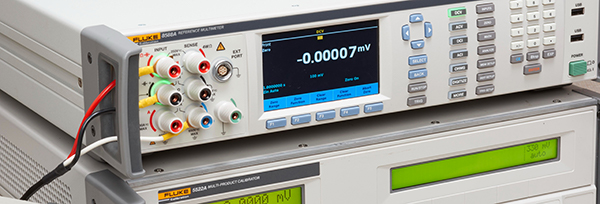
Fluke Corporation announced a new addition to its 55XX multi-product calibrator series with the Fluke 5530A Basic Multi-Product Calibrator. Designed for calibration and metrology technicians, the 5530A targets industrial calibration workloads at a more affordable price point. In addition, a new Null Meter option was added to the Fluke 8588A-series Reference Multimeter for metrologists and calibration technicians in laboratory environments, creating a new generation of digital null meter capability that will obsolete analogue null detectors. “These new solutions reflect our deep collaboration with calibration professionals,” said Ben Ewoldt, Product Manager Fluke Calibration. “By listening closely to our customers, we developed the 5530A calibrator and enhanced Null Meter capabilities to deliver the precision, flexibility, and automation they need—at a better cost and with greater efficiency.” The new 5530A Basic Multi-Product Calibrator is designed to be a workhorse for industrial organisations. The 5530A enables calibration technicians to keep their factories running and their equipment calibrated at a lower cost. Key features of the system include calibration support for 4.5-digit multimeters and as well as compatibility with the Fluke Calibration 52120A Transconductance Amplifier for expanded workloads. The 5530A also addresses power workloads with dual output for ACV and DCV. Fluke also announced new firmware updates across its Fluke 55XX series that allow organisations to expand and automate their calibration workloads. The 55XX series of multiproduct calibrators, 5560A, 5550A, and 5540A, are receiving a new firmware update, allowing technicians and metrologists to execute calibrations with more automation. The firmware update supports higher amps on clamp meters for expanded workloads. Users can: The new Null Meter option is now available for the 8588A Reference Multimeter. This option allows users to automate and complete null detection faster and more accurately with extremely low noise. New functionality includes: To learn more about Fluke’s solutions for electrical calibration please visit: https://www.fluke.com/en-gb/products/calibration-tools/electrical-calibration/electrical-calibrators.
Rogue Trader Hotspots Revealed – How Bad Is Your Area?

New FOI data reveals the UK hotspots for rogue trader reports, and the top five trades most likely to be exploited include electrical work, roofing work and plumbing. UK hotspots for suspected rogue trader reports have been revealed, with local residents being warned to “know who’s knocking”. Analysis of Freedom of Information request data by consumer safety charity, Electrical Safety First, reveals Greater London, Yorkshire and the Humber and East Anglia as the top three UK hotspots for suspected rogue trader reports in 2024. More than 9,700 suspected rogue trader reports for all types of work were recorded across the UK during 2024, with Greater London recording a shocking 2,462. The Capital was followed closely by Yorkshire & The Humber with 2,431 reports whilst East Anglia recorded the third highest number, at 934. The East Midlands recorded the forth highest number with 793 whilst the North West recorded 722. East Anglia 934 East Midlands 793 Greater London 2462 North East 364 North West 722 Northern Ireland 695 Scotland 438 South East 198 South West 271 Wales 287 West Midlands 108 Yorkshire and Humber 2431 Grand Total 9703 Now, households are being warned, whilst all rogue trader work can be dangerous, poor electrical work can leave them and their home at serious risk of fire and electric shock. “Falling victim to a rogue trader can be hugely distressing for anyone, leaving you feeling unsafe or vulnerable in your own home,” Richard Harvey, Electrical Installation Safety expert for Electrical Safety First warns. “With so many reports of suspected rogue trade activity, there’s a real chance of dangerous work being carried out in homes that leaves victims picking up the pieces, or worse, at serious risk of harm. People are still feeling the squeeze from the cost-of-living crisis, and rogue traders will exploit this, perhaps offering to do the work in an unrealistic time frame or at a cheaper price. “Whilst all types of rogue trader work can be a traumatic experience for anyone to fall victim to, electrical work can be some of the most dangerous, leaving you at risk of fire, burns and electrocution. That’s why we’re urging everyone to know who’s knocking on their door before committing to letting anyone undertake work on their home and to stick with a registered and competent electrician.” TOP FIVE MOST EXPLOITED TRADES: All types of work were recorded within the total 9,703 reports of suspected rogue trader work recorded across the country during 2024. Analysis of this data revealed the top five types of work most likely to be exploited by rogue traders. Reports of suspected rogue trader work linked to roofing work topped the list with more than 2,000 reports recorded followed by reports linked to; general building works (1,018), plumbing work (881), electrical work (655) and work surrounding carpentry (633). Other types of jobs reported included work relating to major renovations, driveways and bathrooms and windows. Peter Arrow, a registered electrician with the NICEIC and owner of Arrow & Son, has seen the consequences of poor electrical work first-hand. He recalls how he had to rectify electrical work that left the homeowner thousands of pounds out-of-pocket and at significant risk of electric shock. “The homeowner initially hired so-called “electricians” to complete the wiring for an indoor swimming pool and adjoining conservatory,” Peter Arrow explains. “Eventually, they lost contact with them and when I was called in to review the work, it became immediately clear that these individuals were cowboys.” The issues Peter uncovered were alarming. “There was mains voltage cabling within arm’s reach of the pool edge, light fittings installed without essential safety connections and corrosion had already begun where they had used incorrect light fittings for the area, putting the homeowner at significant risk of electric shock.” The scale of the remedial work required was extensive. “We had to completely rewire the areas around the swimming pool and strip out all the existing wiring in the conservatory before starting again,” Peter Arrow said. “It was a full overhaul, which cost the homeowner thousands of pounds on top of what they had already paid.” Now, households are being urged to ‘know who’s knocking’ to avoid falling victim to a rogue trader which could leave their home badly damaged and in a dangerous condition. ROGUE TRADER PROSECUTIONS In October last year, a rogue trader from Swindon was sentenced after it was found he carried out dangerous electrical work which was not compliant with building regulations. He also fraudulently issued houseowners with an electrical installation certificate for the electrical work claiming it had been signed off by an electrician who had not visited the property. He was given a 12-month community order and must carry out 200 hours of unpaid work. He was also ordered to pay compensation of £4,669.40 to the victims, an amount equal to the cost of correcting the work he had carried out. In July last year, a rogue trader from Cornwall was sentenced after he left customers £90,000 out of pocket. In one case, he removed load-bearing walls without adequate support for the roof and left electrics in a dangerous state. He was given a 16-month prison sentence after pleading guilty to three counts of fraud. HOW TO AVOID A ROGUE TRADER & THE RED FLAGS TO BEWARE OF Electrical Safety First is urging households to ‘know who’s knocking’ as part of its rogue trader awareness campaign, advising all homes to use a competent and qualified registered electrician, to ensure the work in their home is carried out to a high and safe standard. Whilst it’s not always immediately obvious that someone could be a potential cowboy, the charity recommends looking out for the following: • Double check your electrician is registered, don’t just take the logo of a registration scheme at face value. Check for their company against the charity’s Find an Electrician tool. Rogue traders may fraudulently use recognised logos of trust to deceive customers, so check they appear on the competent persons register online. • Ask to see their paperwork – whilst it
How Students Can Stay Up to Date with the Electrical Industry Through NAPIT Foundation
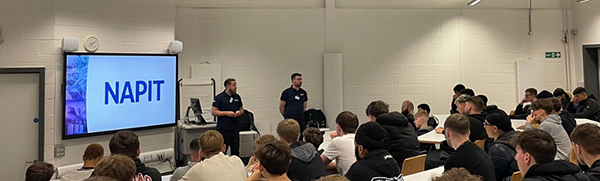
The NAPIT Foundation helps students and learners stay up-to-date with the electrical industry and offers a wealth of support to develop industry knowledge. It’s that time of year again when students are taking the next step in starting their careers as they collect their exam results. Whether it is GCSEs, A Levels or T Levels, young learners should be proud of their efforts no matter the result. It can be challenging to determine the next steps and your options for the future. For those wanting to step into the industry, an electrical apprenticeship, a course at your local college or T Levels can be considered. It can be daunting to stay on top of constant changes when entering the industry. Learners need to get the best out of their education. At NAPIT, we aim to give learners a ‘foundation for success.’ NAPIT works with a number of colleges and organisations in the UK through its initiative, NAPIT Foundation, supporting apprentices and students. NAPIT Foundation offers a free membership that provides a strong foundation for students, offering expert technical support and resources. By being part of the NAPIT Foundation, students and apprentices can access educational resources, technical guidance, CPD opportunities, and regular industry updates. Every month, NAPIT releases a new technical webinar hosted by our experts on industry topics where students can join in during the live webinar. NAPIT is proud to support young people with their learning journey and celebrate their achievements on this results day. Finance & Operations Director, Sarah Lowe, said: “Results day marks a key milestone for many young people in the UK. NAPIT congratulate all NAPIT Foundation students and colleges for their efforts this academic year. “Well done to those receiving their A Level or T Level results today, and best of luck to those receiving their GCSE results next week.” Read more about NAPIT Foundation here.
SELECT urges public to check tradespeople’s identification after notorious conman is jailed

Scotland’s largest construction trade association, SELECT, has urged the public to always check identification before allowing tradespeople into their home following the jailing of a serial fraudster who posed as an electrician to target the elderly. The campaigning body issued the reminder after 64-year-old Robert Markward was recently sentenced to nine years in prison for a string of crimes across Ayrshire between December 2022 and March 2023, including tricking vulnerable victims into letting him into their homes. Markward, who has more than 100 offences on his record dating back to the 1980s, was found guilty of defrauding and stealing from nine victims, some in their nineties, by pretending to be a nurse, handyman and electrician. Alan Wilson, Managing Director of SELECT, said: “Sadly, there are criminals who will use any disguise to gain access to people’s homes – including pretending to be qualified electricians. “We would remind householders to always check that visitors are who they say they are, particularly if they claim to be a tradesperson. Ask to see their ECS Grade Card or similar official form of identification that proves they are a qualified electrician. “A genuine and fully qualified electrotechnical professional will never object to showing you their credentials – in fact, they’ll be proud to do so.” The Electrotechnical Certification Scheme (ECS) is the electrotechnical industry’s official ID and competence card scheme, covering those working in the sector across the UK. Overseen by the Scottish Joint Industry Board (SJIB) in Scotland, it confirms the holder’s identity, qualifications and current status to work in the trade. SELECT, which is currently celebrating its 125th anniversary, represents more than 1,200 firms across Scotland. All members meet strict criteria, are accredited in at least one technical discipline and employ skilled and apprentice electricians working to the highest standards. Mr Wilson added: “Our message is simple – don’t be rushed, don’t be embarrassed to ask and don’t open your door unless you’re satisfied the person is legitimate. It could protect you or someone you love from becoming a victim.” SELECT advice on choosing an electrician
Resolving EMC challenges in variable speed drive (VSD) installations

Electromagnetic compatibility (EMC) is a crucial consideration in modern electrical engineering, particularly in the design and implementation of variable speed drive (VSD) systems. When EMC is not properly addressed, systems can suffer from operational disturbances, interference with nearby equipment and non-compliance with legal directives. Here, David Strain, technical director at integrated drive system specialist, Technidrive provides a comprehensive guide to managing EMC challenges in VSD installations. At its core, EMC refers to a system’s ability to operate effectively in its electromagnetic environment without emitting levels of electromagnetic interference (EMI) that would disrupt other equipment. The term encompasses both emissions from the device and its immunity to external electromagnetic disturbances. EMI, on the other hand, refers specifically to the unwanted disturbances — either conducted through cables or radiated through space — that can cause systems to malfunction. The distinction between conducted and radiated EMI is especially important in VSD systems, where the high-frequency switching of inverter outputs can generate both forms of interference. Compliance with the European EMC Directive (2014/30/EU) is not optional. The harmonised EMC product standard for VSDs defines categories from C1 to C4 that set specific emission limits and application conditions, helping ensure products are suitable for their intended environments. Selecting a VSD and associated EMC filters that meet the appropriate category requirements is a key first step towards a compliant and reliable system. However, ensuring EMC compliance goes beyond product selection — the entire installation must also meet EMC standards. Correct installation practices are essential, including proper grounding, shielded cabling and adherence to manufacturer guidelines. Inadequate installation could degrade EMC performance and result in non-compliance at the system level, regardless of the product’s CE marking. Finally, clear documentation and traceability must be maintained, as failure to demonstrate compliance can expose projects to legal and operational risks. Installation techniques that ensure EMC compliance The physical installation of VSD systems plays a pivotal role in controlling EMC performance. Drives should always be mounted inside a well-grounded metal enclosure. The quality of the grounding connection is paramount and the enclosure door must be earth bonded using a short, thick braided cable to maintain shielding integrity. Additionally, the enclosure should include an EMI conductive seal to prevent radiated emissions from leaking through door seams. If a gland plate is used for cable entry, it should be correctly fitted and either incorporate an EMI conductive seal or ensure bare metal contact at all mating surfaces by removing any paint or coatings that could act as insulators. It’s also essential to note that the grounding system must be tested to ensure low resistance values, as high resistance can degrade the effectiveness of the shielding and compromise EMC compliance. Another critical area of EMC control lies in the cabling. Both the mains power cables and the motor output cables should be shielded to limit conducted and radiated EMI. In particular, motor cables are notorious for acting as antennas that radiate high-frequency noise. Shield terminations must use 360-degree bonding techniques, such as EMI-compliant glands or properly grounded clips and must be connected to unpainted metal surfaces to maintain continuity. While pigtail terminations (often used for grounding purposes) are a common installation practice, they can introduce unwanted impedance into the shielding system, potentially reducing the effectiveness of the EMI shielding. This can compromise the overall EMC performance by allowing higher-frequency interference to radiate. To avoid this issue, it is crucial to ensure that any grounding or shielding terminations maintain a low-impedance connection. Ideally, grounding should be done using a solid, continuous connection to a suitable grounding point, without the need for pigtails. If pigtail connections are necessary, they should be kept as short and direct as possible to minimise impedance and maintain the integrity of the shielded system. Control cables must also be screened according to the VSD manufacturer’s specifications, with care taken not to connect the screen to control common or 0V lines. While many installers hesitate to ground cable screens at both ends due to concerns over circulating currents, following the equipment manufacturer’s guidance is critical for achieving EMC compliance. Diagnosing and solving EMC issues on-site Even when best installation practices are followed, EMC problems can still arise, particularly in complex or high-performance systems. In such cases, using a structured troubleshooting approach is essential. A detailed EMC checklist should be used to verify key aspects of the installation, including the make and model of the VSD, the necessity and category of EMC filters, the length of the motor-side power cables, the grounding and bonding of enclosures, the termination method of cable shields and the carrier frequency setting of the inverter. Each of these elements can have a significant impact on the EMC profile of the installation. For example, exceeding the cable length limits recommended by the filter manufacturer can lead to diminished filter performance. Likewise, incorrect termination of shields or inadequate grounding can result in elevated emissions or reduced immunity. Advanced filtering solutions for persistent EMI problems When standard measures are insufficient, additional EMC mitigation components may be required. One effective solution is the use of line chokes, which are inductive devices installed in series at the input of the drive. These chokes help reduce high-frequency disturbances by increasing the impedance to transients and also assist in reducing harmonic distortion, improving the overall power quality. Line filters are another vital tool. These are installed on the mains supply side and are designed to suppress conducted EMI generated by the inverter’s switching operation, particularly in the 150 kHz to 30 MHz frequency range. They also offer a degree of protection from disturbances originating from the grid. On the output side of the inverter, output chokes serve to dampen high-frequency leakage currents that can occur due to the pulsed operation of the VSD. These components are especially useful when the use of motor cable shielding is limited or when long motor leads are necessary. In more demanding applications, output filters can be employed to convert the square wave output of the inverter into a waveform
