



C.K Set to Lead the Way in Cable Routing with its New spiraFLEX Draw Tape Range
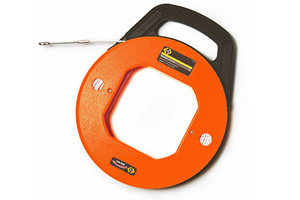
Following the successful launch of its pioneering range of next generation C.K MightyRods PRO cable rods, C.K continues to develop its range of cable routing tools, unmatched for their high quality and efficiency. With this in mind, the launch of its exciting new and innovative range of C.K spiraFLEX draw tapes marks a significant advancement in draw tape technology, making them the perfect solution for the smooth routing of cables through conduit, trunking, ducts and wall cavities. Superb Features and Benefits The newly developed spiraFLEX draw tapes offer some unrivalled benefits when it comes to providing the answer to hassle-free cable routing. The super flexible and immensely tough 4mm Ø spiraFLEX draw tape, offers a major improvement on standard nylon and steel draw tapes, which are often prone to twisting and kinking. In addition, the unique helical profile of spiraFLEX and advanced Polyethylene Terephthalate (PET) material, greatly reduces friction, kinking and coiling, to ensure longer and smoother runs and enable the user to complete the task quickly and easily. Obstructed runs are also effortlessly navigated with C.K spiraFLEX draw tapes, which are supplied with a high tensile steel wire flexi lead to allow much smoother runs. The benefits don’t stop there either and, for added convenience, C.K has ensured that the C.K spiraFLEX draw tapes are compatible with all C.K MightyRods accessories, including the LED Torch, Magnet, In-line Swivel and Hook. Housed within a heavy duty, rewindable, impact resistant cassette, the C.K spiraFLEX draw tapes are available in lengths of 10m, 20m and 30m. Graham Godfrey, Brand Manager at C.K comments: “Cable routing can be notoriously difficult and we are delighted to have found the perfect solution with our innovative new C.K spiraFLEX draw tapes, set to make cable routing a straightforward task. With the introduction of the C.K spiraFLEX draw tape range, C.K now offers a collection of industry leading cable routing solutions.” A high quality product, offering a multitude of benefits to the end user, the new C.K spiraFLEX draw tape range is set to become a popular choice with anyone looking for a superior cable routing solution. Prices for the C.K spiraFLEX draw tape range start from £46.36 (ex-VAT). For further information on the C.K spiraFLEX please visit www.carlkammerling.com or call 01758 704704.
What does the new PPE Regulation mean for health and safety in the electrical sector?

Until very recently, Personal Protective Equipment (PPE) legislation has been defined by a UK law, which was based on an EU Directive introduced 25 years ago. But as research, development and technology has moved on, thankfully, so has EU Law. The old PPE Directive has now been replaced by the new PPE Regulation (EU) 2016/425, which came into force on 21 April 2018 and must be fully implemented within 12 months. So what does this mean for health and safety in the electrical sector? Let’s start by considering the term ‘regulation’. This is a bit of jargon busting exercise, as understanding the difference between a directive and a regulation is key to how businesses need to respond. As a directive, it was up to each European Member State to look at the guidance and goals set down within it and determine its own PPE legislation to meet them. As a regulation, PPE safety rules become standardised under a consistent, legal binding force throughout all European Member States. In layman’s terms – it’s essential for companies to adhere to regulation. New obligations throughout the supply chain Under the old directive, the focus was on manufacturers. One of the changes in the new regulation is that the responsibility for compliance and governance now clearly incorporates the whole supply chain. This means anyone who is involved in any aspect of the supply and distribution of your PPE must take appropriate steps to make sure it complies with the regulation and they must keep all relevant documents for at least 10 years. This is fantastic news for reputable suppliers, customers and end users alike as it makes it much harder for non-compliant imports and sub-standard products to make their way into the market. This can only be a good thing for the safety of your team. What it means for existing PPE A question a lot of clients have asked, is whether or not, under the new regulation, their business is required to replace all of its PPE. However, at this stage companies don’t need to worry about this as there are clear and realistic timelines in place. From April 2018, all new certified PPE must be used under new PPE manufacturing standards and carry a new EU-Type Certificate, however there’s also a one-year changeover for suppliers – which means any products already manufactured (and carrying the old EU Directive EC-Type Certificates) may still be supplied/sold from existing stock until the new law comes into full effect on 21 April 2019. Even then, any equipment a business has already bought, which carries a certificate issued under the Directive, will still be valid for use until 21 April 2023, unless the expiry date for the certificate is earlier or, as has always been the case, the product needs to be replaced due to wear and tear or damage. So, even if a business bought a stock product with an old Directive EC-Type Certificate on 20 April 2019 (the day before those products can no longer be sold unless they’re re-certified), companies would still be able to use them for up to another four years. What do businesses need to do to prepare? To ensure that PPE across the business is fully compliant in time, it’s best to opt for a supplier that can provide clear guidance and expertise – meaning you won’t be caught out when the changes come into place and the business’ health and safety is fully compliant in advance. Speak to your supplier and ascertain how aware they are of the new regulations. When you’re choosing a supplier, opt for a brand that is researching and introducing the best possible materials and manufacturing techniques to make sure their PPE clothing and equipment is as safe as possible. For free advice on the PPE changes, you need to implement to ensure Arc Flash safety, speak to a sector expert by calling +44 (0) 1482 679 600 or visit http://www.progarm.com/
Resistor for renewables
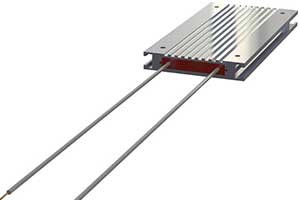
With UK Government figures reporting that renewable energy accounted for almost 30 per cent of energy generated, power quality specialist REO UK is focussing on ensuring reliable power generation for the future. The company has launched the REO BW151 Resistor Kombi, a braking resistor for renewable applications such as wind turbines and electric cars. Braking resistors work to ensure the safety and longevity of electrical components. If there is surplus electricity in the circuit and it cannot be regenerated, then the energy will put excess wear on the electrical motor drive system, which will harm it. Braking resistors absorb the surplus load that is created and convert it into heat. This also creates a braking effect, slowing down the moving mechanised load, which can make the movement much safer and protect the electrical drive system. The REO UK BW151 resistor has special aluminium profiles for fast-temperature derivation or is also available as a water-cooled version. It provides a high-power density in a small area and has various switching and combination possibilities for different applications. “As the renewable energy sector and the electric car market grows, there is an increasing need for electrical components that are well designed,” explained Steve Hughes, managing director of REO UK. “The UK Government will be investing £246 million in battery technology to help manage the storage of renewable energy. However, braking resistors are also an important component in ensuring the safety and efficiency of renewable energy generation. In wind turbines, the REO BW151 resistor is safe for use onshore and offshore. In faster winds, cyclical braking is introduced, causing the turbine blades to slow. By using a braking resistor, the excess energy will flow into it, away from the generator, reducing the weight and turning the load into heat.” He continued. For more information about the REO BW151 resistor, please click here or call 01588 673411.
Harvard Technology announces appointment of new CEO

Harvard Technology, a pioneer in smart wireless lighting solutions, has appointed Gary Lynch as Chief Executive Officer (CEO). Mr Lynch joins Harvard Technology in its 25th year following renewed investment by a group of renowned investors. He brings a wealth of experience to the post, having previously held senior roles with ICL, Celestica, Glen Dimplex, Nikon Metrology and GE. Mr Lynch said: “I am delighted to become a part of this pioneering and highly regarded company. Harvard Technology’s R&D investment has enabled it to remain a market leader for so many years as it continues to launch state-of-the-art products. We will build on this reputation going forward, as we continue to create innovative market-leading solutions.” “Our team has the ability to offer customers a full package of leading edge technologies, so I am looking forward to getting to know our customers and share our vision for the future, as we continue to re-focus on our core values and our acclaimed brands” Established in 1993, Harvard Technology is customer focused, offering best in class products and services to the provide high quality and delivery performance that our customers expect. Harvard Technology Background Information: Established in 1993, Harvard Technology has grown to become a leading player in the design, development and manufacture of energy saving lighting solutions. Harvard Technology’s innovative ranges of products include LED Solutions, combining the market-leading CoolLED LED drivers, LEDeng light engines, and CustomLED design and placement service, as well as the ingenious monitoring and management system for indoor lighting EyeNut, and the wireless remote monitoring and control system for street and outdoor lighting LeafNut. For more information about Harvard Technology, please click here
SELECT marks another successful year

Another year of successful awareness raising, outreach and training initiatives was recorded at the AGM of SELECT, the campaigning trade body for the electrotechnical industry in Scotland. Kevin Griffin was re-elected as President of SELECT and Kenny Duncan was re-elected as Vice President at the meeting and Technical Update, which was held at the DoubleTree by Hilton Edinburgh in Inverkeithing, Fife. The AGM also welcomed Darrell Matthews as the organisation’s new managing director and wished outgoing MD Newell McGuiness, who has served for 29 years, every happiness in his retirement. Mr Griffin pointed out that the technical hot topic over the course of the year had been work on the 18th edition of BS 7671 on which many hundreds of hours have been spent to ensure amendments would be practical and would meet international standards. He said: “For the third successive year, SELECT delivered awareness training to all local authority verifiers. This year we travelled to eight locations around Scotland delivering updates on BS 7671 and BS 5839. “These events are an important part of maintaining our relationship with local authority building standards staff, which helps us represent members’ interests around the Certification of Construction Scheme.” SELECT’s Toolbox Talks also had a strong year. In 2017, 12 events had a record number of attendees with more than 650 members coming to hear about updates to the Scottish Building Standards and Surge Protective devices, a presentation which now features on YouTube. Training played another important role with a 5% increase in demand for SELECT training courses. Over the year SELECT trained 2871 delegates across 267 different courses. 2044 delegates were from member businesses and the rest from non-member organisations. Dave Forrester, SELECT’s Head of Technical Services, who presented on the major changes, said: “It has been another eventful, but very satisfying, year with demand on the increase yet again.” SELECT’s 1250 member companies account for around 90% of all electrical installation work carried out in Scotland. They have a collective turnover of around £1 billion and provide employment for 15,000 people. For more information please contact Alan Wilson, Head of Membership and Communications at SELECT, the Electrical Contractors’ Association of Scotland, The Walled Garden, Bush Estate, Midlothian, EH26 0SB. T: 0131 445 5577
Competitive differentiator: Digital twins are changing the energy industry

Improved operations, a reduction in unplanned outages and better managed variations in market conditions — it’s the idyllic aim of power leaders across the globe, but how is the digital twin concept making this goal a reality? Martyn Williams, Managing Director at COPA-DATA UK, explains. Digital twinning describes the mapping of physical assets to a digital platform. For the energy industry, this could be a wind farm, nuclear facility or traditional coal plant. The digital replica uses data from physical assets, for instance, thedata acquired from the motor of a wind turbine, to analyse its efficiency, condition and real-time status. It sounds impressive, but how can it improve energy applications? Twin Power Consider wind farms as an example. Wind power contributed 15 per cent of Britain’s total electricity generation in 2017. It’s an increasingly popular form of energy generation, but as turbines are expected to operate over many decades, in some of the harshest environments, unexpected failures can be costly. Therefore, it’s highly beneficial to predict anupcoming equipment failure, well before it takes place. Using a digital twin of the turbine, the replica can inform an operator when an asset begins to show signs of non-optimal performance, without an engineer having to access the physical turbine. This could give an indication of when the asset could fail, minimising the risk of unexpected downtime. By gaining this insight into upcoming issues, maintenance engineers can also make their repair decisions based actual data, as opposed to pre-defined maintenance schedules or guesswork. Assets can then be kept at their optimal level for maximal profits, rather than performing random, reactive maintenance when a part breaks down. That said, improved maintenance isn’t the only advantage of this technology. Unlike nuclear, gas or coal, where the power output can be predicted, wind power is much more volatile. Using a digital twin of a wind farm, operators can forecast when they may experience increases or decreases in wind speed based on simulations. This allows them to quickly react to markets and better cope with highly vertically integrated markets, like North America and Europe, where there are multiple fuel sources to fulfil energy demand. By analysing digital turbines, operators can utilise this data to optimise generation and profits. What happens if the wind drops below a certain level? Should you sell your energy today based on rate trends? Would it be better to ceasegeneration today, because the cost of generation surpasses potential profit? All of these questions could be informedand answered using this data. However, data collection holds no value without the correct software. An intelligent software package is essential to analyse and visualise this data onto a human machine interface (HMI). COPA-DATA’s monitoring software zenon, for example, includes a simulation mode which allows operators to make changes to a digital asset and see the effects — without the risk of tampering with a real-life physical asset. Gaining insight into the future is one thing, but what about reviewing past occurrences? Thankfully, zenon also provides the module Process Recorder, which can replay previous time frames. At a wind generation site for example, an operator could use this module to identify changes that have occurred at a certain time. This will demonstrate what caused a sudden dip in power generation, or an unpredicted increase in operating costs. All inclusive Digital twinning can be applied to almost any energy generation site. At nuclear facilities, this technology could be used to predict the failure of a compressor, 30 to 60 days ahead of actual break down. It can cost millions to bring a nuclear plant back online, so the cost savings for this sector are undeniable. Coal plant operators can also benefit from digital twin insight, to save on fuel and improve overall efficiency. This couldreduce the amount of coal needed to run a plant, reflecting the huge potential for economic and environmental benefits. Improved operations, reduced outages and better managed variations in market conditions may seem idyllic, but the digital twin makes it possible. It certainly explains why this technology is so well received in the energy sector, and why we’re set to see more use of digital twins in the future. www.copadata.com/en/
Tritium signs deal with IONITY for 100 high-power charging sites across Europe

IONITY has chosen Tritium as its technology partner for the construction of 100 high-power charging sites across Germany, France, UK, Norway and Sweden. The dedicated electric vehicle (EV) charging stations will have an average of up to six user units, each capable of delivering 350 kW of power for fast charging of modern EVs. All equipped with the Combined Charging System (CCS) used by a wide range of vehicle manufactures. “We chose to partner with Tritium because they have a world-leading technology and have shown they can develop and deliver their products quickly,” said IONITY CEO Michael Hajesch. The deal follows closely on the installation of two new sites in Germany at Tank and Rast rest stops at Brohltal East and Brohltal West. As the first sites to go live for IONITY in Europe, these two sites each have six high-power user units and form part of a planned rollout of around 400 EV charging sites across Europe. This will ensure EV owners will always have access to a high-power charging station within 120 km. “We already have a leading position in the European fast-charging market and could see that demand was really taking off. Which is one of the reasons we recently opened our new sales, testing and assembly facility in Amsterdam,” said David Finn CEO and Founder at Tritium. “This deal with IONITY shows just how fast the transition to EVs is happening.” Each of the Tritium high-power chargers on the IONITY sites will deliver up to 350 kW, which can add 150 km of driving range to an EV in just five minutes. They include Tritium’s unique and innovative liquid-cooled technology and the complete charging infrastructure is extremely compact, typically up to 50%-75% smaller than other systems on the market. for more information about IONITY sites please click here
OECD report confirms the large scale of WEEE non-compliance through online marketplaces

EucoLight has welcomed OECD report on ‘Extended Producer Responsibility (EPR) and the impact of online sales’, to which EucoLight members contributed. Recognition of the online WEEE non-compliance challenge, (free-riding), faced by Producer Compliance Schemes is a vital first step to addressing the problem. EucoLight endorses the recommendation to define multi seller online platforms as ‘producers’ of the products that they list from non-registered companies, and that transit through their fulfilment houses. The report indicates that online WEEE non-compliance is hindering the efficiency of WEEE systems, affecting around 5 to 10% of the total OECD Electric and Electronic Equipment (EEE) market. This issue affects especially small devices, such as LED lamps. EucoLight has been promoting policy responses to tackle WEEE non-compliance and is actively facilitating the debate among stakeholders and institutions, and to identify possible solutions. EucoLight Secretary General, Marc Guiraud explains: ‘WEEE schemes, which aim to make producers responsible for the environmental impact of the products they sell, have been key in increasing recycling and collection rates. When producers selling online avoid their obligations, they impose an unfair burden in the rest of the system and on compliant producers. Non -declared products prevent correct calculation of collection rates, and therefore achievement of the collection targets.” Nigel Harvey, EucoLight Vice President and Recolight CEO said: “The OECD report confirms the large scale of WEEE non-compliance through online marketplaces and fulfilment houses. There is an urgent need for regulatory change. The VAT system has been amended to make online fulfilment houses jointly liable for VAT payments for any product they hold in stock in the UK. A similar approach is now needed for WEEE.” About EucoLight EucoLight is the voice of European WEEE compliance schemes specialised in managing the collection and recycling of WEEE lighting; working to make the circular economy a reality for lighting products. On behalf of its 19 members, EucoLight engages with everything related to the WEEE Directive, legislations and standards affecting the collection and recycling of WEEE lighting. EucoLight members collect and recycle, in aggregate, 79 % of the lamps waste collected in the 18 countries in which they operate. Founded mid-2015, EucoLight has quickly embarked into constructive dialogue with relevant stakeholders to provide expertise in the field of management and treatment of WEEE lighting and to promote the positive role of Extended Producer Responsibility schemes on the environment and society. For more information, visit the EucoLight website, follow EucoLight on Twitter @EucoLight
Boulting appoints new HR director

Warrington-based engineering solutions provider, Boulting Ltd has promoted human resources (HR) manager, Michelle Stott, to the position of HR director. Stott, who has over 20 years HR experience and has previously worked for Marks and Spencer and the Environment Agency will take up the role to reinforce the organisation’s commitment to its staff across the UK. Stott, who graduated from Liverpool John Moores University with a degree in Human Resource Management and Psychology, began her HR career at Royal and SunAlliance and has worked both in the UK and Overseas for north-west based organisations her entire career. Moving to Boulting Ltd in 2013 as HR and resourcing manager, she has supported the organisation with employee relations and ongoing recruitment requirements. Stott is Charted Institute of Personnel and Development (CIPD) qualified and also holds numerous employee management accreditations including, Myers & Briggs Type Indicator (MBTI) and 16 personality factors (16pf). Throughout her career, Stott has designed and developed assessment tools for line managers and outplacement workshops as well as implementing an online tool for recruitment strategy. “In the five years that I have worked for Boulting, I have always been impressed with the future prospects of not only the company, but the organisation’s employee skills set too,” Michelle Stott said. “As HR director I will look to reaffirm the company’s people management processes as well as solidify new schemes, such as a formal mentorship programme and increased school liaison work. “Government studies report that the engineering sector is facing a skills crisis like never before,” continued Stott. “The industry needs around 186,000 skilled recruits each year, until 2024, to help bridge the gap. At Boulting we understand the need to develop our current staff as well as consider new ways to tackle the skills gap and improve diversity across the engineering sector as a whole. “Our dedication to our employees continuous professional development (CPD) and our ongoing apprenticeship scheme is just the starting point of our investment in engineering careers and the evolving industry in which we work,” Stott added. “Boulting Ltd is committed to its employees,” Josh Groake, deputy managing director at Boulting commented. “By promoting Michelle into the role of HR director, she will lead a dedicated human resources team that will work to support and guide our staff across the UK and beyond. Michelle will provide a wealth of knowledge and experience to our directorial board and some of the ideas and plans she has moving forward will continue to set Boulting apart as a dedicated and valuable employer.” Boulting Ltd is a multi-disciplined engineering solutions provider, operating across a diverse range of industry sectors in the UK and abroad. The organisation employs over 950 staff throughout the UK at its regional sites. To find out more information about Boulting visit www.boulting.co.uk.
