



Tool theft and how to protect against it . . .
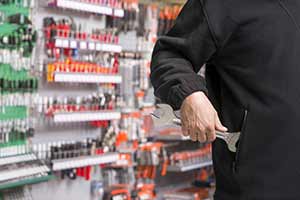
Whether you’re a plumber, builder, electrician, mechanic, self employed or employed, tool theft is no joke. With recent figures suggesting that tool theft is on the rise, it’s more important than ever to protect your livelihood from the devastating consequences of chancers and thieves. As tradesmen, we know that tools are an essential part of everyday life, but what if this was taken away? No tools means, no work. No work, means no money. No money, means no bills paid. And so begins a snowball of devastation. The unfortunate thing is that these attacks quite often occur with little or no warning, in fact you may only discover the theft as you are due to leave for work, which is why we recommend as many deterrents as possible to keep your tools safe and secure. So let us help you to protect your tools in a few simple steps . . . 1. Tool Insurance This is one of the first things you should own as a tradesman. With so many companies offering different levels of cover, there really is no excuse not to have this in place. Yearly cover works out at pennies per day, offering cover in excess of £10,000 in many cases, giving you peace of mind should theft occur, so the question is . . . how can you afford not to? 2. Show them you mean business While some people argue that a huge padlock or van lock indicates there is something of value inside, it also proves that you are serious about protecting your belongings, therefore discouraging any chancers or passers by to break in. 3. The Krypton Factor That got your attention didn’t it?! If, on the off chance thieves do manage to gain entry, the last thing you want to do is make it easy for them to walk away with your hard earned collection of tools. Enter the krypton factor. This is where we recommend heavy duty, lockable tool boxes, lockable cabinets, lockable drawers, or anything else that requires time (and patience that they likely wouldn’t have) to decipher. With any luck, these lockable items might just stall them enough to walk away. And don’t forget to remove batteries and chargers for additional security, storing these in separate sections. 4. Mark your tools They may seem like a simple thing to do, but it’s very effective when it comes to recovery of tools. Mark them in a discreet yet visible place with either a name, symbol, logo or anything that is relevant to you and would make your tools instantly recognisable. It’s also a good idea to take photographs of these as proof should the need arise. 5. Tool trackers Brands such as Milwaukee, Dewalt and Makita offer tracking devices that are easily attached to your power tools providing easy connectivity, GPS signal and many alerts. We highly recommend these as a theft deterrent due to their quick and easy trackable features. Thieves won’t get far with these in place! 6. Smart parking For a no frills approach we recommend thinking outside the box when leaving your van unattended. Parking against a wall, building, gates or anything else that may cause an obstruction is a simple yet effective deterrent. Afterall, there’s no use trying to break in, if they can’t even open the doors! 7. CCTV An oldy but a goody. It’s safe to say that CCTV has evolved over the years, with many improvements along the way. Gone are the days of bulky tapes and stacks of storage, you can now check in at any time thanks to the technological advancements of CCTV monitoring apps. With the ability to keep an eye on your belongings at all times, you can quickly alert the police should anything appear untoward. CCTV provides live video footage, making it an essential part of catching the thieves, and they will be caught. And finally . . . Although a determined thief is hard to deter, we firmly believe that you can reduce the risk of becoming a target by following the tried and tested suggestions above. So what are you waiting for? Make the changes today, and lets stamp out tool theft once and for all. For more information about Tool theft please visit https://www.toolden.co.uk
Tool maintenance and why it’s so important
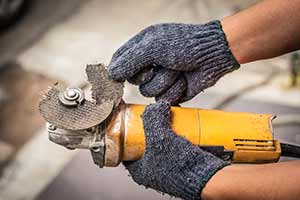
As tempting as it may be to down tools and leave site quickly after a busy day, it’s important not to let this temptation get the better of you. Tool maintenance is an essential part of maintaining the quality and life of your equipment, afterall, you wouldn’t turn up to a job without looking after yourself would you? So it’s exactly the same for your tools! Power tools are required to perform heavy duty tasks on demand, therefore regular maintenance is the only way to ensure they remain as powerful as the day you bought them. Read on to find out how and why. How do you maintain tools? Tool maintenance shouldn’t be a chore. Think of it as a way of winding down after a long day on a job, knowing that by following a few simple steps, your tools will be ready for action the following day. Take a look at the checklist below for helpful tips and advice on how to get the most of your tools. ✓ Clean, clean, clean A quick once over of your tools should be the minimum you should do after each use. Wipe away and dust or debris with a cloth, check smaller areas for build up, clear out air vents to remove anything that may have collected throughout the day. Regular cleaning also gives you an opportunity to inspect each item, taking note of any areas that may appear a little worn. ✓ Sharpen and shine The correct power tool should make light work of the task ahead, however, having blunt tools means you and your tools have to work twice as hard to get the job done! You will be pushing your tools to the max and expecting the best results, which of course, will not happen if they aren’t fully equipped. So make sure your blades are sharpened and shined on a regular basis, no dirt, no rust, just super sharp. ✓ Storage How you store your tools plays a huge part in the lifespan of them. Again, while it may be tempting to throw them all in one box, we recommend resisting the urge to do this. Instead, spend a little time putting them neatly away in like for like groupings, this way it’ll be easier to grab what you need, rather than having to rummage through a huge pile of tools. ✓ Replace old parts As you use your tools, you’ll get to know which parts are susceptible to natural wear and tear. Belts, brushes, cables and switches tend to be the main contenders. Therefore, it’s important to monitor any suspected areas as you don’t want a belt to snap during a job, so take the risk of downtime away with regular checks. ✓ Batteries and chargers A vital part of tool maintenance is care of your batteries and chargers. Don’t let them run flat before charging and remember to store them in cool dry area to reduce the risk of overheating. Tool maintenance vs tool cleaning – what’s the difference? As with any tools that have moving parts, they need to be maintained regularly to ensure they are running at optimum performance. Regular cleaning removes dirt and debris build up, whereas tool maintenance restores your tools to how it should be. This is where tool calibration comes in. It’s a process that realigns parts, improves accuracy and keeps the tools running at the high level that’s expected. Without tool maintenance, parts would break, efficiency would be lost and the level of output could be effected, not to mention the fact that it would become costly to replace your tools when simple maintenance steps could be taken to prolong the life of your hard earned tools. For more information abot Tool maintenance please visit https://www.toolden.co.uk
More needs to be done to crack down on dangerous tamper tutorials
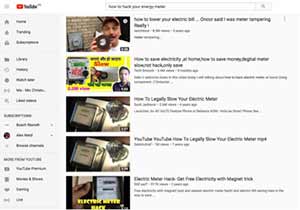
An industry expert, Echo, is calling out for social media giants to do more to remove ‘how to’ videos that provide dangerous advice on how people can illegally cheat their energy meter. The investigation by Echo Managed Services and Grosvenor Services Group found 94,700 YouTube results under the search term “how to hack your energy meter;” some with millions of views. The practice causes at least one death or injury every 10 days in the UK but safety warnings were absent from almost all of the tutorial videos investigated on the streaming site. Many of the most-viewed videos state that their method is “legal” or, because it doesn’t stop the meter altogether (just slow it down), it was non-punishable or invisible to authorities. This is highly misleading to viewers in the UK, where any form of meter cheating is illegal and can lead to five years in prison. Some comments on the videos also advertise a paid-for tamper service. This is a real-life practice whereby “professional” meter thieves target vulnerable families, visiting them door-to-door, and interfere with their meter for a – sometimes very large – fee, on the promise of cheaper energy bills. Even one incident of meter tampering can leave unsafe gas and electrical supplies, which can cause electric shocks, fires and even explosions. However, the online comments analysed did not provide details of how meter cheating can put many households at risk. This was concerning given that recent Echo research found 39% of billpayers are completely unaware of the threat meter tampering causes to public safety. This group could therefore be more easily influenced by the offer of cheaper energy fees, as they do not understand the potential consequences. The analysis comes as social media companies face intense scrutiny around the availability of harmful online content to children. Lloyd Birkhead, managing director of Grosvenor Services Group, said: “It’s shocking that such dangerous tutorials are allowed to exist on the world’s biggest social media platforms. They pose a real danger to society. Methods employed in these videos should never be carried out by a skilled technician – let alone an untrained member of the public. The promise that an individual can “cut [their] electricity bill in half” is hugely enticing – particularly for those on low incomes or those looking to carry out illegal activity such as cannabis farming. However, the reality is incredibly serious and video streaming sites have a responsibility to crack down on the practice. Current statistics show that 150,000 cases of energy theft are investigated annually in the UK, but only around 1,500 people are charged. We must therefore come together to prevent and prosecute. Closer links between the government, social media companies, energy suppliers and police could improve these figures. We need to show energy thieves how seriously their actions can impact innocent lives, as well as the tough sanctions they will face when prosecuted.” For more information about Echo please click here
Viability of hydrogen as future energy source in the Humber

An independent study, done by the iNNiTi, to enhance the evidence base for hydrogen technology has paved the way for its feasibility as a future clean energy source in the Humber region. Industry management consultancy experts, the iNNiTi effect, in conjunction with an MBA study group at the University of Hull, was commissioned by Humber LEP (Local Enterprise Partnership) to carry out the research. Hydrogen as an energy source has much potential, with many applications currently being trialled in the UK and further afield. Hydrogen can be produced by a variety of methods, and has the potential to use renewable energy sources that would make significant strides in reducing carbon emissions. It also has a range of applications from industry, through to fuel for ‘zero-emissions’ vehicles and homes. Alexandra Poole, director of the iNNiTi effect, said: “we were delighted to assist the LEP in developing its portfolio of evidence for investment in the Humber energy sector. We were able to identify and evidence the key strengths and weaknesses in developing the production and application of hydrogen in the area.” “As the UK’s largest trading estuary and enterprise zone, the Humber represents 16% of the country’s seaborne trade and a major source of renewable energy offering the opportunity to explore green hydrogen. It also has significant natural and industrial resources that lend themselves to the capture and storage of hydrogen. In addition, there’s significant investment in the area’s industry, transport links and housing, providing ample opportunity for application.” For more information about the iNNiTi please click here
GDPR and Brexit – what does the future hold for manufacturing?

GDPR and Brexit both seem to be all anyone has talked about over the past few years. Yet no one seems to be any clearer on these topics. GDPR (General Data Protection Regulation) came into force in May 2018. But many companies (particularly smaller ones without a specialist, dedicated team handling data) are still unsure about what exactly this entails. As for Brexit, no other country has left the EU before so there really is no yardstick. And with more scare stories available than facts, it is very difficult to know what may or may not happen post 29thMarch 2019. So, in light of this – what does the future hold for the manufacturing industry? The GDPR opportunity Although GDPR came into play almost a year ago, it’s still a hot topic. The regulation protects the personal data of any EU resident and applies to any company that has employees, suppliers or customers in Europe. Meaning even a US-based manufacturing company that uses a UK supplier for component parts will be bound by the rules of the regulation. And while there is a lot of uncertainty about Brexit, one thing is clear: GDPR is here to stay (the UK government has already said the regulation will continue no matter what the outcome is). As many manufacturing companies move from mass production to customisation, GDPR could be seen as a potential threat to innovation. On the surface, the regulation appears to restrict a company’s use of personal data. Making it difficult for manufacturers to tailor products and services based on their customers’ behaviours and preferences. However, it also presents a significant opportunity for the future. Within the manufacturing industry, GDPR offers a framework for building trust and being more transparent. It doesn’t stop companies working with personal data. It just allows them to redefine their relationships with customers, employees and suppliers. As a result, manufacturers which work to gain the proper consent and demonstrate they are using the data properly will be rewarded with customers that are willing to consent to their data being used. Enabling companies to continually improve and personalise the services they deliver. Overcoming Brexit uncertainty When it comes to Brexit, things are more uncertain. We don’t yet know what the final deal will be (or even if there will be a deal at all). And there are still talks about a second referendum to potentially ‘cancel Brexit’ altogether. In terms of trading, leaving the EU without a deal would likely result in the most change and disruption. This scenario could potentially see supply chains become more complex and the cost of moving goods to or from the UK increase – as well as restrictions on the free movement of labour. But rather than being something to be feared, this could actually present a good opportunity for manufacturers to move production back to the UK in the future. In fact, a survey by the Chartered Institute of Procurement and Supply (CIPS) found that 32% of UK businesses who used EU suppliers in 2017 were already looking for British suppliers. So, what are some of the benefits of reshoring? Many people will argue that offshore manufacturing is cheaper, but this isn’t always the case when you take the logistics costs into account. Plus, there are fewer hoops to jump through if all parts of the supply chain remain in the UK. Local manufacturing also offers added flexibility, improved communications, enhanced control and visibility, better lead times and often higher quality end results. Additionally, reshoring UK manufacturing presents a great opportunity when it comes to retraining people and reskilling them in new techniques. How does EMS fit in? Many manufacturers have already realised the benefits of reshoring, but the process is far from straightforward. Cost and profitability are critical to the success of any reshoring. At EMS, we have helped several customers reshore their requirements for electronic manufacturing services back to the UK from both the Far East and Europe. Tools such as the Cost-Differential Frontier (CDF) calculator can also help companies compare the options of producing locally or offshoring, by looking at demand variability and putting a number on the costs. As a sole UK manufacturer, all our production is carried out in Newbury, Berkshire – allowing our customers to benefit from all the advantages associated with using a local company. Our specific New Product Introduction (NPI) teams are also always on hand to ensure communication is clear at every stage of the process and that everything runs smoothly – while eliminating any ambiguity regarding data, production and processes. To find out more about our services and how we are continuing to provide high-quality and cost-effective solutions for our customers, please contact us today. For more information about GDPR please visit https://www.itpro.co.uk
Powerstar secures place on Good Energy Framework

Powerstar, UK manufacturer of leading-edge smart energy solutions, has been selected to partner with Good Energy on its battery storage framework, helping to strengthen the clean power sharing company’s commercial and industrial (C&I) energy storage offering in the UK. One of only two companies to be announced, Powerstar was selected following a competitive tender and procurement process, alongside Belectric, and will be tasked with supporting Good Energy with the design, installation, operation and maintenance of major commercial battery storage projects. Good Energy said the partnerships with Innogy-owned Belectric and Powerstar would ready the firm for future projects and put into place a key part of the framework for their delivery, providing an excellent opportunity for business supply customers to procure battery storage solutions that are fit for purpose and manufactured for their needs, thanks to the structured approach that Good Energy has put in place. It will also assist in educating commercial customers on how battery storage can help them take ownership of their power, enabling energy resilience, carbon savings and cost efficiencies. As a trusted supplier on the framework, Powerstar will support Good Energy in supplying Powerstar VIRTUE battery energy storage solutions that can help deliver a host of benefits including maximising renewable energy, minimising CO2 emissions, reducing energy consumption and costs, all whilst delivering energy resilience through its full Uninterruptible Power Supply (UPS) capabilities which can fully support the load during a grid event such as a loss of power. Dr. Alex Mardapittas, Chief Executive Officer at Powerstar, said: “We are incredibly proud to be one of the few chosen suppliers selected to be a part of Good Energy’s business battery storage framework. It displays the level of quality we uphold for our solutions and highlights our focus of sustainability as a business. “It is a positive step towards the wider adoption of energy storage technologies to maximise green energy in the UK as renewable generation continues to become a larger part of the energy mix. We look forward to working with Good Energy to provide a sustainable, and more resilient, future for the UK’s commercial sector.” To find out more about Powerstar and good energy, please visit https://powerstar.com.
Custom 3-point locking from Essentra Components for RACK Data Cabinets installations
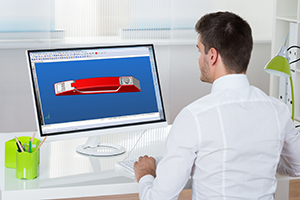
EAE Elektroteknik A.S. is a member of the EAE Group which was established in 1995 to manufacture Low Voltage Electrical Enclosures under the E-Kabin brand. When EAE faced growing customer demands to increase the productivity and efficiency of its data cabinet locking system, Essentra Components developed the existing product into a new single movement locking solution, solving EAE’s customers valuable time and providing improved product satisfaction. EAE prides itself in providing robust and functional solutions that effectively meet the needs of its customers, their RACK Data Cabinets are no exception. These cabinets previously featured a 3-point locking system however, due to customer demand, the company decided to develop a more efficient single movement system that would increase functionality whilst still maintaining security. Having provided EAE with previous standard locking systems, Essentra Components was perfectly placed to supply an enhanced product to EAE. Working closely at every stage of development and discussing the specification of the product ensured the most efficient solution was provided. The most important criteria was for the locking system to be linear, which would allow the door to be opened in one movement using a multipoint locking system, but without the need for a gearbox. This meant the lock could be set and opened in one fluid movement saving valuable time for EAE’s customers. Using its specialist 3D printing capabilities Essentra Components delivered a number of 3D prototypes as well as a fully working version, enabling EAE to wholly test the product in application. Any modifications were quickly identified and adapted so that the solution could be quickly delivered to EAE, accelerating the launch of their RACK Data Cabinets to market. Ersun Çakmak – E-Kabin R&D Manager at EAE Elektroteknik pointed out that “Not only did Essentra ensure that the product significantly increased ease of use and enhanced productivity for our customers, but they were even able to re-purpose existing components. This meant not only were our customers happy, but the lock came at no extra cost to us.” The outcome produced significant advantages on many fronts – primarily of course the new design fully met the requirement for quicker, easier opening/closing of the cabinet door. The push-button handle access with lift handle enables opening or closing to be operated in a single fluid movement. No fiddling with catches and keys, just push and flick to open, push and click to close. Cost improvements came because Essentra Component’s custom solution specialists were able to incorporate some existing components into the new product reducing EAE’s investment in new tooling moulds. This simplified design and use of existing components enabled substantial cost savings. Naturally, the new solution was designed to fit the same ‘cut-out area’ as the previous locking system, meaning EAE did not need to change the design of their RACK Data Cabinets to fit the new solution. Alongside these operational improvements, the custom solutions team were also able to make improvements to other features of the lock, such as the material. The body is now made completely from a robust zinc composite providing an added layer of security. Ersun Çakmak explained that “Essentra Components and EAE have a long-standing relationship of over 15 years. By delivering this adapted linear locking system Essentra ensured that we were able to meet the requirements of our customers, significantly improving their productivity and efficiency.” Essentra Components continues to build on this flourishing relationship by offering ongoing support. Essentra Component’s forward-thinking R&D team are now in a position to work closely with EAE driving innovation through development of new Access Solutions. Further information on Essentra Components or the EAE products can be found on the Essentra Components website – www.essentracomponents.com, or contact sales@essentracomponents.com. Follow them on social media: https://facebook.com/essentracomponents/, www.linkedin.com/company/essentra https://www.youtube.com/channel/UCD-2g7tiLiKxsDptdC79BNQ
New D-Snap Technology in stainless steel from FDB Panel Fittings
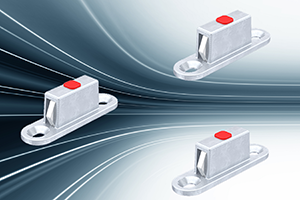
The D-Snap components system enables panel builders and installers to save time and money with click-together panels. Now this robust technology is available from FDB Panel Fittings in a stainless steel format developed for applications that need to be permanently fixed on one side and easily removable on the other. Their first component offering is the DST fastener to suit 30×10 cutout so bringing DST assembly to cabinets for external environments. The fastener has a clamping range of 0.8-3mm with a pull-out force of up to 50N. Suitable for panels, hollow sections or complete housings, the fastener can be installed in a recessed position for flush mounting. FDB Panel Fittings and sister company FDB Electrical share their online shopping website at www.fdbonline.co.uk. Further information on FDB products and services may be found at:www.fdb.co.uk. Find the latest information and news on the D-Snap components system FDB blog – www.fdbnews.co.uk, or follow them on twitter: www.twitter.com/fdbpanelfitting– also see www.youtube.com/fdbpanelfittings.
Choosing between air and water cooling resistors
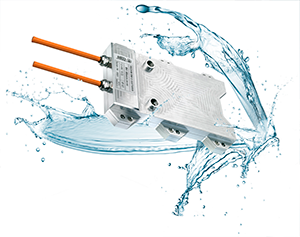
With rising ambitions to meet sustainability targets, the International Energy Agency (IEA) aims to have 220 million electric vehicles(EVs) on the road by 2030, EVs are fuelled by battery power and overheating must be avoided to ensure reliable and efficient operation, Here, Steve Hughes, managing director of specialist electrical components manufacturer REO UK, explains the difference between air and water cooling braking resistors. The effects of temperature on a product’s performance has always been an important design consideration. Overheating can reduce efficiency and the lifespan of components. So, whether a product is subjected to environmental heating or cooling, or if it generates its own rise or drop in temperature, managing temperature is critical. At REO UK, many of our customers are in the marine, renewable and railway sectors, all of which must operate in extreme environmental conditions where standard electrical items are not always fit for purpose. From our experience, many of the challenges components face in these sectors, like temperature, are also applicable to automotive manufacturers. Most manufacturers understand the importance of effectively addressing and understanding heat transfer considerations early in the design process, saving time and minimise prototyping costs. Despite this, many original equipment manufacturers (OEMs) are unsure how to choose between the two main ways of regulating device temperature: air-cooling and water-cooling. Braking resistors are used to dissipate heat and slow down a mechanical system to avoid overheating. Brake resistors have relatively low ohmic values, a high-power rating and are typically encased in a frame to create a safe distance between surrounding components. To increase its dissipation capability, the resistor’s frames feature cooling fans or liquid coolants. Traditionally, air cooling has been most commonly used as it is relatively inexpensive and require little maintenance, other than the replacement of filters. This is because the fan technology is robust and able to undertake some degree of damage without impacting performance significantly. For example, if a single fin broke on the fan it would remain functional and safe to use. Air-cooling, however, does come with its limitations. Firstly, the integration of a fan means that the enclosures of the device generally must be bulkier to accommodate it. This means that air-cooling cannot be used in applications where space is limited. Air fans also create an additional source of noise, unlike water-cooling alternatives like the REO braking resistor D 330. Suitable for integration in EVs, the resistor works by converting excess electricity that is not needed for recharging the EVs battery into heat that can be dissipated safely or as energy that can be regenerated into the vehicle’s power supply. This is an effective use of energy that would otherwise simply be lost. It also reduces the need for resistance heating using the battery’s energy, which can reduce the vehicle’s driving range. The benefit of using a water-cooling resistor in an application like this, is that they can be easily integrated into the existing cooling systems of the vehicle and are able to deliver cooling on the areas where fans often fall short. Water-based systems operate on a very simple principle of heat exchange whereby pipes containing a liquid coolant circulate around an enclosure and out of the device to keep components cool. The excess heat generated during use is thermally conducted by the water in the pipes, which can then be transferred out of the device and regenerated for other processes. With EVs, automotive manufacturers aim to make driving as energy efficient as possible. Not only are fans in air-cooling systems limited by their reliance on ambient temperatures to cool down overheating components but depending on the size of the application, OEMs may need to integrate multiple fans as opposed to just one. In comparison, water has a high heat conductivity and only requires a single pump to cool infrastructure, significantly lowering the overall energy consumption and cost of the cooling system. Another advantage is that coolant can be stored in the pipes below the application’s ambient level for even faster cooling. Water cooling is the only method that permits cooling below the ambient air temperature and is ideally suited to industrial applications. In addition to maximising efficiency, resistors like our REOHM series D 330 make an additional space saving of up to 88 per cent. The use of a water cooling system allows optimal temperature characteristics to be achieved, while the performance of the component is improved. The adoption of electric vehicles is only set to increase in the coming years and automotive manufacturers must be able to select the right components, like resistors, and technologies for their design. By considering the factors that affect equipment performance, engineers and OEMs can ensure they make the right choice between air-cooling and water-cooling every time. For more information about components for electric vehicles, visit the REO UK website and download the electric vehicle power whitepaper.
