



Toyota Stadium first to install LED lighting using robotics

Signify (Euronext: LIGHT), the world leader in lighting, has installed its connected lighting system Interact Sports at the Toyota Stadium in Aichi, Japan. It’s the first outdoor stadium in Japan to install connected LED pitch lighting in combination with high performance Philips ArenaVision LEDs. Unique in the project was the use of robotic measurement while installing the connected lighting system. The robotic measurement is part of Signify’s innovative commissioning method. It helps to reduce installation time and significantly improves accuracy compared to traditional measurement methods. Aiming of floodlights, horizontal illuminance, color temperature and rendering are just a few of the components put to the test. The total service package installed in Japan’s first LED outdoor stadium includes software-based lighting design, 3D visualization and video aiming. Already in operation in numerous stadiums around the world, Signify’s innovative LED lighting system brings an immersive bowl lighting experience by seamlessly integrating color changing floodlights alongside entertainment lighting moving color spots. The new lighting meets the stringent broadcast standards for flicker-free Ultra-HD 4K television and super slow-motion action replays, people at home can clearly see every detail and emotion on the pitch. Stadiums that already use Interact Sports include Atlético Madrid’s Wanda Metropolitano and Juventus’ Allianz Stadium. Toyota Stadium upgraded its pitch floodlights with 554 energy-efficient LED lighting fixtures across its 45,000-seat stadium. It uses Interact Sports Lighting management software to control and manage Philips ArenaVision LED Field of Play (pitch) lighting. It combines seven different light distribution characteristics which make it possible to design lighting best suited for each player’s action. For more information about the LED pitch lighting please visit https://www.signify.com
Trades bosses losing points for productivity

52% of UK trades workers would be more productive if offered gamified rewards! GAMIFIED rewards and bonuses not only introduce an element of fun in to the workplace, but also increase employee performance – and according to new research, 52% of trades bosses are losing out on increased productivity by not making use of them. The only industry that would have more increased productivity from the introduction of gamified rewards than Trades was Medical/Healthcare (56%), with Hospitality and leisure (51%) and Retail (50%) both close behind. A survey of 1,096 UK workers, by workplace incentives and rewards provider, One4all Rewards, published in the Workers on Top of Their Game Report, surveyed employees from different age groups, genders and industries and revealed that 1 in 2 (52%) of UK workers in the trades industries would feel more motivated to work hard and 1 in 5 (20%) would increase their performance if their employer introduced a points based rewards and bonus system. Gamification is increasingly being used in workplaces, with Gartner reporting 40% of Global 1000 organisations are doing so to motivate and encourage positive behaviours. The technique works by setting small rewards for desired actions and then inviting workers to repeat that behaviour, which they do in anticipation of the same result. 1 in 4 (26%) UK workers in the trades industries said they would work harder to unlock rewards and bonuses in this way. There are also clear softer benefits of gamified rewards systems, with 31% of UK trades workers claiming this would also increase their happiness at work, while almost the same number (33%) said it would make them feel more engaged with their company. Finally, 2 in 5 (38%) of those in trades surveyed said that working towards rewards and bonuses would make work more fun. Alan Smith, UK managing director at One4all Rewards, said: “In SMEs, finding the budget for a rewards scheme can be tough, but gamified rewards can be more flexible in some ways and they don’t have to involve large budgets. While some might think that these kinds of rewards are more complex to implement, this isn’t necessarily the case and there are many companies out there that can help with implementing these rewards. “As we can see from the survey data, and the sheer number of trades workers who said that the implementation of a gamified reward system would make them work harder, the cost of implementing this kind of rewards could soon be recouped by the increased productivity employers would benefit from.” Top 5 industries that would benefit from increased productivity by introducing gamified rewards: Medical or Healthcare – 56% Trades (eg. construction, plumbing, carpentry) – 52% Hospitality and Leisure – 51% Retail – 50% Local or National Government – 50% One4all Rewards are industry experts in benefits and rewards. Working with over 6,000 businesses of all sizes nationwide, One4all Rewards helps to transform customer and employee relationships through successful rewards and incentive schemes. For more information and to read The Workers on Top of Their Game Report, visit http://one4all.link/gamification Top 5 benefits of gamified rewards in the trades industries: An increase in employee motivation – 52% Employees would find work more fun – 38% An increase in employee happiness – 31% A boost to employee morale – 33% Employees will work harder – 26% For more information about gamified rewards please visit the one for all Rewards page at https://promotions.privy.com/campaigns/742869
The Benefits of Underground Utility Surveys

The latest report from the Utility Strike Avoidance Group [USAG] has revealed a consistent rise in Utility Strikes, impacting the health and safety of workforces worldwide enter the Underground Utility Survey. Despite these alarming statistics, clear and accurate utility records do not exist for many development and construction sites, not only impacting the safety of a workforce, but also resulting in significant cost implications in the short and long-term. A quick, easy and cost-effective solution is undertaking an Underground Utility Survey, which can be implemented using the latest innovative EML technology to successfully locate known and unrecorded services. Aside from significantly reducing the risk of utility strikes and the potential impact on site workers, Underground Utility Surveys provide a host of additional benefits, including: Complete Projects on Time Utility Surveys aid developers in keeping projects on schedule, particularly when taking into account the potential impact locating unexpected utilities could have during a construction or development process. Not only will an underground utility survey alleviate any nasty surprises, it will also minimise the likelihood of having to foot the bill for any potential expensive repairs. What’s more, having to expand project deadlines following a utility strike is likely to result in costly outcomes through additional labour costs, construction work and contract renewals. Reduces Intrusive Investigation Underground utility surveys minimise the requirement for invasive underground inspections. Depending on the project, surveys can be undertaken alongside topographical surveys, where a combined topographical and underground utility drawing can be produced. The process includes using lightweight Ground Penetrating Radar (GPR) technology to provide non-intrusive detection, such as mapping underground pipes and cable ducts alongside identification of cable services. Alternatively, project developers can use a process called ‘Slit Trenching’ but compared to utility surveying, it will only provide limited knowledge of the site. Comply with BSI standard PAS 128 Surveys As the demand on UK infrastructure continues to grow with increasing developments, utility surveys are vital in ensuring the construction of a safe and reliable construction site. Underground utilities can now be detected more easily with new BSI standard procedures, ensuring accurate detection, verification and location of active, abandoned, redundant or unknown utilities. With the process having to conform to PAS 128 standards, utility surveys represent a clear indicator of the presence or absence of underground utilities prior to breaking ground, aiding any construction and development process from the word go. Anthony Onyeogo is a qualified surveyor for Rock Surveying, who offers underground utility surveying to accurately locate the routing and depth of all buried services. For more details about the Underground Utility Survey, please visit: www.rockpowerconnections.co.uk/rock-surveying
Energy companies get smarter about resourcing challenges?
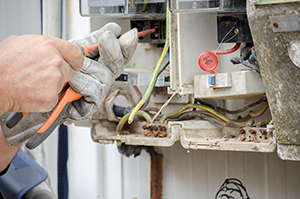
Given the speed at which energy theft cases can escalate and cause danger to life, it’s vital that teams are available to investigate reports instances as quickly and efficiently as possible. This process is being significantly hampered by time constraints placed on in-house engineers by the smart meter rollout. However, isn’t always necessary for technical engineers to attend callouts. In fact, our experiences prove that non-technical revenue protection field officers can carry out up to 75% of energy theft investigations successfully. Such teams that are also experienced in customer service and debt collection, also have the added benefit of providing a seamless, end-to-end solution as, they can effectively work to recoup the debt owed without the customer’s account being handed over to different contractors throughout their journey. As a result, engineers could focus solely on the most complex tamper cases and smart installations. Given the enormous fines levied to companies for not meeting rollout targets, this could create significant long-term savings. Here, Lloyd Birkhead, managing director at Grosvenor Services Group, will discuss the technical vs. non-technical debate and provide advice on how energy suppliers can better use their budget and resource when it comes to tackling energy theft. For more information about Energy theft please visit www.echo-ms.com
Why you should make the switch to LED lighting

In our environmentally conscious world, LEDs are a great option for lighting, but they have so many more benefits than we might realise. David Boultbee, Technical Consultant at Ultra LEDs told us why we should make the switch to LEDs. As of last year, halogen bulbs have been banned in the EU in an effort to reduce Europe’s carbon footprint. This means that many people have been looking to find a much more efficient and eco-friendly alternative, which just so happens to be light-emitting diodes (LEDs). In this article, I’ll be taking you through the many benefits of LEDs. They’re easy to install Previously, LED bulbs required a lot of changes to wiring, which meant a lot of fitters tried to avoid them where they could. Luckily, more modern LED bulbs can now be installed into traditional light bulb sockets and are compatible with mains voltage systems. Like any bulb, the only thing you need to worry about is whether the fixture is a bayonet or an Edison screw. They’re energy efficient LEDs are more efficient than other lighting alternatives and can help save on energy bills. This is because, unlike compact fluorescent lamps (CFLs) and incandescent lighting, LEDs are directional. This means that they emit light in a specific direction, instead of all directions, andevery bit of light produced by the bulb is useful. LEDs are also brighter than incandescent lights of the same wattage. This is described as producing more lumens per watt, and means you’re going to save more on your energy bills because it takes much less power to achieve the same level of light. In fact, most of the energy going to the bulb is going to be converted to light. Incandescent bulbs rely on a wire filament to be heated to a very high temperature so it glows, but this means that the bulbs use around 90% of their energy to produce heat, and only 10% on light. LEDs, however, only require an electrical current to flow through it to light up, so most of its energy is used for lighting instead of just warming the bulb. They’re good for the environment Because they’re efficient and it takes less energy to provide the same amount of light as a standard CFL or incandescent bulb, they’re also better for the environment. But, they aren’t just energy efficient: they’re also more eco-friendly to dispose of, too. CFLs contain a number of toxic substances, such as mercury, which classes them as hazardous waste. Not only are they quite difficult to dispose of compared to LED lights, but when they reach landfill, these toxic elements can leak out and harm the environment. Alternatively, LEDs can safely be disposed of in ordinary household waste, but try checking the packaging that thebulb came in, because some can even be recycled. They last longer Because LEDs don’t contain a filament, they have a much longer lifespan than other alternatives, meaning they’re great value for money. On average, LED lights can last 12–15 times longer, enduring for around 15–20 years or more compared to the 2 years you can get from a halogen bulb. This means that they can essentially pay for themselves within 3–6 months, and you’ll save money because you’re getting much more use out of them. They’re more durable There’s a number of factors that make LED lights more durable than other lighting alternatives. For one, they can withstand extreme temperatures, which means they’re ideal for being used outside where they can be subjected to big temperature changes. They’re also more resistant to shock or vibrations and are less likely to break when dropped or hit, which makes them a lot easier to transport and install. They’re great for smart lighting Today, we’re more reliant on technology than ever before, and the great thing about LEDs is that they allow for architects and designers to come up with more creative lighting solutions by using smart lighting. This means that users can control a number of things about their lights, including brightness and colour, to generate a desired mood or effect. Smart bulbs also often allow users to control their lights from their phone or tablet, which means they can be managed even when no one is home. There are multiple reasons why you should switch to LEDs. Because they’re more efficient and last a lot longer than other lighting alternatives, they’re much better for the environment and can save you a pretty penny in the process. For more information about LEDs please click here
The ethics of energy market distribution

The energy market is in a state of change. Technological, economic, environmental, and political developments are all having an unprecedented influence on how the UK considers, consumes and storesenergy. There are well publicised issues around how and where energy is produced, but the distribution of this energy is a subject that raises more questions. Is access to energy a basic human right? What are the ethical implications of storing and sharing energy? And who should be making decisions on what we buy and what we share? Can energy generation and distribution ever be ethical? Renewable energy generating solutions like solar, wind and geothermal are gathering pace across the globe. However, the development of these technologies often requires government subsidies and incentives, which can raise questions of freedom, fairness, and equality. In simple terms not all communities have the freedom to choose renewable energy solutions. In her paper ‘Is energy an ethical issue?’ Linnea Luppala argues there will always be a trade-off. She notes “Every single energy technology has its negative impacts and energy policy must make difficult decisions between the different choices available” However, we can claim that renewable energy solutions are more ethically responsible than fossil fuel solutions. Carbon dioxide and methane emissions from burning fossil fuelscontribute to global warming and decreased air quality whereas solar energy solutions produce no suchpollution. While some argue that emissions are created during the production of solar panels these emissionsare much lower compared with lifecycle emissions for coal and natural gas. The so-called ‘hidden emissions’due to building wind turbines, solar panels or nuclear plants are very low compared with the savings from avoiding fossil fuels. So where green energy technologies are available, they are certainly more environmentally ethical, but when this energy is produced who decides where it should go and at what cost? What happens with our surplus energy? In the UK, with our current centralised energy distribution system, consumers must pay a cost per unit (known as kilowatt hours or kWh) along with the costs associated with the production and distribution; some of which can be included in the kWh unit figures or a separate fixed standing charge. However, recent moves towards decentralisation of energy and bi-directional energy flow represent changes to this traditional one-way model of generator to consumer. Through solar, battery and ‘smart’ technologies consumers and businesses are now able to harness their energy production in a way that they could not do before. We are moving towards a model whereby the consumer can choose when to use, store and – in theory – sell their energy. This turns the current model of distribution upside-down and legislation in the UK and worldwide is having to adapt to fit with these changing arrangements. The Feed-in Tariffs (FIT) scheme is a government programme designed to promote the uptake of renewable and low-carbon electricity generation technologies. Introduced on 1 April 2010 the scheme requires participating licensed electricity suppliers to make payments to consumers and companies with solar panels on both generation and export from eligible installations. It has now been confirmed that the FIT scheme will be closed to new applicants from 1 April 2019. In November 2018 Claire Perry (Energy Minister) signalled a shift on export tariff plans and declared it was “wrong to provide solar for free”. Furthermore, on 8 January 2019 the Department for Business, Energy and Industrial Strategy published a further consultation on a ‘Smart Export Guarantee’ under which government would legislate for suppliers to remunerate small-scale low-carbon generators for the electricity they export to the grid. However, it looks unlikely that any direct replacement for the FIT or an export tariff will be in place for April 2019 meaning consumers may be giving excess energy back to the grid for free. When businesses and homeowners pay a ‘unit’ charge for any energy they consume, renewable energy producers providing usable energy without recompense is troubling. One country which has experienced even more controversy in terms of renewable energy models is Spain. The so-called ‘sun tax’ law of 2012 was implemented by the government of Mariano Rajoy in 2012. It has been heavily criticised as it charged Spanish homes fitted with solar panels an additional tax of 7% to remain connected to Spain’s electricity grid should the solar panels not produce enough energy. According to Spanish energy experts, the average family with three solar panels fitted to their home paid around EUR 70 each month to remain connected to the grid. Last October Pedro Sanchez’s government announced that it would scrap the controversial levy making it cheaper for consumers to erect solar panels for their own use. Energy and Environment Minister Teresa Ribera said: “This country is finally freeing itself from the great absurdity, scorned by most international observers, that is the ‘sun tax’”. Energy access in the developing world Leaving aside the significant issue of fuel poverty for the moment, in the UK and many developed countries, access to electricity is abundant. In many parts of the world, this is not the case. According to World Bank nearly one billion people – mainly in Sub-Saharan Africa and Asia do not have access to electricity. The United Nations 2012 Sustainable Energy for All initiative (EAI) stated 2.6 billion did not have access to clean cooking energies and it was suggested by International Energy Agency (2011) that universal access to sustainable energy by 2030 will not be achieved unless significant investment is targeted towards energy access provision. There is significant opportunity to use renewable technologies – such as solar – to bring electricity to rural communities. Kenya is a leading example of a country embracing renewable technologies for economic benefit. The Rural Electrification Authority (REA) in Kenya works with businesses to implement off-grid solar system – they are working towards universal access to electricity by 2020 to help the country achieve financial sustainability. In addition, the Kenyan government is investing heavily in geothermal energy production, and Kenya will also be home to Africa’s largest wind farm – the Lake Turkana Wind Power project in the north west of the country, designed to produce enough energy to power one million homes. Access to electricity is arguably a fundamental human right and the growth in renewables such as solar is going to be a key factor in ensuring this worldwide access. Energy distribution and fuel poverty So, how do we ensure ethical distribution? We have mentioned renewable technologies introduced on a government level to benefit developing countries. However, in more general terms it could be argued that only the homeowners at the upper end of the social spectrum, and big businesses have the resources to choose renewable technologies. Often the less well-off, and smaller businesses do not have the freedom to make that choice. More renewable technology means more electricity will be taken ‘off grid’. Less than 40% of an energy bill is the wholesale cost of the energy, the remaining 60+% covers network costs, operating costs etc. Fewerconsumers on the grid means that those distribution costs will need to be shared by a smaller group. This may mean that the energy bills for the
Our Solar Electric Future

Paul Hutchens is CEO of Midlands-based solar specialists, Eco2Solar, he is a board member of the Solar Trade Association (STA), the UK’s leading solar industry voice, and Chairman of the STA’s New Build Working Group which aims to inform governments, councils, house builders and consumers about sustainability in housing. Here, Paul discusses the quickening pace towards electrification of energy the UK, what this shift means for the grid, and how our electric future should ultimately benefit all consumers. As fossil fuel resources are depleted and demand for sustainable energies increase, we are looking to a future of total electrification of energy in homes, industry and transport. This is a world-wide movement, but specifically in the UK, is the National Grid prepared to meet this demand? Renewable energy solutions like solar serve a vital role in meeting future energy requirements, but are the systems currently in place able to monitor and react to the significant changes in demand expected? Shifts to electrification Shifts towards total electrification can be seen across buildings and transport, and this movement is gaining pace. Looking first at buildings – the Government’s Clean Growth Strategy released in 2017 recommends“phasing out the installation of high carbon fossil fuel heating in both domestic and non-domestic buildings off the gas grid during the 2020s, starting with new build.” In addition, following recommendations from the Climate Change Committee, there is widespread agreement that heating must be decarbonised in order to meet the UK’s 2050 carbon targets. In terms of transport, all eyes are on electric vehicles (EVs). In 2017, the Government pledged to ban production of new petrol and diesel car sales by 2040 and more recently there have been calls to bring that ban forward to 2032. Several large car manufacturers have announced that they will shortly stop production of vehicles powered solely by internal combustion engine. Volvo will stop next year and Jaguar Land Rover in 2020. Other major manufacturers plan to release high-profile electric models, including Volkswagen who haverecently announced plans to handle production of 50 million electric vehicles. Electrification of industry is following suit behind buildings and transport, but the pace of change is slower. However, for buildings and transport the not-so-distant future looks to be electric. Industry response to electrification In November 2018, the International Energy Agency reported that the world has no capacity to absorb new fossil fuel plants. We know that we cannot continue to rely on fossil fuels to generate the electricity required for industry, transport and buildings. This year, electricity generation from coal decreased by 47 per cent from June to August, compared to the same period in 2017, representing just 1.2 per cent of total MPP supply. The gap left needed to be filled by a significant increase in energy production from renewable sources. Indeed, September this year saw a major milestone in the UK power market as for the first time there was more renewables capacity on the grid than fossil fuels. The challenge for the National Grid is how it will balance these different energy sources in order to maintain consistency in supply. The six large energy companies dominating the market are having to show unprecedented agility and flexibility in reacting to changes in sources of energy. At the same time, these companies are being challenged by the emergence of more nimble, small power generators, which can immediately smooth supply of energy supply. These small generators, often positioned in sites that experience power shortages are presenting ‘two-way’ power systems where low carbon energy such as solar are complemented by energy sources like batteries and small, local power stations. These ‘pop-ups’ are increasingly valuable at times of peak demand, especially as we experience more phases of extreme weather. The energy gap? To date, the Office of National Statistics (ONS) reports that demand for electricity has been pretty constant. In the 25 October report detailing availability and consumption of electricity, ONS notes “Overall for the three-month period to August 2018, consumption in the industrial sector increased by 0.8 per cent compared to the same period in 2017. Consumption by other final users had a 0.1 per cent increase on the previous year.” In 1997, total consumption of energy in the UK was 321TWh. Twenty years on, in 2017 we consumed just 308TWh. There are many reasons for this including the improved energy efficiency of electrical products, systems and processes. However, this is set to change. In 2017, the National Grid warned that by 2030, electric cars could require 3.5-8GW of additional capacity, on top of the current peak demand of 60GW.Another estimate suggests that if one in three cars sold in 2035 is electric, the charging of vehicles would account for 3% of the UK’s total electricity demand. The power generation available at present simply won’t meet this increase in demand. Short power outages for homes are disruptive, but nothing compared to the damage that can be done in industry. Pressures on the grid can result in so called ‘brown-outs’: drops in voltage in an electrical power supply system. If this happens in manufacturing plants the results can be devastating, resulting in six figure damages. More and more big businesses are looking for back-ups to their supply. So, what can we do to protect consistency in supply? One answer is likely to be battery storage and smart technology. Solar, smart technology and storage We believe batteries are going to be a big shock absorber for the changes in demand expected across bothdomestic and industry settings. An Energy Storage report from February 2018 states that “In megawatt-hours, battery energy storage capacities installed in the UK by the end of 2022 will be 50 times what they were as 2017 ended.” As well as solar panels, Eco2Solar install EV charging points and battery storage in new houses. We are preparing for a significant increase in demand over the coming years as individuals and companies aim to be more self-reliant. It is still early days for home batteries, but costs are starting to come down. The space is starting to get interesting, as the big six energy companies race to make their mark in the consumer solar and storage market. Smart technology is key to getting the most out of these storage solutions. In homes, smart energy systems can balance the overall electricity load, using the ‘free’ electricity from the sun to run appliances at times when energy from the Grid is at its highest cost. The ability to store energy at peak times and use it at low peak willpresent cost benefits to consumers. Investment in out-of-home storage is soaring. Energy Storage News reports that currently, the largest battery project in the UK stand at 50 MW with Statera’s Pelham Storage project, due to be completed this December. The project, near Bishop’s Stortford in Hertfordshire, has the potential to provide enough power for over 13,000 average UK homes at any time. Drax have also announced plans to build a 200 MW battery storage project in North Yorkshire. The cost of decentralisation Taking energy demand out of the National Grid and localising it presents some interesting challenges to the utilities sector.
A Presidential affair

Education, public health and industry collaboration were the running themes of this year’s Chartered Institute of Plumbing and Heating Engineering’s (CIPHE) ‘Dinner with the President’. Held on the 13 March at The Honourable Society of Gray’s Inn,some 50 guests joined President Tracey Richardson for a special dinner, celebrating her year in the Institute’s most coveted position. The dinner was attended by prominent figures from organisations serving the plumbing and heating industry, with Kirstie Donnelly MBE, Group Managing Director, City & Guilds, as guest speaker. Tracey opened her speech by thanking Kirstie for her thought provoking and kind words and then headed straight into her own passion for education, touching on the introduction of the new Plumbing & Domestic Heating Technician (Trailblazer) Apprenticeship: “I feel there are some interesting times ahead; especially to see what impact this new level 3 Apprenticeship will have on our industry… Naturally, with the introduction of any new qualification, we don’t expect it to run without any issues, but the fact we have made this momentous change to the Apprenticeship is a start, and one that we hope to build on; not only to encourage all plumbing and heating engineers to aspire to that of level 3, but also to encourage the Professionalism that registration with the Engineering Council brings about.” The Perkins Review by the Royal Academy of Engineering (RAEng) was next in Tracey’s sights. The RAEng has recently revisited the original review from 2013, to report on the progress made. Tracey talked her audience through the developments that have since hit the industry such as the Apprenticeship Levy, new Trailblazer Apprenticeship Standards and the Post-16 skills plan, including the impending introduction of T Levels. Commenting on what it means for the plumbing and heating industry, Tracey said, “The report recognises an increase in the importance of upskilling and reskilling the existing workforce and states how we, in the engineering profession, have an important role to play in ensuring that this is undertaken in a clear and organised manner. This is something we as an Institute wholeheartedly agree with, such as encouraging experienced workers; those often referred to as having ‘Grandfather rights’, to also aspire to gain some formal recognition of their competency.” Addressing the CIPHE’s recent public health work in the areas of scalding and Legionnaires’ disease, Tracey said the Institute was “Leading the way in pulling statistical information together from a wide range of sources, to show what impact these occurrences are having on our hospitals in both England and Wales.” She also urged the whole industry to come together to help tackle public health issues saying, “It’s by working together with other likeminded trade associations, to form collaborations, that we should be able to see how we can all help to make the industry a better and safer place.” Tracey, who will continue in her role as President until the CIPHE’s AGM in June, finished her speech by touching on some of the activities she’s really enjoyed as national President, such as meeting staff and students at CIPHE Approved Training Centres. She then thanked all of those who have supported both herself and the Institute in her presidential year. For more information about the CIPHE please click here
CLOSED – Win one of two pairs of workwear trousers

The Engel trousers are made from 65% polyester and 35% cotton incorporating a specially developed mechanical stretch factor including an inner-crotch seam panel and patches of highly stretchable and ventilated material at the backs of the knees and seat areas to help keep cool and provide maximum flexibility whilst bending or kneeling. There are two spacious slanted pockets at the front, two back pockets, a flapped mobile phone pocket on the right thigh plus a standard one on the left which has an extra inner, zipped compartment. Engel seem to have thought of everything with more useful features including a ruler pocket with extra sections for tools, tool straps and Velcro-fastened, reinforced knee pockets with two knee pad positions for height adjustment. Reflector strips are built in behind the knees for greater visibility and the trousers have an extra deep hem so the length can be increased if required. The Engel ‘X-treme’ Slim-Fit Stretchable Work Trousers are available in black, black/anthracite grey, Forest green/black and Mocha Brown/black in sizes28.5”-47” waist. And to make these super-comfortable work trousers even more practical, they each come with a pair of clip-on hanging tool pockets so everything you need on a job is just a fingertip away. The first two entries drawn will be the winners! More information on these and the entire ENGEL WORKWEAR range can be found here Or send an email to: gbl@f-engel.com To Enter into the competition please click on the Rafflecopter link below a Rafflecopter giveaway *The administrator of this competition is the Electrical Trade Magazine (“administrator”). By participating in the competition, each Entrant unconditionally accepts and agrees to comply with and abide by these Official Rules and the decisions of Administrator, which shall be final and binding in all respects. Administrator is responsible for the collection, submission or processing of Entries and the overall administration of the competition. Entrants should look solely to Administrator with any questions, comments or problems related to the Competition. Administrator may be reached by email at socialmedia@euromediaal.com during the Promotion Period. * This giveaway will close at 12.00am, 1st May 2019. * The prize is a A pair of Engel’s ultra-comfortable ‘X-Treme’ workwear trousers. The prize is non-transferable, non-refundable. There is no cash alternative. * Open to UK residents aged 18 or over, excluding employees of the Administrator, the sponsor, their families and anyone else professionally connected with this promotion. * There is one compulsory entry which requests that to enter the competition you answer a question based on ‘A pair of Engel’s ultra-comfortable ‘X-Treme’ workwear trousers’ information. Additional entries are available. * The prize winner will be asked to provide their email address so that contact can be made to arrange prize delivery, and their name and county be published in the next issue of the magazine * By entering the competition, you grant the Administrator permission to add your details to the mailing list, share your email address and any other personally identifiable information with the other competition Entities for the purpose of administration and prize fulfillment, including use in a publicly available Winners list. * Entries will only be accepted as instructed and any entrant that does not complete the qualifying requirements will be disqualified * The winner will be chosen using the random entry selector built into the widget. * The winners will be informed by email within 5 days of the closing date, and must respond within 5 days to claim their prize. If there is no response within the 5 days and new winner will be drawn at random. *This prize draw is governed by English law and the courts of England shall have exclusive jurisdiction over any dispute arising in connection with it. For further T&C and our privacy policy please see here Euromedia Associates Ltd: Privacy Policy https://www.iubenda.com/privacy-policy/66331438/legal
