



Unqualified electricians in Scotland pose public safety risk

Unqualified electricians in Scotland pose a significant threat to public safety, the head of Scotland’s largest construction trade association has warned. Alan Wilson, Managing Director of campaigning electrical trade body SELECT, voiced his concerns in a new podcast during which he also reinforced the urgent need for the regulation of the electrical sector in the country. Speaking to architect Kenneth Martin on Hard Hat Talks, Mr Wilson said that as many as 13% of fires in the home could be traced back to poor electrical work, though accurate statistics were hard to come by. And he highlighted that although professions like doctors, nurses and even farriers and door staff were tightly regulated, there is no such requirement for electricians – meaning anyone can set themselves up as an apparent expert, risking public safety. Mr Wilson said: “These kind of people tend to be the kind who will turn up at your house in a van that says ‘Plumber, Electrician, Decorator, Joiner, Roofer’ on the side – and then one person gets out. That’s who they tend to be. “What they tend to do is small scale electrical work, where they’ll maybe connect bits of wiring. If they’re doing kitchen work, they’ll maybe connect up lights or cookers. “But, as we all know, things move on and electrical installation is becoming ever more complex. The Wiring Regulations, which lay down the requirements for electricians, are currently being updated, with the latest version due to be issued next year. “So, every year that goes by, working practices change. Therefore, if the person maybe did have some kind of knowledge back in, say, the year 2000, then 25 years later, the landscape is completely different.” Kenneth Martin, managing director of Block Architects, said: “Frankly, it’s surprising that in 2025, when we’re designing £50,000 kitchens and whole-house renewable systems, anyone can call themselves an electrician. As architects, we carry a huge burden of liability, but when the very safety of a family in their new home depends on unqualified work, that is a failure of the system. Alan’s fight for regulation is not just about protecting a trade; it’s about protecting the public.” Mr Wilson said that SELECT was continuing its push for regulation and that, while it had been successful in garnering cross-party support in the Scottish Parliament, it was now trying to embed the promise of regulation into party manifestos ahead of next year’s elections. He said: “Whenever we speak to politicians and explain to them that it’s an unregulated profession, they throw up their hands in horror and say, ‘Oh, we can’t believe that. How has that not happened?’ And in turn WE throw our hands up and say, ‘Well make it happen – YOU have the power to do something.’ “The opportunity is there because we’re now looking at the ongoing electrification of society. It’s so important that the products put into our homes that we use on a day-to-day basis are installed safely by people who are properly trained and who know what they’re doing.” Mr Wilson said that the Scottish Electrical Charitable Training Trust (SECTT), the managing agent for electrical installation apprenticeships in Scotland, saw 19,000 people undertake its aptitude test between January and July this year. However, the number of apprentices taken on by firms in Scotland averages between 850 and 900 annually, partly because Mr Wilson said the smaller businesses who take on the majority of apprentices are not being given enough government support. He said: “I don’t think anyone who recruits an apprentice does so on a planned return on investment basis. Employers invest huge amounts of time and money when you consider everything that they put in, in terms of their on-the-job training, their time, paying for the time the students are at college, wages, holidays and so on.” Mr Wilson also used the podcast to stress that the construction industry is an enabling sector, which relies on clear, consistent policy direction from the government regarding initiatives like renewables. He said policy changes, or withdrawal of funding, make it impossible for micro-businesses to commit to vital, time-consuming training, such as a five-day course for battery storage. Both Mr Wilson and host Kenneth agreed that the sluggishness of the planning system is also a problem that sends ripples across the entire construction sector and that fixing planning would be the single most impactful action the government could take. The SELECT MD also said that the most important change needed in the industry is prompt payment and getting money flowing from large clients, and even domestic customers, to small businesses. Mr Wilson said this capital is what allows SMEs to pay staff, circulate money locally and, crucially, fund apprentice training, and that he supported a move toward trust accounts for retention money, rather than outright prohibition.
The Weidmüller Stripax: Designed for Accurate Cable Stripping

Stripping instead of breaking: The new Weidmüller Stripax wire stripper auto-adjusts to cross-sections from 0.08 to 10 mm2 and ensures the accurate removal of insulation – no additional manual settings necessary. The latest version of the Stripax wire stripper doesn’t just make the removal of insulation easier. It also comes with smart extra features that minimise the need for other tools and make its handling more comfortable. Weidmüller’s improved stripping tool helps you save time and boosts occupational safety. The product is now supplied by the Conrad Sourcing Platform. “What we really like about working with Conrad is their speedy listing of new products, their extensive marketing and the way they target specific audiences,” says Dr Christian Dülme, the managing director of Weidmüller Germany who also looks after the company’s business in Austria and Switzerland. “Moreover, from what we heard, being able to integrate electronic Conrad catalogues into their ERP systems goes down well with our shared customers across the industries.” Automatic adjustment to cable thickness Anyone who ever tried to remove the insulation of a cable using the wrong tool knows the advantages of a wire stripper: no more splicing of individual cores, accurate removal of the jacket without damaging the conductors, and above all, a low risk of getting injured. The Weidmüller Stripax detects and auto-adjusts to a wide range of cable cross-sections, ranging from a tiny 0.08 mm2 to a massive 10 mm2. The tool makes stripping PVC insulation off cables a fast and safe process – no extra manual settings required. The product comes with a stopper that allows you to choose the wire strip length yourself. Accurate, versatile and personalisable The tool is suitable for removing insulation with different thickness, including cables with two layers of sheathing, to be stripped in two successive steps without having to adjust the settings in between. Thejaws open automatically after the job is done, with the built-in ejector releasing the piece of insulation. Partly stripping a wire requires two manual settings: switch to unsheathe mode, lock the cutter and you are ready to go. Something really useful: a built-in wire cutter that shortens cables to the required length before removing the insulation. Moreover, a writable name badge makes sure everyone knows whose tool it is. Robust and ergonomic design In MRO, the trades and vocational training, stripping wires is part of your everyday job, even more so, if it involves assembling switchgear. In this context, among the strongpoints of the Stripax are its low weight (175 grams) and ergonomic design that reduce strain. Since the tool is easy to use and prevents your hands and wrists from tiring out too quickly, this helps during job training and boosts efficiency, occupational safety and business continuity. Moreover, the wire cutter blade is very low maintenance due to zero play and self-adjustment. In short, the Stripax is a durable, compact, versatile and reliable tool that should be in every service engineer’s toolkit. More information about this product available here.
Scruffs Workwear Launches New Lines for Tradespeople

Following the successful launches of its High Visibility Collection and Painters Collection, Scruffs Workwear has expanded its trade-ready line-up once again with new additions that combine durability, practicality and everyday comfort on site. The latest products include the Borley Fleece, Bradfield Softshell Jacket, Worthing Coverall and the all-new Croften Boot — Scruffs’ first slip-on dealer boot, now available to all customers. Each piece has been built for the trades, with practicality, durability and all-day comfort in mind — workwear that works as hard as you do. • The Bradfield Softshell Jacket is ideal for staying warm and working in comfort, made from breathable, shower-resistant fabric with a flexible fit that doesn’t restrict movement. • The Borley Sherpa Fleece is designed to keep you warm on colder days — durable for demanding environments and comfortable whether you’re on site or off duty. • The Worthing Coverall offers durable, full-body protection with multiple pockets, reinforced knees and adjustable details for a practical fit. • New to the footwear range, the Croften Boot is a no-nonsense dealer boot built for trades who want solid protection without the faff. With a tough, water-resistant leather upper, slip-on fit and non-metallic safety features, it’s made to graft hard and go on easy, day in, day out. All four products showcase Scruffs’ proven tech innovations — from Insatherm® warmth and Abratect™ durability to Micro-Fresh® odour control — offering real performance where it counts. “At Scruffs, we’ve always been passionate about developing products alongside tradespeople. Ensuring every range fits the requirements of the job is at the core of the brand. The Borley Fleece, Bradfield Softshell Jacket, Worthing Coverall, and Croften Boot continue that commitment. We’ve designed and manufactured tough, practical pieces that not only work hard but also look the part on site.” said Laura Cansfield, Managing Director at Scruffs Workwear. Scruffs has been supplying hard-wearing, reliable workwear for over 20 years, with products designed to support tradespeople across every sector. The Borley Fleece, Bradfield Softshell Jacket, Worthing Coverall and Croften Boot are now available direct from Scruffs and stocked at Screwfix — offering high-quality, trade-tested kit built for the job. For more information please don’t hesitate to contact Rebecca on Rebecca.Long@Scruffs.com, or visist the website here: https://scruffs.com/
NAPIT Welcomes New Electrical Safety Requirements in Social Housing

NAPIT welcomes the new legislation requiring social landlords to inspect and test electrical installations in their properties at least every five years. New electrical safety requirements will bring the social housing sector in England into line with existing requirements for electrical safety standards in the private rented sector. The new electrical safety regulations have taken effect this November for new tenancies, and for existing tenancies, these changes will come into force in May 2026. Social landlords must: It also requires social landlords to inspect and test (PAT Testing) any electrical appliance they provide as part of a tenancy. On October 27, 2025, Awaab’s Law came into force. Awaab’s Law has been created in memory of Awaab Ishak, who sadly died in 2020 due to a severe respiratory condition following prolonged exposure to mould in his home. It requires social landlords to address all emergency hazards and all damp and mould hazards that present a significant risk of harm to tenants within fixed timeframes. In 2026, these regulations will be extended to include other hazards. The hazards include fire and electrical hazards, excess cold and excess heat, structural collapse, and explosions. Frank Bertie, NAPIT Managing Director, said: “This marks a significant time in enhancing safety within the social housing sector. NAPIT have spent a considerable amount of time campaigning for electrical inspection and tests to be carried out by a competent and qualified electrical inspector at least once every 5 years in the social rented sector, and is pleased to see these requirements come into force. “We will continue to promote electrical safety and support campaigns to educate tenants on the importance of electrical safety.” Read Government Guidance below: Awaab’s Law: Guidance for social landlords Electrical safety standards in the private and social rented sectors: guidance
Callan White named 2025 SJIB Apprentice of the Year

A talented young electrician has been rewarded for his outstanding commitment and skill after being crowned Scottish Joint Industry Board (SJIB) Apprentice of the Year 2025. Callan White, from Livingston, took home this year’s top title, which is presented in conjunction with Edmundson Electrical, after impressing judges with his technical ability, professionalism and “exceptional attitude towards learning and improvement”. The 26-year-old, who works for H F Electrical Ltd, received his trophy from SJIB Chair Jock Simpson at a ceremony held at the Edinburgh Marriott Hotel Holyrood on October 9, where guests gathered to celebrate the next generation of Scotland’s electrical talent. Callan – who moved to Scotland from Melbourne, Australia, as a teenager – was also presented with a £1,000 voucher as part of his prize, recognising his achievement in a highly competitive field of finalists. Catherine Gillon, Secretary of the SJIB and Director of Employment Affairs at electrical trade association SELECT, said: “Every year, the SJIB Apprentice of the Year Awards highlight the incredible talent that continues to emerge across Scotland’s electrical industry. “Callan stood out for his exceptional performance, dedication, and willingness to go above and beyond – qualities that perfectly reflect the standards we want to see in our future electricians. His success is a testament not just to his own effort, but also to the ongoing commitment of his employer, college lecturers and training officers. “As Scotland continues its transition to net zero, our apprentices play a vital role in delivering the skills and innovation the country needs. Callan, and others like him, represent the bright future of an industry that is essential to a modern, sustainable society.” Callan completed his apprenticeship with West Lothian College, supported by Scottish Electrical Charitable Training Trust (SECTT) Training Officer Jim Birrell, and achieved an impressive 97% in his Final Integrated Competence Assessment (FICA) earlier this year. He said: “I’m absolutely delighted to have won this award. My apprenticeship has been full of challenges, but it’s also been one of the most rewarding experiences of my life. “To be recognised by the SJIB among so many talented peers is a huge honour. I owe a lot to the team at H F Electrical, my lecturers at West Lothian College and to Jim Birrell for all the guidance and support they’ve given me throughout my training.” Gary Muir, Line Manager at H F Electrical, said Callan’s professionalism and work ethic had been evident from the start. He said: “Within weeks of joining us, it was clear Callan was going to be a success. He’s got an experienced head on his shoulders and a real drive to learn and improve. “His work has always been of the highest standard, even in his first year, he was producing the quality of a third or fourth-year apprentice. All our engineers wanted to work with him, which says everything about his ability and attitude. “Since qualifying, Callan has continued to excel and is now one of the most sought-after electricians in our team. We’re incredibly proud of what he’s achieved.” This year’s competition also saw Ewan MacDonald, 22, from Inverness, and Duncan Lucy, 24, from Kilmarnock, named as finalists. Ewan works for Ross-Shire Engineering Ltd and trained at UHI Inverness under SECTT Training Officers Graham Keil and Iain Lamont, while Duncan works for Ronnie Duncan Electrician and studied at Ayrshire College under Training Officer Daniel Flanigan. All three finalists were presented with gift vouchers by Darren Coppola of Edmundson Electrical, who added: “Callan, Ewan and Duncan have every reason to be proud of their success and their dedication and hard work throughout their apprenticeships are clear to see. “We’re delighted to continue supporting the SJIB Apprentice of the Year Awards, which shine a light on the outstanding new talent entering our industry each year.” Founded in 1969 by SELECT and Unite the Union, the SJIB continues to regulate relations between employers and employees, promote skills and competence, and support ongoing progress across Scotland’s electrical sector. Edmundson Electrical, one of the UK’s leading electrical wholesalers, serves Scotland from more than 37 locations, supplying contractors, engineers, and public bodies across the country.
Apprenticeship Shortfall Of Nearly 10,000 Threatens UK Electrical Sector

The talent shortage in UK trade sectors is getting worse. While job demand surges across the electrical sector, the apprenticeship system that should be feeding these trades is failing to deliver, according to new data. The ‘Apprenticeship Gap Report’ found that the electrical trade faces the most severe deficit across all sectors analysed, with a 227:1 ratio representing a gap of just over 9,600 unfilled positions. The research, created by power tool accessories specialist DART Tool Group, analysed data from the Department for Education, the Office of National Statistics (ONS), and job board site Reed across six UK trade sectors, revealing where the skills crisis is most severe, why training pathways are under strain, and what strategic actions employers can take to strengthen their future workforce. Across all trades analysed, there are just 809 apprenticeship openings to fill over 86,000 current job vacancies, a ratio of 106 jobs competing for every single apprenticeship place. Top Electrical Apprenticeships, by Deficit Deficit Apprenticeships 2024-2025 Trade Job openings per completer Starts Year-on-Year % difference Starts 24/25 v 21/22 Completion Rate Electrical Building Services Engineering 281 0% 35.3% 26% Electrical Engineer 256 -33.3% 0% 50% Installation & Maintenance Electrician 77 -10.7% -10.5% 39% Electrician 63 -16.7% Low Low Hardest hit within the electrical sector are in Electrical Building Services, with 281 job openings for every one apprentice that qualifies. Although apprenticeship starts have grown 35% since 2021/2022, low completion rates of just 26% in the past year mean the surge in interest has not yet converted into the skilled workforce needed, leaving a persistent gap between demand and supply. A similar pattern follows Electrical Engineering roles, which had 256 vacancies per apprentice completer, and starts declining year-on-year by 33%. However, completion rates are somewhat higher, with 50% of apprentices completing their programmes in the last year. Installation & Maintenance Electricians face a smaller deficit at 77:1, but starts have declined year-on-year by 11% and completion rates for the 2024/2025 intake remain modest at 39%. While broadly defined Electrician positions have fewer jobs per apprentice opening (63:1), starts overall have dropped 16% year-on-year, coupled with persistently low completion rates. Combined, this indicates the trade is persistently facing limited interest and uptake, which may threaten the skilled pipeline. This comes as the UK’s industrial and commercial electricity demand is forecast to rise by around 10% between 2024 and 2030, yet the electrical workforce has already shrunk by 26% since 2018 – with projections indicating a further fall of up to 32% by 2038. Fewer than a third of apprentices complete their programmes, suggesting an inefficient and costly training pipeline. Within the electrical industry, the report’s data shows that less than two in five (38%) apprentices completed their programmes on average in 2024/2025, a notable drop from the 53% that completed the previous year. However, the exceptionally high completion rate in 2022/2023 for the electrical sector, likely driven by rising demand to support the Net Zero transition, shows that targeted demand can boost retention. Trade Completion Rate 24/25 Completion Rate 23/24 Completion Rate 22/23 Completion Rate 21/22 Electrical 38% 53% 90% 51% Ryan Paterson, Managing Director at DART Tool Group, said: “The findings from our ‘Apprenticeship Gap Report’ have demonstrated that, with a stronger, more effective apprenticeship system and active encouragement and promotion of trade industry jobs, the risk of a widening skills gap can be reduced. “The UK’s electrical sector is facing some of the toughest shortages in recent years, with our data finding a deficit of 227:1. By partnering with local colleges, addressing misconceptions about trade roles, and providing flexible on-site learning, businesses can gradually fill the positions needed to meet the ambitious housebuilding targets. “Bridging the labour market gap demands smarter workforce planning, better training frameworks, and professional-grade site tools that enable apprentices to complete their programmes, master technical skills, and build a stronger and more confident workforce without delaying projects further.” Methodology Using the Department for Education’s official statistics for 2021/2022 to 2024/2025, DART Tool Group examined apprenticeship starts, enrolments, and achievements across Construction, Planning and the Built Environment, and Engineering and Manufacturing Technologies sectors. Live apprenticeship openings were captured from official government portals across regions, analysing a total of 809 apprenticeship roles. Job vacancy data was sourced from Reed and the Office for National Statistics (ONS) to calculate demand across each sector, highlighting the number of roles currently unfilled and regional variations in labour shortages.
Parking fines estimated to cost tradespeople over £119 million a year

Tradespeople across the UK are struggling with costly parking problems, according to new research from Direct Line business insurance. Over the past year, tradespeople are estimated to have been issued with 2.3 million tickets and fines, amounting to approximately £119 million, highlighting the ongoing challenge of finding legal parking near job sites. Over four in five (81%) tradespeople say that they find it hard to park at least once a week when on a job, with 75% not finding space to park close to their workplace at least once a week. Almost half (48%) have turned down jobs because they couldn’t park within sight of their job site, citing concerns about tool theft. Tradespeople often struggle to unload and move heavy tools, equipment and supplies when they are unable to park close to where they are working. This is especially the case in urban areas where numerous parking and unloading restrictions apply. This not only results in delays and frustration but also takes a financial toll with tradespeople who are paying an average of £443 out of their own pocket in a typical year to park at jobs, and some are spending as much as £6,000 a year on parking. Depending on the severity of the parking contravention, Penalty Charge Notices, or parking fines, can be anywhere between £50 – £130 each outside London and up to £160 in the capital, but are normally halved if paid within 14 days. Almost three in 10 (28%) tradespeople report that they have been clamped or towed whilst on the job. Mark Summerville, Product Manager at Direct Line business insurance says: “Parking or off-loading tools and equipment close to a job can often be a challenge for tradespeople, adding stress to their working day. “To avoid unnecessary fines and disruptions, it’s worth checking local parking restrictions before starting a job. Where possible, always check with the customer about on-street parking restrictions in the area and request a guest or visitor permit if available. Taking these steps can help reduce the risk of unexpected costs and delays, allowing tradespeople to focus on getting the job done.” For details on when you can and can’t park on double yellow lines see: When Can You Park Your Van On Double Yellow Lines? – Direct Line For Business
Van drivers face fines under new careless driving laws

Van drivers are being warned that everyday habits behind the wheel could now lead to fines, penalty points, or even a court appearance under the new careless driving laws. Automotive specialists at LeaseLoco.com are urging drivers to be aware of behaviours that may seem harmless but are technically classed as careless or inconsiderate driving. Under new sentencing guidelines brought into effect in England and Wales on 1st July 2025, drivers can now be issued bans of up to 56 days for mid-level careless driving offences, even when injuries are not caused. This driving law change could also see drivers and motorists hit with fines worth 250 per cent of their weekly wage. Careless driving covers anything that falls below the standard of a competent driver, ranging from momentary lapses of concentration like when motorists eat at the wheel or adjust the sat nav, to more serious oversights, such as failing to secure a load or driving unsafe vehicles. Van owners are being reminded that commercial vehicles attract particular scrutiny due to their size and the risks they pose when they’re not handled correctly. Motorists found guilty of careless driving face not only fines, points, and bans but also the prospect of increased insurance premiums or even losing cover altogether if deemed high-risk. Commercial drivers could also put their business licences or contracts at risk if they are penalised. John Wilmot, CEO and founder of car leasing deals site LeaseLoco.com commented: “Van drivers are often working to tight schedules and may develop habits they don’t think twice about. “But forces are increasingly clamping down on behaviour that distracts drivers or puts others at risk. “What might feel like a minor shortcut or time-saver can result in hefty fines, higher insurance costs, and even driving bans. “Drivers should treat their van as both a workplace and a vehicle – which means keeping standards professional at all times.” Five careless driving examples to be aware of this autumn: Drivers who snack while driving can be deemed distracted, meaning they are not in proper control of the vehicle. Even something as simple as sipping coffee could trigger enforcement, depending on the situation. Vans carrying tools, building materials, or parcels must have loads properly tied down. Loose items pose a danger not only to the driver but to other road users if they shift or spill. Leaving engines running when stationary is not only an environmental issue but can also be seen as inconsiderate driving. Some UK councils are even issuing fixed penalty notices (FPNs) to combat it, which is typically a £20 fine for needless engine idling near schools. Driving too close to other vehicles or making sudden manoeuvres are among the behaviours that often draw complaints or police attention for van drivers. Vans have larger blind spots than cars, and failure to check properly before changing lanes or overtaking can quickly be judged as careless.
SELECT warns short electrical courses risk safety
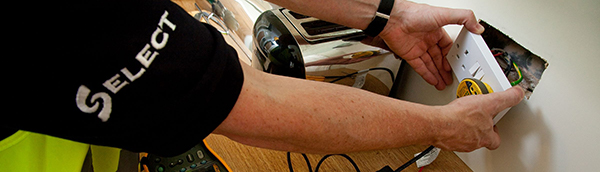
Leading trade association SELECT says ‘quick courses’ continues to pose a risk to the public and that there is no substitute for apprenticeships Campaigning trade body SELECT has once again warned of the ongoing danger to public safety from organisations offering to train people in electrical skills in just a few weeks. Scotland’s largest construction trade association has repeated its alert about the rising trend of “six-week wonders” – and expressed dismay that some courses now appear to be offering even shorter training periods in electrotechnical work. Alan Wilson, Managing Director of SELECT, said: “Despite repeated warnings, we continue to see short courses being offered, including a recent example that promised to equip candidates with electrical installation skills in a month with no prior experience needed. “It is a matter of considerable concern that some of these so-called training providers appear to be suggesting that it’s possible to learn in a few weeks some of the complex technical skills that qualified electricians take years to acquire. “Inadequately trained people pose a significant risk to both consumers and the electrical sector itself. There is no substitute for a proper apprenticeship, followed by extensive on-the-job experience.” SELECT has been at the forefront of a long-running campaign for the professional recognition of electricians, which is now gaining traction in the Scottish Parliament, and which would make it illegal for unqualified people to pose as electricians. Alan added: “The key to keeping the sector safe is to make sure that people get work done properly and that those who work in the industry do so in a safe and competent manner. “With the rise in renewables and ever more sophisticated technology, it’s vitally important that only properly qualified and suitably skilled experts instal products and carry out repairs and maintenance.” SELECT, the Scottish Joint Industry Board (SJIB) and Unite the Union all work in close partnership with the Scottish Electrical Charitable Training Trust (SECTT) to ensure the Modern Apprenticeship in Electrical Installation produces an annual pipeline of talent. Mr Wilson added: “The wellbeing of the public and the safety focus on the work undertaken by electricians have always been at the forefront of everything that SELECT does, which is why we help run some of the most rigorous and most demanding apprenticeships and training courses in the industry. “The industry already has routes to entry for people with transferrable skills but, in general, adult apprenticeship schemes are still the best option for securing a recognised qualification for people wanting a change in career.”
