



Prevention is Better Than Cure – Medical Isolated Power Supplies
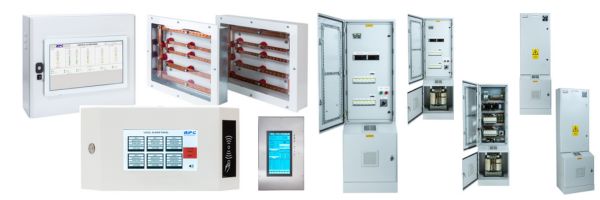
BPC Energy’s range of Medical Isolated Power Supplies (MIPS) are electrical Medical IT systems which are isolated from earth and enable insulation maintenance faults to be monitored. In the healthcare industry, it is crucial to ensure a safe, continuous, and dependable power supply to avoid any potential risks to patient, and hospital staff, safety. Traditional electrical systems, whilst effective in numerous applications, are not suitable for medical environments due to the increased vulnerability of patients. Initially, continuity of supply in the event of an earth fault must be provided. Patients in hospitals, and other healthcare facilities, are often at higher risk from electric shock because of a reduction in body resistance due to a variety of medical conditions. Quite low currents, of the order of only a few milliamps (mA), can cause fatal electric shock. Therefore, provision must be made to mitigate these risks and provide protection against any possible electrical leakage currents. This reduces the risk of a shock hazard occurring, ensuring the protection of patients and hospital staff. There may also be a risk from failure of the electrical supply, with potentially life threatening consequences. Areas where applied parts (i.e. electrical equipment in direct physical contact with the patient) and failure of the electrical supply may create a danger to the patient life are defined in BS 7671:2018 Medical Locations. A secondary power supply is critical to ensuring that patient safety is maintained in the event of power failure. Even a momentary drop in power in the event of mains failure could have catastrophic consequences as it could result in the shutdown of medical devices, interruptions to critical operations, and risk to patient life… medical locations cannot afford to risk this! Most hospitals and medical facilities have backup generators on-site, but in medical locations such as Group 2, further resilience is required. In Group 2 medical locations: These requirements can be generally satisfied by installing a suitable Medical Isolated Power System (MIPS) To address this issue, advanced technologies such as Medical Isolated Power Supply (MIPS) systems are used to enhance patient safety standards by providing an isolated power source for medical devices, minimizing electrical hazards, reducing the risk of electric shock and an uninterruptible power delivery system for mains electrical failures. Understanding the Need for Medical Isolated Power Supplies In conventional electrical setups, such as those found in homes or standard buildings, the earth is typically connected, establishing a live, neutral, and earth connection, commonly known as the TNS electrical installation in the UK. However, in medical environments, especially those catering to critically ill patients, electrical faults present significantly higher risks of shock. Therefore, to enhance patient safety, the BPC MIPS solution introduces an IT configuration away from the traditional TNS arrangement that eliminates the presence of neutral wire and disconnects earth. This technical adjustment is aimed at minimizing the risk of electrical shocks and represents a strategic move towards a paradigm shift in earthing arrangements in order to ensure patient safety by minimising the risk of electrical shocks. Understanding the Need for MIPS in meeting government regulations In the medical domain, adherence to stringent regulations and standards is non-negotiable. The Health Technical Memorandum 06-02 (HTM 06-02) is the UK national standard used for electrical installations and wiring safety, providing crucial guidance to duty holders (healthcare managers, electrical safety groups, design, and operation managers to name a few), detailing the precautions necessary to mitigate the risk of death and personal injury. Healthcare establishments, governed by these regulations, are required to provide as much resilience as possible, as medical electrical systems pose a significant risk to patient safety due to the possibility of inadvertent contact with live wires. Additionally, medical environments are incorporated in Part 7 (Section 710) of BS 7671 18th edition regulations as it works in conjunction with the HTM 06-02 guidance and so, installations must adhere to both. BPC MIPS is designed and engineered in strict accordance with industry benchmarks such as the HTM06 standard and BS7671 18th edition, providing a robust electrical system that mitigates electrical medical risks and allows medical facilities to uphold the highest standards of care. The Role of MIPS in Patient Safety The fundamental objective of MIPS is clear: to safeguard patients from electrical hazards in medical settings. Unlike standard electrical systems, where accidental contact with a live wire could result in potentially life-threatening shocks, MIPS employs a sophisticated insulation monitoring mechanism that prevents the flow of electric current to patients. This proactive approach drastically reduces the likelihood of electrical accidents, ensuring a safer environment for patients and healthcare professionals alike. That is why BPC ensures our medical IPS solutions feature a supply switch that increases resilience and monitoring and alarm circuits that ensure continuous operation during normal and abnormal conditions. Our Medical Isolated Power Supplies are carefully designed for medical locations and with complete compliance to medical regulations and safety standards. Most importantly, our MIPS solutions are designed to: How is BPC taking the lead in the Medical Isolated Power Supplies industry? In a market characterized by its emphasis on patient safety and regulatory compliance, BPC Energy emerges as a beacon of innovation and reliability. Our MIPS solutions not only meet but exceed industry standards, offering unparalleled levels of safety and performance. Here’s why BPC stands out: BPC Energy is a comprehensive solution provider. Unlike traditional suppliers, we offer both uninterruptible power supplies and medical IPS solutions, which are often sought after in conjunction with each other in medical facilities. Simply put, BPC provides the complete package. From UPS to MIPS, we offer a holistic approach to power management, ensuring seamless integration and performance across the board. Additionally, BPC combines superior technology with competitive pricing, delivering exceptional value for money by eliminating the need for multiple suppliers, streamlining procurement processes and therefore, reducing operational costs. Furthermore, our commitment to customer satisfaction extends beyond product delivery as we offer integrated monitoring and control systems, providing real-time insights and alerts to facilitate proactive maintenance and troubleshooting. With BPC Energy, clients and key
SELECT supports proposed changes to apprenticeship training “in principle”
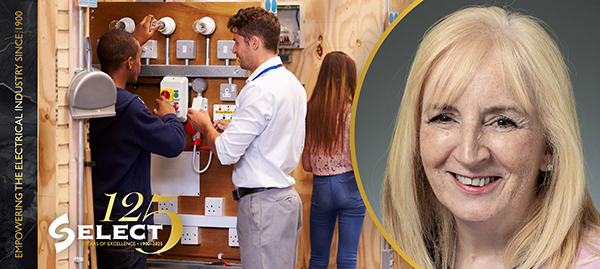
Electrical bodies give views on government plans to move apprenticeship funding from Skills Development Scotland to Scottish Funding Council Scotland’s leading electrical training bodies have given an “in principle” welcome to new Scottish Government proposals to change the way apprenticeships are funded and run across the country. SELECT and the Scottish Electrical Charitable Training Trust (SECTT) say they support a plan to move funding and functions for national training programmes and apprenticeships from Skills Development Scotland (SDS) to the Scottish Funding Council (SFC). But they warn that the move must lead to improved accountability and efficiency and “greater transparency and streamlined funding opportunities” that are open equally to all training providers in the management of apprenticeship training. In a robust response to a call for view on the proposals, SELECT and SECTT say there must be “a party of esteem among all stakeholders” if the draft Tertiary Education and Training (Funding and Governance) (Scotland) Bill is to succeed. The bodies say the new set-up should aim to support a mixed economy of delivery partners and insist the role of managing agents should be explicitly included in the definition of an apprenticeship “to ensure that further and higher education requirements do not dominate”. SELECT and SECTT also say consideration should be given to the idea of introducing incentives to “encourage employers, especially small employers, to invest in accredited training and safeguard future recruitment numbers”. And they insist the Bill should also aim to ring-fence all revenue from the apprenticeship levy for investment in skills and “legislate to revise the apprenticeship funding contribution to make more costly programmes more financially viable for sector training providers to offer”. They add: “While we feel that the Bill lacks detail in some areas, we support the proposed terms of appointment for Council members and endorse the move away from appointing actively employed further education/higher education representatives, minimising potential conflicts of interest. “We believe the Bill should aim to improve transparency, streamline funding opportunities and ensure fair and proportional allocation of resources. It should also ensure that standard setting organisations are included in development processes and clarify who will be involved in developing National Occupational Standards (NOS) and qualifications.” In addition, the bodies express firm support for broadening the skill set of SFC members to include expertise in Scottish apprenticeships and work-based learning and for the establishment of an Apprenticeship Committee. SECTT and SELECT also say there should also be encouragement to include representation from the building services engineering (BSE) sector to provide clarity and insight into what it describes as “this unique and highly effective operating model”. Fiona Harper, Chief Executive of SECTT, said: “Our hope is that the Bill will simplify and refine the apprenticeship management process while maintaining a robust operational infrastructure so that SECTT, with the support of SELECT, can continue to deliver the gold-standard apprenticeship on behalf of the industry.” Want to see more from SELECT, check out our article: “SELECT releases safety video about neutral current diversion as part of 125th anniversary“
Eavesdropping on malfunctions with acoustic imager

FLIR introduce their high-performance Si2-Pro acoustic imager Acoustic imagers are able to spot pressure leaks, partial discharges and mechanical failures even in the noisiest of industrial environments. Using soundwaves and their characteristic signatures allows pinpointing and assessing trouble spots which boosts workplace safety and prevents costly downtime. FLIR’s Si2-Pro is an innovative and advanced imager aimed at this segment of the market. The device is part of the FLIR SI product line, and is now supplied by the Conrad Sourcing Platform. “The three flagship products further demonstrate that the SI series indeed represents a ready-to-use solution that covers all aspects when it comes to pros using the camera in an industrial setting,” explains Rob Milner, Business Development Manager at FLIR. Using acoustic signatures to detect trouble spots The FLIR Si2-Pro makes detecting damaged ball bearings, partial discharge as well as pressurised air and gas leaks a fast and reliable process. Featuring advanced automatic filtering, the camera works even in the noisiest of industrial settings, identifying potential and existing leaks and mechanical issues by their respective acoustic signatures, and that from as far as 200 metres away. This helps prevent occupational injuries and production downtime. Identifying, assessing and resolving issues The FLIR Si2-Pro doesn’t stop there: the camera comes with a MECH mode providing on-camera decision support that includes damage measurement, classification and severity assessment of partial discharges, and leak size estimation. This information forms the basis for later cost projection. All in all, this enables efficient planning of maintenance and repair operations and helps bring down running costs. Advanced special features Other FLIR imagers also feature built-in pressured air leak quantification and cost projection.However, when it comes to the Si-Pro, both functions have been expanded beyond that, now including additional industrial gases such as hydrogen, CO2, methane, helium, argon, ammonium, and other VOCs. Acoustic imager: Easy to use, easy to onboard Being a lightweight at 1.2 kg, the Si2-Pro handles well even during prolonged use. Moreover, operating the camera is as easy as it gets. The device features built-in automated frequency control, range finder, 8x zoom, a 12MP camera, GPS data integration and a QR code reader. What’s more, the device allows combining acoustic and thermal images to be included in the same report. The product comes with an IP54 dust and sprayproof rating. Two LED lights enable the use in low-light conditions. For larger businesses in particular, cloud-based fleet management with OTA software updates makes using and maintaining the product highly efficient. More details about FLIR’s Si2-Pro acoustic imager are available here.
Electricians reveal horror stories in new podcast from SELECT
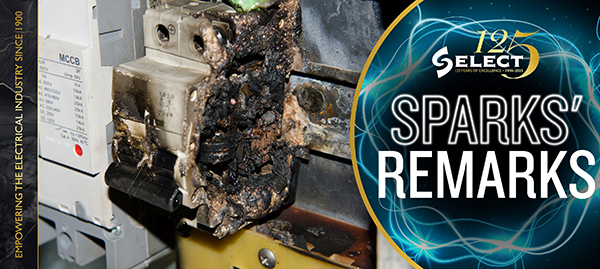
Electricians reveal their biggest horror stories and the shoddy and shocking work they’ve been called to put right in new podcast from SELECT Trio discuss the downright dangerous in latest episode of Sparks’ Remarks from Scotland’s largest construction trade association Meter tampering, overloaded sockets and smoking fuse boards are among the horror stories revealed by electricians in the latest episode of the popular Sparks’ Remarks podcast from Scotland’s biggest construction trade association, SELECT. Hosted byaward-winning journalist Kim McAllister,the seventh instalment in the series shines a spotlight on three electricians who discuss some of the shoddy workmanship and dangerous DIY installations they’ve encountered and had to put right. In the episode – entitled Can you smell fish? Bypassed boards, cable calamities and other electrical horror stories – the trio reveal how they can tell instantly if an installation has been carried out by an unqualified person and why a particular tell-tale aroma is always a bad sign. Chris Micheau, who works for SELECT member firm S&C Electrical & Plumbing Ltd, tells the podcast: “I’ve come across quite a few – things like Sellotaped wires above light fittings, sockets glued to the wall rather than properly fixed. People take shortcuts and don’t want to spend the money of a qualified tradesperson doing the work properly. “Christmas can be difficult, with lights and Christmas trees and so on. I’ve seen five and six plugs all powered off one socket, plus kettles, toasters and microwaves all taking power from one plug. Electrical safety isn’t something that many people really think about.” Chris also said he’s seen people bypassing the electricity meter to try and save money on their bills, adding: “I’ve come across a fair few, particularly in rental properties. I’ve pointed out that it’s dangerous but I just receive a lot of abuse back. Now I just report it.” Also interviewed is Paul Erasmuson of SELECT member firm Techni-Call Electrics in Gorebridge, Midlothian, who reveals he’s kept busy with emergency callouts to fix bodged electrical projects. He said: “Going to fix other people’s mistakes is part of my job now. Just because something is working doesn’t mean that it’s electrically safe. I’ve seen showers running and smoke coming from the fuse board and when I put my hand on the cable it’s red hot. “When someone says to me on the phone, ‘I can smell burning fish’ I know right away that it’s a bad connection and that plastic is melting somewhere. I then get there, take a melted circuit breaker out of the board and show it to them and it’s absolutely stinking. “On fuseboards which have been badly installed by a DIY-er, you can put a thermal imaging camera on them and see the terminals heating up red hot. When I show customers they’re absolutely horrified. “Ninety nine times out of a hundred people will say ‘It was a guy I knew’ or ‘The joiner thought he could wire it up’. When people hear these stories, they’re shocked, but it’s become the norm to me.” He added: “The worst time is around Christmas when people have their oven on, their heating on and all their appliances on and that’s the time that things start to go wrong, especially if it’s been part of a bad installation in the first place. “I was called out to one house when all the lights were out and the fuse board was literally hanging from the wall – the cables were holding the fuse board up. As soon as I took the cover off, all the connections inside were loose, cables were arcing together and they were burnt black. You really don’t want to get it to that stage.” Experienced electrician Graeme Anderson of SELECT member firm Powertec Electrotechnical Services Ltd also tells the podcast how he often has to clear up other people’s mess on industrial installations. He said: “I do get sent to a lot of problem jobs. On a massive project last year, the electrical engineers had simply designed it wrongly. Two systems were being consolidated inside one plant room and the electricians, working to the engineers’ design, had also got it wrong. “Once it was finished, it was clear something was not right and it had to be shut down. It was very satisfying to go in, stop everything and break it all down into each individual component part and disconnect almost everything to see what the parts were. “We had to test each part, get a result for them and then submit a report with an alternative design to upgrade. We had to have bespoke instruments made to put on to the existing system. It was a lot harder than starting from fresh, but there was a lot of job satisfaction in it.” The timely message comes as cross-party support continues to mount for SELECT’s long-running campaign for regulation of the industry and protection of title for electricians. Iain Mason, Director of Membership, Events & Communications at SELECT, said:“As we continue to celebrate our 125th anniversary, this podcast is a fascinating glimpse into the some of the dangers that face electricians every day and reinforces the need for regulated professionals to make sure that public safety comes first and foremost.” Listen to the new episode of Sparks’ Remarks here. For more from SELECT, read “SELECT releases safety video about neutral current diversion as part of 125th anniversary” here.
FDB Electrical expands range of enclosed electrical protection devices

As the UK’s construction and infrastructure projects regain momentum, FDB Electrical Online is proud to announce an extensive range of enclosed electrical protection devices. These high-performance solutions are designed for industrial and commercial sites, utilities, healthcare facilities, military and civilian airfields, and rail applications, ensuring safe and reliable electrical protection – in addition, specialist custom panels are available to order for new or retrofit projects. The FDB Electrical fully enclosed protection equipment includes the FDB2 Modular Multi-Way RCBO, the FDB11 and FDB13 series general-purpose RCDs, and the home/office-approved FDB21 “Interruptible” RCD/MCB. Additionally, the FDB27 unit provides specialized protection for Ground Support Equipment in RAF and RNAS hangars. For system customization, panel builders can integrate remote core transformers, universal earth leakage protection relays, multi-function RCDs, and earth fault monitors into their own designs. With urgent availability from their online store, the FDB11, FDB13, FDB2, and FDB21 units offer robust electrical protection for diverse applications. These products are available in steel, GRP, or stainless-steel enclosures, ensuring durability in harsh environments both above and below ground. Their expert technical advisory service is also available to assist with specialized requirements. A key focus is the range of Network Rail-approved DC immune protection devices, including the FDB2 Multiway RCBO, which provides 2, 3, or 4-way multi-circuit protection. Similarly, the FDB11 offers general-purpose RCD protection up to 100A. These units, featuring solid-state electronic circuitry, provide stability and prevent spurious tripping in DC electrified environments. Specialised solutions extend to international projects such as the Monorail Mass-Transit system in Singapore, where EFU50 DC protection units safeguard station equipment. Additionally, FDB19/STS power supply units have been deployed by the Royal Marines for offshore pontoon operations, ensuring secure electrical connections for landing craft. For over 50 years, FDB Electrical has been a leader in electrical protection, supplying innovative solutions to industrial, commercial, and defence sectors. This extensive range of RCDs, earth leakage relays, and toroidal CTs supports custom-built panels and bespoke solutions tailored to unique project needs. FDB Electrical and sister company FDB Panel Fittings share their online shopping website at www.fdbonline.co.uk. Further information on FDB products and services may be found at: www.fdb.uk.com. Find the latest information and news on the FDB blog – www.fdbonline.co.uk/blogs/news.
Shaping the Future of Power Tool Battery Pack Design

Battery technology is driving the evolution of power tools. As manufacturers push for better performance and usability, the battery pack has become a key battleground. Designing a battery pack isn’t just about cramming in more energy, power tool OEMs need to strike a balance between durability, power and safety, while keeping up with technological advancements and industry trends. Owen McNally, Principal Design Engineer at Alexander Battery Technologies, explores the key factors shaping next-generation battery packs for power tools. Balancing Performance and Durability in Battery Design The challenges faced by manufacturers in the power tool industry largely depend on the type of tool and its end-use application. As any tool manufacturer will understand, a drill used occasionally for DIY projects doesn’t have the same demands as a high-powered impact wrench on a construction site and the batteries inside them need to reflect that. Designing batteries for professional tools comes with higher expectations for sustained power, thermal management and resilience against real-world conditions. A key distinction in battery design for power tools is the difference in requirements between consumer-grade and professional-grade batteries. For consumer tools, cost-effectiveness and ease of use take priority. These tools are generally not subjected to heavy or prolonged use, so batteries don’t need to withstand constant high-power demands or extreme conditions. Instead, their design focuses on affordability, moderate durability and a straightforward user operation. However, professional tools demand far more from their batteries. These tools are used on job sites where they can face harsh and unpredictable conditions. Their batteries need to deliver sustained high power without overheating while also withstanding drops, dust and moisture. Battery design engineers will incorporate essential features like ruggedised casings, high discharge rates and efficient thermal management to ensure long-term reliability and high-performance standards in tough environments. Standardised battery platforms have helped OEMs simplify power tool ecosystems, offering broad compatibility and ease of use. However, these solutions don’t always meet the needs of professional and industrial applications, where performance and durability are key. As operational demands become more specialised, many manufacturers are looking beyond off-the-shelf options towards tailored battery solutions designed for real-world conditions. For power tools used in extreme conditions, battery performance and durability are critical. A customised battery design can be the difference between reliability and failure. In one example, a manufacturer of high-torque tools used on oil rigs and in wind turbine maintenance was experiencing unacceptable failure rates due to harsh operating conditions, including frequent battery damage when the heavy tool was dropped. By integrating a data logging feature within the battery management system, along with an accelerometer to detect drops, Alexander Battery Technologies developed a solution that disables the battery if it is dropped from a significant height. This added layer of protection helps prevent accidents and unnecessary returns, making the tools safer and more reliable for the end user. One Size Doesn’t Fit All and The Shift Towards Custom Battery Solutions As OEMs strive to differentiate their power tools, there’s a growing trend towards custom battery solutions. Standardised platforms like the Cordless Alliance System (CAS) are a practical choice for some companies providing an easy, cost-effective solution by offering a shared battery platform across multiple tools. However, this approach doesn’t allow for the flexibility and performance optimisation that many tools require, especially for use in industrial and heavy-duty applications. Bespoke battery management systems enable OEMs to tailor power output, extend run times and add advanced functionality that standardised packs cannot provide. For instance, some tool batteries now feature Bluetooth connectivity, data logging and enhanced thermal protection, all designed to improve performance under demanding environments. These features are especially important for categories of power tools where battery operation is put to the test under intense usage conditions and directly impacts productivity and safety. While a custom battery design gives the OEM full control and flexibility over the performance of their product, this route may present additional challenges, particularly around compliance and manufacturing costs. Regulations governing battery safety, transport and recyclability are becoming more complex and OEMs must ensure their products meet customer expectations as well as international regulatory requirements. Despite these challenges, transitioning to a proprietary battery pack doesn’t need to be a costly or complex exercise. By partnering with a custom battery manufacturer, OEMs can develop high-performance, cost-effective solutions that comply with industry regulations while being precisely optimised for market viability and long-term reliability. Selecting the Right Battery Technology for Power Tools When designing battery-powered tools, OEMs must carefully evaluate the advantages and trade-offs of different cell formats when specifying the battery pack. Cylindrical cells remain the industry standard due to their robustness, high discharge rates, and mechanical durability, making them a reliable choice for both consumer and professional-grade tools. They are also easy to manufacture at scale, providing consistent performance and cost-efficiency for power tools that require high power output and resilience to impact and vibration. For applications where compactness, weight reduction, and heat dissipation are critical, some manufacturers are exploring pouch cells. These can offer higher energy density in a smaller footprint and, in some cases, support faster charging times. However, pouch cells lack structural rigidity, making them more susceptible to damage and requiring additional packaging to ensure durability in real-world use. This adds complexity to battery pack design, particularly for tools that experience high-impact use or extreme conditions. For this reason, cylindrical cells remain the preferred choice for battery design engineers seeking long-term reliability and user safety in power tools. Navigating Regulatory Compliance and Shipping Restrictions One of the most significant concerns for OEMS when exploring the option for a custom battery design is meeting global shipping and safety regulations. Power tool manufacturers must carefully navigate these regulatory frameworks, especially when selling internationally. Batteries exceeding 100 watt-hours are classified as dangerous goods, requiring special packaging, labelling and certifications. In addition, some regions impose certifications, such as UL or CE, making compliance an important consideration in product development and distribution. As battery capacities increase, it’s also important to consider the environmental impact and recyclability
Win tickets to see Oasis with Schneider Electric!

Starting today, you can enter Schneider Electric’s new and exciting ‘Watts the Story’ competition and have a chance to win a pair of Oasis tickets! Electricians and electrical contractors who purchase Schneider Electric products from participating electrical wholesalers have the chance to win fantastic prizes with ‘Watts the Story,’ including two opportunities to win the top prize—a pair of hospitality tickets to see Oasis at Wembley Stadium on 2nd August 2025. What’s more, these exclusive tickets offer Premium Club Level hospitality, with some of the best seats in the stadium, access to exclusive bars, an Oasis merchandise gift, and a £50 Uber voucher for your journey home. There are two randomised prize draws (3rd June and 3rd July), the prizes in each draw are as follows: How to enter: The competition closes on 30th June 2025. Enter by 31st May 2025 for both prize draws or by 30th June 2025 for the second. Look here for more details and full T&Cs.
Ideal Heating brings first-class training to Scotland with new facility

Ideal Heating has boosted its proposition to the Scottish market with the opening of a new, dedicated training centre near Edinburgh. The facility, in Dalgety Bay, will provide installers in Scotland with easy access to industry-leading courses delivered by Ideal’s Expert Academy training arm. Alongside Expert Academy’s range of boiler courses, the centre will play a critical role in reskilling installers to work with heat pumps and other low-carbon heating solutions. The Dalgety Bay facility represents an investment of £250,000 from Ideal Heating, in the refit of the building and in updated equipment. With flagship facilities in Hull, Luton, Leeds, and now Scotland, Expert Academy is ensuring the UK has the skills to decarbonise heating. Installers and specifiers from the new build and social housing sectors were among the guests for the opening of Ideal’s latest training centre. Also in attendance at the event was Nicola McLeod, Managing Director for the Scotland Division at Warmworks. Over the past decade, Warmworks has delivered heating and energy efficiency upgrades to tens of thousands of homes on behalf of the Scottish Government. Nicola said: “Having a training facility right here in Dalgety Bay, the first in Scotland, is an incredibly exciting milestone for Ideal. “Not only does it give Warmworks’ supply chain access to high-quality, hands-on training, it also gives organisations the opportunity to advance their skills in heat pump technology and strengthens their commitment to local communities.” At the event, Ideal Heating executives leading its training, product and technical teams explained how the company is setting the standard for heat pumps in the UK. Mark Derbyshire, Ideal Heating’s Managing Director (Domestic), said: “As the industry moves towards low carbon heating solutions, it was important for Ideal to have a strong presence in Scotland, and to take installers on that training journey from boilers to heat pumps. “Installers visiting our new centre in Dalgety Bay can not only access our high-quality range of training courses but also learn about heat pump system design and become familiar with our products.” With capacity to train up to 2,000 installers every year, the new training facility is strategically located to be easily accessible to installers across central Scotland, with Glasgow, Dundee and Perth all within a 50-mile radius. Installers undertaking training at the centre can benefit from the latest rigs and simulators, gaining hands-on, practical experience of working with Ideal’s range of heat pumps and boilers. They will work closely with Expert Academy’s training team – who between them have 300 years of industry experience – to diagnose and solve real scenarios they will face when working out in the field. Andrew Johnson, Training and Design Services Director at Ideal Heating, said: “We continue to invest significantly in our Expert Academy, to meet the evolving needs of the heating industry. “By choosing Expert Academy, installers receive best-in-class training, in modern and attractive facilities, from a team with centuries of combined experienced in the heating industry.” Expert Academy now has more than 30 training locations across the UK, with a dozen new centres opening last year. Feedback on Expert Academy training has been overwhelmingly positive. Last year, 94 per cent of installers rated their experience as five out of five. To build on a successful and busy 2024, Expert Academy kicked off 2025 by formally launching its On Demand service. The interactive, digital learning platform means more installers can access training anytime, anywhere, with greater flexibility. Expert Academy is developing new courses in 2025, focused on renewable technologies and system design. For details of Ideal Heating’s new Scottish training centre, go to www.expert-academy.co.uk/w/venues/5-dalgety-bay
Shaky start to the year for electrical manufacturers

Electrical manufacturers got off to a shaky start to the year – with sales and purchasing both taking a hit, and lead times starting to creep up. Small and mid-sized firms saw their average sales revenue drop by more than a third in the final quarter of last year, from nearly £221,000 to just over £142,000, according to figures from inventory management software provider Unleashed. The number of purchase orders (POs) placed also fell by more than half (53%) from 262 to 122, while lead times were slightly up – from 17 days to 19. The research also shows that sales revenues were down by half compared to the same period last year, and POs by nearly 36%. Electrical Manufacturing performance: Sector 2023Q4 2024Q3 2024Q4 YoY % change QoQ % change Profitability / GMROI £4.45 £2.87 £1.96 -55.96% -31.71% Sales revenue £287,328 £220,920 £142,398 -50.44% -35.54% Excess stock £40,906 £76,373 £36,171 -11.58% -52.64% Purchase orders 190 262 122 -35.79% -53.44% Lead time (days) 30 17 19 -36.67% 11.76% Unleashed analysed data from 12 manufacturing categories. Across all the categories, average sales revenue dropped by more than 40% in the final quarter of last year, from £468,215 to £275,953. The number of purchase orders (POs) placed also fell by nearly half, from 322 to 167. Sales revenues were down by almost 22% compared to the same period last year, and POs by nearly 18%. Suppliers in the energy and chemicals market were hit hardest, seeing the sharpest decline in both sales revenue and POs of any manufacturing category. Quarter-on-quarter sales revenue was down by 63% from £587,148 to £219,024, while POs dropped by 64% from 339 to 121. Joe Llewellyn, GM of ERP Small Business at The Access Group, the parent company of Unleashed, said: “Low business confidence and newly-volatile international trading conditions seem to be taking their toll on manufacturers across almost every category we looked at – which made it a tough start to the year for many businesses. “While many will be rightly concerned about this drop-off, it’s worth bearing in mind that Q3 2024 was a bumper quarter, when we saw both sales revenue and POs surge. That suggests performance is returning to more normal levels, albeit a little more subdued than we’d all like to see. “The figures also suggest that manufacturers are keeping a tight rein on their inventory, with excess stock significantly down. However, with GMROI also dropping this might suggest weak demand. While market conditions have impacted sales and orders, they’re controlling what they can, enabling them to weather the storm and make the most of the recovery.” “Finally, it’s reassuring that total sales for the year were up compared to 2023, showing an overall more positive direction of travel.” View the full Unleashed Manufacturing Health Index report.
