



NICEIC launches tutor-led remote EVCP training course

NICEIC launches tutor-led remote electric vehicle charging point (EVCP) course to expand access to Level 3 qualification. NICEIC has launched a new one-day remote training course for the Level 3 Award in the Requirements for the Design and Installation of Domestic and Small Commercial Electric Vehicle Charging Installations (2921-34). This new course will make it easier for electrical contractors to upskill and gain a recognised EVCP qualification without needing to attend a training centre. The one-day course, accredited by City & Guilds and remotely invigilated, will run across five initial dates in July, August and September, starting on 31 July 2026. The course combines the flexibility of remote learning with the structure and support of a live teaching environment. Sessions are delivered in real time by experienced tutors, allowing learners to ask questions and receive immediate feedback. NICEIC’s new offering provides a practical and accessible training option and greater convenience for contractors, while retaining the tutor-led element that is critical for building competence in a technical area such as EV charge point installation. Alex Robinson, Head of Training at NICEIC, commented: “With consumer demand for electric vehicles continuing to grow, we’re seeing real-world electrification become a defining theme for the year ahead. In 2025 alone, EV sales rose by 28%, with around one in three new cars sold now fully electric. That pace of change means we need more contractors competent in the technology to meet demand and enable the roll-out. Our focus is to make high-quality training more accessible to electrical contractors across the UK. This course allows us to reach those who may not be able to travel to a training centre, while still delivering the tutor-led experience that supports real understanding and competence.” All NICEIC virtual training courses on the NICEIC shop will benefit from a 5% discount from 1 July to 31 August 2026. The summer discount can be used in conjunction with other discount codes, including the ongoing 10% training discount for NICEIC-certified businesses. Electricians interested in securing a place on one of the upcoming dates can find more information on the NICEIC shop.
VCHRGD partners with Kelvelec to expand UK wholesale access to EV charging solutions
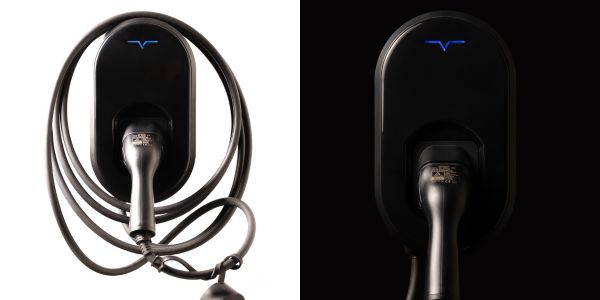
VCHRGD, the UK-based EV charging manufacturer, has announced a new distribution partnership with Kelvelec, further expanding its presence across the UK electrical wholesale market. The agreement will see Kelvelec stock and distribute VCHRGD’s range of smart EV chargers via their UK-wide base of wholesale clients, improving accessibility for electrical contractors and installers seeking reliable, cost-effective charging solutions backed by strong technical support,. The partnership marks a continued focus for VCHRGD on building its wholesale channel, a core route to market that enables their growth while maintaining close alignment with installers and trade partners. It also builds on recent momentum created through VCHRGD’s partnerships with leading energy providers including Octopus Energy and So Energy, enabling installers to offer customers smart charging solutions that combine competitive hardware with low-cost, smart off-peak tariffs. Through this partnership, Kelvelec customers will benefit from access to VCHRGD’s portfolio of chargers, designed to be simple to install, competitively priced and built for consistent real-world performance. VCHRGD’s hardware is supported by a UK-based technical team and a strong track record for reliability, with less than 0.54% of units requiring return for replacement. This combination of hardware reliability, tariff integration and partner support reflects VCHRGD’s broader strategy to deliver practical, scalable solutions through its partner ecosystem. Phil McDermott, Chairman at VCHRGD, said: “Wholesale is a critical channel for us, and partnering with Kelvelec is an important step in expanding our reach across the UK. They have a strong understanding of the electrical trade and share our focus on service, reliability, and supporting wholesalers and installers on the ground. For our partners, this means easier access to chargers that are simple to install, competitively priced and fully supported, alongside integrations with energy providers like Octopus and So Energy that are helping customers reduce charging costs.” Matt Gooding, Director at Kelvelec added: “VCHRGD share the same ethos and values as Kelvelec, prioritising the customer experience and delivery of exceptional service, so partnering with them was a no-brainer for us. Meeting the passionate people within their team gave us huge confidence in the partnership, and we are proud to be working together with them to promote the products for exponential growth throughout 2026 and beyond.” Founded in 2021, VCHRGD has established itself as a customer and installer-focused EV charging manufacturer, operating across wholesale, installer and fleet channels. The partnership with Kelvelec represents a further step in strengthening that network, supporting the continued rollout of EV infrastructure across the UK.
Electrical Safety Roundtable Cautiously Welcomes Tenant Satisfaction Plans

The Regulator of Social Housing’s plans to introduce Tenant Satisfaction Measures (TSM) on electrical safety have been given a cautious welcome by the Electrical Safety Roundtable (ESR). The ESR is a cross-industry body with over a decade promoting electrical safety in the home, social housing and workplace. The Regulator has asked stakeholders if they agree or disagree that the proposed TSM will provide an appropriate level of information about landlord performance in carrying out required electrical safety checks. The Social Housing Sub-Group of the ESR has responded to the RSH’s consultation, saying they partially agree, but there are concerns about whether routinely providing full electrical safety certificates directly to tenants will significantly improve residents’ understanding of landlord performance, which is the primary aim of the TSM. Martin Simmonds, Chair of the ESR Social Housing Sub-Group, said: “The ESR support the intention behind the TSM and its role in strengthening resident safety and confidence, and we welcome any initiative that will improve electrical safety for tenants and their families. “The proposed TSM should provide a useful level of information regarding landlord performance in carrying out required electrical safety checks, supporting greater transparency and accountability, helping ensure landlords remain focused on meeting their statutory safety obligations. “However, we do have concerns about whether routinely providing full electrical safety certificates directly to tenants will significantly improve residents’ understanding of landlord performance, which is the primary aim of the TSM.” The ESR response to the consultation also warns about the risk of unintended consequences. While certificates demonstrate technical compliance, they are often complex documents that can be difficult for residents to interpret and may lead to confusion or misinterpretation of findings. The ESR has already seen examples of unintended consequences where measures intended to improve electrical safety have added additional costs and admin to social housing providers. New electrical safety regulations came into force in England, requiring social landlords to inspect and test electrical installations in their properties at least every five years and carry out necessary works. These changes took effect in November 2025 for new tenancies and will come into force in May 2026 for existing tenancies. These requirements are already in place in Scotland and Wales, and there is support to see them extended to the social rented sector in Northern Ireland to ensure consistent safety standards across the UK. Social landlords will also be required to inspect and test any electrical appliance they provide as part of a tenancy. Martin Simmonds added: “There are notable administrative and cost implications associated with distributing certificates, alongside the likelihood of increased customer contact relating to technical queries that may not provide additional assurance. This could divert resources away from delivering safety improvements and remedial works, ultimately reducing the effectiveness of the measure’s intended outcomes.” The ESR has called for the introduction of an annual compliance summary issued to residents which would present key safety information in a clear and accessible format and could incorporate all relevant compliance areas, including electrical safety, gas safety, and fire risk assessments (where applicable within blocks), as well as other statutory checks. The ESR has previously published guidance documents aimed at landlords and social housing tenants to explain electrical safety legislation and how they will be impacted. Earlier this year the ESR launched a new campaign to promote electrical safety for social housing tenants. The Let Me In! campaign aims to engage social housing providers and tenants to ensure the safety of electrical installations and equipment within their properties. This tenant-focused campaign aims to educate and allow access for essential safety checks across the UK. The campaign media pack that promotes the key message ‘Safety Starts at Your Door Let Me In!’. It includes free resources such as posters and leaflets, accessible documents and social media images and captions. The campaign materials include statistics and information explaining the dangers of electricity, why electrical checks must be carried out and what happens during an electrical inspection. The ESR also launched guidance on how to find a Competent & Qualified Person for Landlord Electrical Safety Checks with a summary of what is contained in an Electrical Installation Condition Report (EICR), which could be amended to explain TSMs in an easy-to-understand format. You can visit the Electrical Safety Roundtable website here: https://www.electricalsafetyroundtable.co.uk/
Electricians Face a Big Surge in Electrical Installation Condition Report (EICR) Demand

Electricians across the UK are reporting a sharp increase in demand for Electrical Installation Condition Reports, commonly known as an EICR. This is down to renewal cycles, landlord duties, and wider compliance expectations. With lots of properties reaching the five-year threshold at the same time, contractors are seeing an EICR renewal rush. The pressure is most visible in the private rented sector, but commercial premises and homeowners are also feeling the pinch. For electricians, this will likely mean lots of bookings coming in at the same time. For landlords, letting agents, and property owners, it raises practical questions about availability, timelines, and the real-world meaning of electrical compliance. The five-year EICR cycle is coming around again The current EICR surge is closely linked to the Electrical Safety Standards in the Private Rented Sector (England) Regulations 2020. Under the framework, landlords must ensure electrical installations are inspected and tested at least every five years. These rules applied first to new tenancies and then rolled across existing tenancies. This is important because many inspections were carried out around 2020 and 2021. As a result, a large number of reports are reaching renewal at the same time in 2026. James Finney, Director at EICR specialists Finney Electrical, says the pattern has been building for months. “We’re seeing a spike in enquiries from landlords whose certificates are expiring,” he explains. “A lot of properties had inspections done as the rules took effect, and now they’re coming back in waves.” Landlords are under pressure to act early For landlords, the legal obligations don’t stop at booking an EICR. They must also provide tenants with a copy of the report within 28 days of inspection and retain the report and provide it to new tenants. They also need to provide it to local authorities if requested within the set timeframe. Local authorities have powers to take action where standards aren’t met, including financial penalties. In England, the maximum penalty increased to up to £40,000 for certain breaches from 1 May 2026, with a lower maximum applying to breaches before that date, according to government guidance. As expiry dates approach, many landlords are discovering that availability is tighter than expected. This is especially true with electricians balancing inspections alongside installation and maintenance work. Finney adds, “We’re advising landlords not to leave it until the last minute because electricians’ diaries are filling up weeks in advance. When factoring in additional remedial works, this can extend timelines further.” This becomes more pertinent when an installation is not deemed satisfactory. Where C1 (danger present), C2 (potentially dangerous), or FI (further investigation required) observations are identified, remedial work is typically required to secure a satisfactory outcome. As a result, landlords can face tight deadlines for completion and evidence. Much more than private rentals While much of the EICR news has focused on residential properties, others are also feeding demand. Commercial premises, for example, have duties under the Electricity at Work Regulations 1989 to maintain electrical systems in a safe condition. This means periodic inspection and testing are required for compliance. Laws have also been updated in the social housing sector, bringing requirements more closely in line with the private rented market. As a result, housing associations and local authority landlords are now operating under clearer inspection expectations. This is adding further volume to inspection demand. And while offices often have longer renewal cycles than higher-risk settings, many businesses operate on a three to five-year timeline. This is currently stacking demand when combined with residential renewals. How long does an EICR last? In England’s private rented sector, the standard interval is five years, or sooner if the report specifies a shorter period. In owner-occupied homes, there is no general statutory requirement. However, inspection is often recommended at ten-year intervals or after a change of occupancy. As previously mentioned, commercial properties like offices can fall anywhere between one and five years, depending on risk, use, and environmental conditions. What is happening with the EICR cost? While pricing varies by area, property size, and complexity, the market is more competitive as more electrical companies offer EICR inspection services. However, many professionals warn electricians against viewing inspection as a commodity service. Finney comments: “We’ve seen some very low pricing advertised by electricians, but a proper inspection takes time. An EICR isn’t a box-ticking exercise as it involves testing circuits, consumer units, earthing and bonding, and documenting results properly. If it’s rushed, serious risks can be missed.” Workforce capacity is shaping availability The EICR surge comes at a time when many electricians are already stretched across multiple growth areas. These include EV charging, solar installations, and retrofit work. As a result, EICRs are competing for the same diary space as other in-demand services. “Electricians are balancing EICRs with ongoing projects,” Finney says. “We’re seeing contractors prioritise existing clients and maintenance contracts. This can make it harder for last-minute bookings.” For smaller electrical firms, the challenge is time allocation and coverage across regions. For larger organisations, the pressure might shift to logistics and quality control. Why reactive EICR compliance creates extra risk Industry experts have long warned that cyclical spikes can encourage reactive EICR compliance. When a landlord books late, however, there’s less flexibility to compare providers and allow time for follow-up work. This can create friction for tenants, too, particularly regarding access and follow-up work. Quality matters, especially when volumes rise For property owners, EICR documentation can become more important over time for tenants and insurers. But with inspection volume increasing, quality control is crucial. As such, EICRs should be carried out by competent persons with appropriate qualifications and experience, using suitable test equipment and clear documentation. Looking ahead The current EICR surge is the first major renewal wave since the 2020 regulatory changes. And unless inspection cycles become more staggered, similar patterns could repeat every five years. In the short term, electricians are likely to face sustained demand through 2026 and beyond. This is especially true as private rented renewals overlap with wider compliance checks across other
MoneySuperMarket Launches UK’s First ChatGPT App for Van Insurance

MoneySuperMarket, part of MONY Group and the UK’s most recommended price comparison website, has launched the first UK financial services and price comparison service ChatGPT app – leveraging the power of AI to search over 150 providers in seconds to help make decisions about saving money on van insurance simpler, faster and more personalised than ever. The new ChatGPT app allows users to access MoneySuperMarket services directly within the ChatGPT interface, creating a conversational way to search, compare and find deals, without leaving the chat – the first launched by a UK financial services company. MoneySuperMarket’s ChatGPT app is available to all registered users and features include: To get started, open the ChatGPT app, search for MoneySuperMarket, connect to the app, and then simply type ‘@MoneySuperMarket’ with your prompt in any conversation. ChatGPT will bring the MoneySuperMarket app into your chat and provide clear, actionable answers. Matt Cresswell, Chief Technology & Data Officer at MONY Group, said: MoneySuperMarket exists to help customers find the best deals on their household bills, and our new ChatGPT app – the first in the UK financial services industry – is designed to give customers quick, personalised results through simple conversation. Existing MoneySuperMarket customers can get an instant fullquote for their car insurance, or with just five answers, new customers can get a car insurance estimate. Existing MoneySuperMarket customers can easily re-run quotes for cars using information they’ve already shared with MoneySuperMarket, and discover broadband deals tailored to their household needs and search for and compare current and savings accounts.” Connecting MoneySuperMarket to ChatGPT is opt-in, and you’re always in control: connect or disconnect at any time. Data for quote journeys is ringfenced within MoneySuperMarket, stored securely, and bound by our existing data protection and deletion processes.
Ritherdon & Co tests new technologies to enhance production of electrical enclosures

Ritherdon & Co has begun exploring robotic welding and automation to enhance the production of its electrical enclosures, following a digital internship supported by Made Smarter. The Darwen-based manufacturer produces a wide range of stainless steel and PVC enclosures for electrical infrastructure and industrial applications. To assess how automation could support efficiency, repeatability and future capacity, the business partnered with electrical engineering student Sahil Hathi from Newcastle University. The three-month paid placement was delivered through Made Smarter North West, the government-backed regional adoption programme supporting SME manufacturers with digital transformation. The initiative enables businesses to test new technologies in a practical, low-risk way while giving students and graduates paid experience inside live industrial environments. Ben Ritherdon, Managing Director of Ritherdon & Co, said: “Made Smarter gave us the time and space to properly test how robotic welding could work within our existing operations, while also developing Sahil’s skills in both hands-on fabrication and automated manufacture.” During the internship, Sahil worked directly within production teams, analysing welding processes, mapping workflows and identifying where automation could improve repeatability and support future scalability. Sahil said: “It’s been a valuable opportunity to be part of a team that encourages problem-solving, knowledge sharing, and continuous improvement, and to build my technical skills in a real manufacturing environment.” Over the past year, Made Smarter North West’s latest cohort of 18 interns have worked directly on factory floors and in engineering teams, applying a wide range of digital technologies to real production challenges. These include robotics and automation, artificial intelligence, data and analytics, CNC and CAD-to-CNC workflows, virtual reality and digital twins, system integration and wider workflow digitisation. Donna Edwards, Programme Director for Made Smarter North West, said: “These digital internships are delivering exactly what manufacturers need, practical digital skills and fresh thinking, while giving students and graduates paid, hands-on experience on real industrial projects, and a direct stepping stone into employment.” Since its inception in 2019, Made Smarter has supported over 2,500 manufacturers across the North West, providing access to expert digital advice, technology adoption roadmaps, skills development opportunities, and funded technology projects. Find out more about the Digital Internship programme and read the recent white paper, visit:madesmarter.uk/adoption/internship-programme
SELECT MD Designate calls for safety focus in Scottish elections

SELECT MD Designate, Sharon Miller, calls on politicians to put safety at the heart of Scottish elections as she vows to continue crusade for regulation of electrical profession SELECT’s new Managing Director Designate has pledged to continue the association’s long-running crusade for regulation of the electrical profession – and has urged decisive action from Scotland’s political party leaders. Sharon Miller said says she is “absolutely committed” to building on more than a century of campaigning to win protection of title, and has already written to Scotland’s party leaders urging them to put regulation at the heart of their Scottish Parliamentary election manifestos. Ms Miller – who will take over from current MD Alan Wilson later this year – said. “Like many people, I once assumed there was a regulatory system in place to ensure that anyone carrying out electrical work was properly qualified. “The reality is that anyone who claims they can wire a plug can call themselves an electrician. Yet in unqualified hands, electricity can be dangerous and cause serious fire risks. “With the Scottish Parliament elections in May approaching, we will be working intensively to ensure politicians of all parties understand that regulation of the electrical profession must be a priority for public safety. “I have already written to the leaders of all the major political parties encouraging them to build support for regulation and the electrotechnical industry into their election manifestos, and we have also asked other MSPs to add their names to our ever-growing Wall of Support. “This work will continue next month when myself and SELECT colleagues will spend a number of days campaigning directly for regulation at the Scottish Parliament itself. “Such activity will prove that I and the wider association are absolutely committed to working with Members and partners to achieve regulation and build a safe electrotechnical industry for generations to come.” Ms Miller said that regulation will continue to be SELECT’s top priority, as outlined its own election manifesto, which was launched last year. She added: “SELECT members have called for statutory regulation since the organisation’s inception more than 125 years ago, yet progress has remained frustratingly slow. “Time and again, politicians have agreed that ‘something must be done’, but little has changed. The tragedy of Grenfell in 2017 horrified the nation, yet the focus of reform has been on cladding rather than the electrical fault that started the fire. That must change. “SELECT is committed to working with partners, policymakers and the wider industry to achieve meaningful regulation. Together, we can build a safer electrotechnical industry that the public can trust and one of which we can all be proud.” With the UK’s transition to net zero accelerating, Ms Miller warned that the risks associated with an increasingly electric future cannot be ignored. She said: “Our homes, transport and infrastructure are becoming more dependent on electricity. Lithium batteries alone are a growing concern, with Scottish Fire and Rescue Service recording a seven-fold increase in battery-related fires between 2018 and 2024. Once these fires take hold, they can burn for days and are incredibly difficult to extinguish.” Ms Miller also said that regulation would help consumers, who often face a confusing and fragmented marketplace when trying to identify properly qualified tradespeople. She said: “There are countless websites and schemes, many of which are unclear about qualification levels. Even Trading Standards’ Trusted Trader schemes rely largely on customer reviews rather than robust technical competence. “Of course, using a SELECT member provides a safe haven for confused consumers but not everyone is aware of our organisation and the high standards to which we operate. “As a potential customer, using a SELECT contractor means you can trust that they are fully qualified and reliable. That is why it is essential to always search the SELECT website to find a trusted electrician in your local area.”
Electrical Safety Roundtable Launches the Let Me In! Campaign

The Electrical Safety Roundtable have launched the Let Me In! campaign to promote electrical safety for social housing tenants. The ESR Social Housing Sub-Group has launched the Let Me In! campaign on January 26th, to engage social housing providers and tenants to ensure the safety of electrical installations and equipment within their properties. This tenant-focused campaign aims to educate and allow access for essential safety checks across the UK. The campaign media pack that promotes the key message ‘Safety Starts at Your Door Let Me In!’. It includes free resources such as posters and leaflets, accessible documents and social media images and captions. The campaign materials include statistics and information explaining the dangers of electricity, why electrical checks must be carried out and what happens during an electrical inspection. New electrical safety regulations came into force in England, requiring social landlords to inspect and test electrical installations in their properties at least every five years and carry out necessary works. These changes took effect in November 2025 for new tenancies and will come into force in May 2026 for existing tenancies. These requirements are already in place in Scotland and Wales, and there is support to see them extended to the social rented sector in Northern Ireland to ensure consistent safety standards across the UK. Social landlords will also be required to inspect and test any electrical appliance they provide as part of a tenancy. Martin Simmonds, Chair of the ESR Social Housing Group, said: “The ESR welcomes the government’s commitment to enhance safety within the social rented sector. We hope that the Let Me In! campaign can educate tenants, encourage access and enhance electrical safety standards. “It’s key that clear and accessible information about safety checks is available, which will help contribute to ensuring all properties meet the highest safety standards through regular inspections.” View the Media Pack Here.
NAPIT EXPO Roadshow is back for 2026

The NAPIT EXPO Roadshows return for 2026 with a brand-new series of events to cover the impact of Amendment 4 of the IET Wiring Regulations. Across four venues, the event will bring together electrical professionals, technical experts and leading industry partners. This set of events promises expert insights, hands-on learning and valuable CPD opportunities for every attendee. It is designed to provide knowledge, networking and the latest regulatory updates with a focus on mastering Amendment 4. The roadshows will kick off in Southampton on 21st April at the Utilita Bowl, before heading north to Leeds, Elland Road Stadium on 1st May, continuing to Bristol’s Ashton Gate Stadium on 8th May, and wrapping up at Coventry’s CBS Arena on 12th May. Each event takes place from 8 am until 1 pm, with breakfast rolls and refreshments provided. At each EXPO, the NAPIT technical experts will deliver Amendment 4 Masterclasses. These sessions will break down the key changes, practical implications and best practices, helping attendees stay ahead of the curve as the industry evolves. This interactive format will allow members to ask questions and gain clarity on what Amendment 4 brings for their day-to-day work. And that’s not all – every attendee will receive a copy of the brand-new Wiring Regulations Book, providing an essential reference for ongoing learning and compliance. Combined with CPD earned from the masterclasses, attendees will leave the event better equipped to adapt to Amendment 4 with confidence. Frank Bertie, NAPIT Managing Director, said: “We look forward to welcoming attendees to the NAPIT EXPO Roadshows for 2026. Together, we will explore key updates and share knowledge to continue delivering the highest professional standards.” Secure Your Tickets Here:
